Learning that someone has made an accusation against you or that you are under investigation can be stressful, especially at first. Disciplinary and legal actions can be stressful, too, but they’re manageable and you don’t have to face them alone. This guide offers tips on when and how to seek support and emerge stronger from stressful experiences.
Where to go for Support
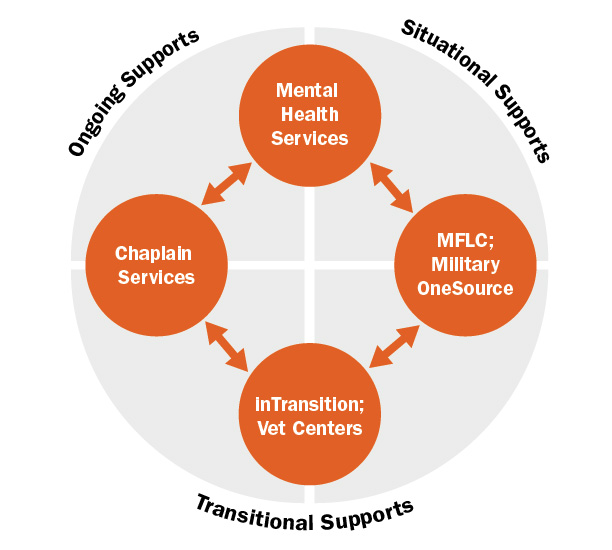
Everyone’s situation is not the same. Knowing which resources best fit yours can help you get connected with the right support as soon as possible. Consider the following options:
- Ongoing support and clinical services such as those provided by your local chaplain or mental health clinic if you are stressed due to a potential investigation or overwhelmed during an investigation
- Situational support programs such as Military and Family Life Counseling (MFLC) or Military OneSource if you or your family need counseling or assistance navigating daily aspects of life like finances, housing, or health because of an investigation
- Transitional support programs such as inTransition or the Vet Center if you’re coping with a change in station or separating from service due to the outcome of an investigation and would like to be connected to mental health care
STRESS CHECK: Are you experiencing any of the following signs of stress?1
- Feelings like fear, anger, or sadness
- Changes in appetite, energy level, or usual activities
- Problems with concentration or decision making
- Sleep difficulty
- Physical symptoms like headaches or stomach upset
- Worsening of pre-existing health or mental health problems
- Increased use of alcohol or other substances
Stressors like legal problems and other risk factors can combine in ways that feel overwhelming. If you are experiencing thoughts of hopelessness or suicide, you are not alone. Call or text the Suicide and Crisis Lifeline at 988 for help right now.
When to Seek Support
There’s no wrong time to ask for help. Specific examples of times to reach out include:
- When you are experiencing signs of stress, especially any that are severe, persistent, or impair your ability to meet your responsibilities
- When you feel isolated, ostracized, or lack support in your unit or personal life
- When your current coping skills aren’t working
How to Access Support
| Resource |
Supports Offered |
How to Contact |
Chaplain
|
Military chaplains are responsible for tending to the spiritual and moral well-being of service members and their families. Chaplains are not typically licensed clinical counselors and do not provide treatment in their role. They do, however, offer confidentiality and can assist with many life challenges, including those related to work, combat, deployment, marriage and family, substance abuse, grief, and finances. |
Find your local chaplain online on Military OneSource’s Military Installations website. Select “Chapels” in the program or service section |
Mental Health Clinic
|
Mental health clinics assist with the prevention, diagnosis, and treatment of mental health symptoms. Mental health providers help patients regain functioning and achieve well-being. |
Find your local clinic online. |
Military and Family Life Counseling
|
Military and family life counselors help service members and their families navigate issues such as improving relationships at home and work, stress management, adjustment difficulties, parenting, and grief or loss. Services are confidential and not reflected in the recipient’s medical record. |
Find your local military and family life counselor online in this directory. |
Military OneSource
|
Military OneSource helps service members connect to a wide range of individualized consultations, including coaching and non-medical counseling, available in the local community. |
To call, live chat, or connect 24/7 visit Military OneSource. |
inTransition
|
inTransition helps service members connect with care. The program provides coaching tailored to address individual needs, including addressing barriers to care connection, education on mental health conditions, problem-solving, stress management, and information on treatment options. |
To call, live chat, or email visit online. |
Vet Center
|
Vet Centers are community-based Veterans Affairs counseling centers not associated with VA medical care that provide a wide range of social and psychological services. Here eligible veterans, service members (including National Guard and Reserve components) and their families may receive professional counseling. Counseling is also offered to service members and veterans to support successful transition from military to civilian life, to active duty, Coast Guard, and to Reserve Component service members who have experienced specific types of trauma. |
Check eligibility and find your nearest Vet Center by visiting this national directory. |
SEEKING HELP IS A SIGN OF STRENGTH. IF YOU NEED ASSISTANCE, REACH OUT TO THE RIGHT RESOURCE FOR YOU TODAY
Need to Talk?
Contact the Psychological Health Resources Center 24/7 to confidentially speak with trained health resource consultants. Call 866-966-1020 or use the Live Chat. Remember, 988 Suicide & Crisis Lifeline provides 24/7, free and confidential support via phone or chat for people in distress, resources for you or your loved ones, and best practices for professionals. For the Veterans/Military Crisis Line, dial 988 and press 1 or text 838255. You can also chat online. For OCONUS calling options and online chat accessible from anywhere in the world, visit the Military Crisis Line website.
Reference
1. Centers for Disease Control and Prevention (2024, August 16). Managing stress. https://www.cdc.gov/mental-health/living-with/?CDC_AAref_Val=https://www.cdc.gov/mentalhealth/cope-with-stress/index.html
Updated March 2025
Download Factsheet
You are leaving Health.mil
The appearance of hyperlinks does not constitute endorsement by the Department of Defense of non-U.S. Government sites or the information, products, or services contained therein. Although the Defense Health Agency may or may not use these sites as additional distribution channels for Department of Defense information, it does not exercise editorial control over all of the information that you may find at these locations. Such links are provided consistent with the stated purpose of this website.
You are leaving Health.mil
View the external links disclaimer.
Last Updated: August 22, 2025