What are the new findings?
Within the Military Health System in 2024, injuries, mental disorders, and musculoskeletal diseases were the major categories of medical conditions associated with the most medical encounters, greatest numbers of affected service members, and highest numbers of hospital bed days. Those three categories showed modest growth, increasing by about 0.8% compared to 2023. While reported health care encounters increased by 1.3% in 2024, the numbers of affected individuals and hospital bed days decreased by 4.4% and 2.9%, respectively.
What is the impact on readiness and force health protection?
The major categories of medical conditions in this report present health challenges among U.S. active component service members that can affect force readiness. Continuous health surveillance, morbidity trend analysis, and timely reporting of comprehensive summaries of the major health issues affecting the active duty force provides crucial evidence to line commanders, Military Health System leaders, and health care providers as they establish policies and priorities for effective health care management and treatment of U.S. service members.
Background
MSMR’s annual burden of disease reports are designed to provide accurate estimations of the general health status of U.S. military personnel, for prioritization of effective interventions with measurable impacts on force readiness.1 In these reports, diagnoses are grouped to inform readers of the major factors and variables each year affecting health care provision within the Military Health System. Although the burden of disease within a health system can be classified into several categories, the majority of the global disease burden results from non-communicable diseases, followed by communicable diseases, maternal and neonatal diseases, nutritional diseases, and injuries.2
To broadly describe the morbidity burden among active component service members, since 2001 MSMR has used a classification system derived from the Global Burden of Disease Study.3,4 This systematic classification, developed through a 30-year scientific effort, quantifies major diseases, risk factors, and intermediate clinical outcomes in a standardized manner, enabling comparisons between populations and health problems over time.5,6 MSMR utilizes the GBD classification system in combination with an International Classification of Diseases, 10th Revision, Clinical Modification chapter-based system for categorizing hospitalizations and ambulatory care visits among the MHS population.
To improve the utility of this information, these classification schemes are refined by MSMR’s editorial staff. The major classification system for diagnoses, ICD-10-CM, features more than 68,000 separate codes.5 While the ICD-10-CM is organized in logical chapters, the groupings are not optimal for articulating burdens of disease within a military population. Consequently, some re-groupings of diagnoses are necessary to achieve a meaningful depiction of the burden in the military population.
The burden of disease experienced by ACSMs—a demographic characterized by youth, good health, and a predominantly male population—is assumed to substantially differ from the burden observed for the general U.S. and global populations. This divergence is attributable to a constellation of factors, including 1) pre-accession medical screening designed to ensure physical fitness for military service, 2) mandatory periodic health assessments and screenings, which potentially lead to earlier detection of certain conditions, 3) frequent use of outpatient services for readiness-related requirements, 4) unique environmental and lifestyle factors associated with military life and training, and 5) universal access to medical care without direct financial cost. These factors, collectively, contribute to distinct morbidity burden profiles within the ACSM population.
Individuals enlist or are commissioned into the active component typically between the ages of 17 and 25 years, with almost all members ending service by age 50 years. In 2024, the largest age group within the U.S. active component was 20-24 years, followed by 25-29 years, according to Defense Medical Surveillance System (DMSS) data. Women accounted for 19.4% of the active component in 2024.
Within the military population and its unique environment, categories of illness and injury requiring hospitalization have historically differed from illness and injury categories that result in the most outpatient visits. Added requirements for military readiness are likely a major factor in outpatient health care provision, but rarely for hospitalization. The categories of medical conditions that account for the most medical encounters generally within the Military Health System may differ from those that affect the most individuals, or those that result in the most debilitating or long-lasting effects among service members.4
This annual summary uses several health care burden measures to quantify the impacts in 2024 of various illnesses and injuries among members of the active component of the U.S. Armed Forces. Health care burden metrics include the total number of medical encounters, individuals affected, and hospital bed days. A consistent and comparative description of the burden of diseases and injuries, and sub-populations affected, should be an important element of health decision-making and planning processes, providing valuable information for where changes in policy or preventive emphasis may improve the medical readiness of the force.7
Methods
The population for this analysis included all individuals who served in the active components of the Army, Navy, Air Force, Marine Corps, or Space Force at any time during the surveillance period of January 1, 2024 through December 31, 2024. Each service member contributed medical records and person-time only for actual months served during the surveillance period.
All data in this analysis were derived from records maintained in the DMSS, which documents both ambulatory care encounters and hospitalizations of active component members of the U.S. Armed Forces. DMSS contains all encounters in military medical and civilian treatment facilities when reimbursed through the MHS. Encounters not routinely and completely documented within fixed military and non-military hospitals and medical clinics (e.g., during deployments, field training exercises, or at sea) were excluded from this analysis.
DMSS data for all inpatient and outpatient medical encounters of ACSMs during the surveillance period were summarized according to the primary (i.e., first-listed) diagnosis if reported with an ICD-10 code between A00 and T88, in addition to an ICD-10 code beginning with Z37 (“outcome of delivery”) or Department of Defense unique personal history codes DOD0101–DOD0105 (“personal history of traumatic brain injury”). This year, four new diagnostic groups were added for analysis: pain in foot, chronic rhinitis, neoplasm of uncertain behavior of skin, and disorder of pituitary gland.
All illness- and injury-specific diagnoses, defined by ICD-10 codes, are grouped into 25 burden of disease-related categories, comprised of 157 medical conditions, based on a modified version of the classification system developed for the GBD Study.4 This classification system was developed by the MSMR editorial staff in 2001 and is updated annually.
The GBD system groups diagnoses with common pathophysiological or etiological bases or significant DOD health policy importance. In this report, some diagnoses grouped into single categories in the GBD system (e.g., mental health disorders) were dis-aggregated to increase military relevance. In addition, injuries are classified by affected anatomical site rather than cause, as external causes of injuries are not required to be documented by providers.
The morbidity burdens attributable to various conditions were estimated based on the total number of medical encounters associated with each condition, i.e., total hospitalizations and ambulatory visits for the condition, with a limit of one encounter for an individual per condition each day; and numbers of service members affected by each condition, i.e., individuals with at least one medical encounter for the condition during the year; as well as total bed days during hospitalizations for each condition.
Results
Morbidity burden, by category
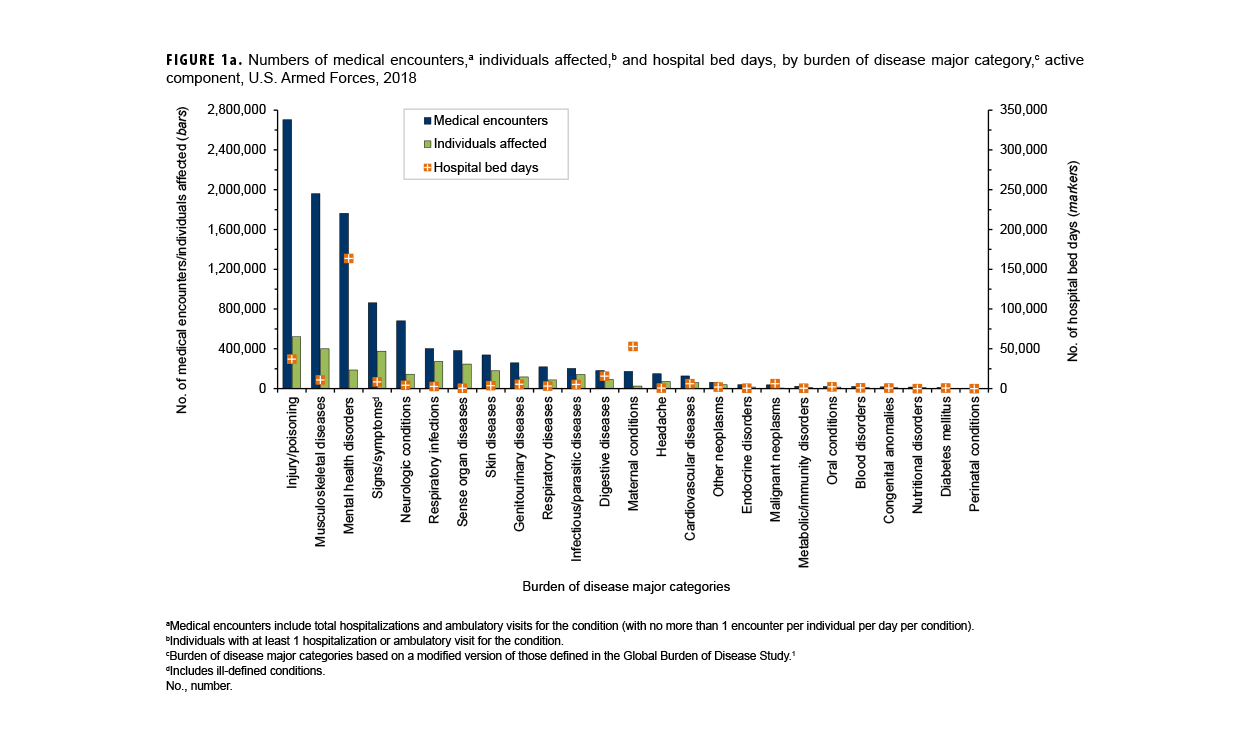 Provisional data indicate that affected ACSMs (n=557,980) experienced medical encounters due to injury more than any other morbidity-related category in 2024 (Figure 1a). Ranking third in terms of hospital bed days, injuries accounted for about one-fourth (23.5%) of all medical encounters (Figure 1b). The injury category combines ICD-10 ‘S’ (“injury”) and ‘T’ codes (“burns and poisonings”), but injuries account for about 98.1% of ambulatory encounters within the category (data not shown).
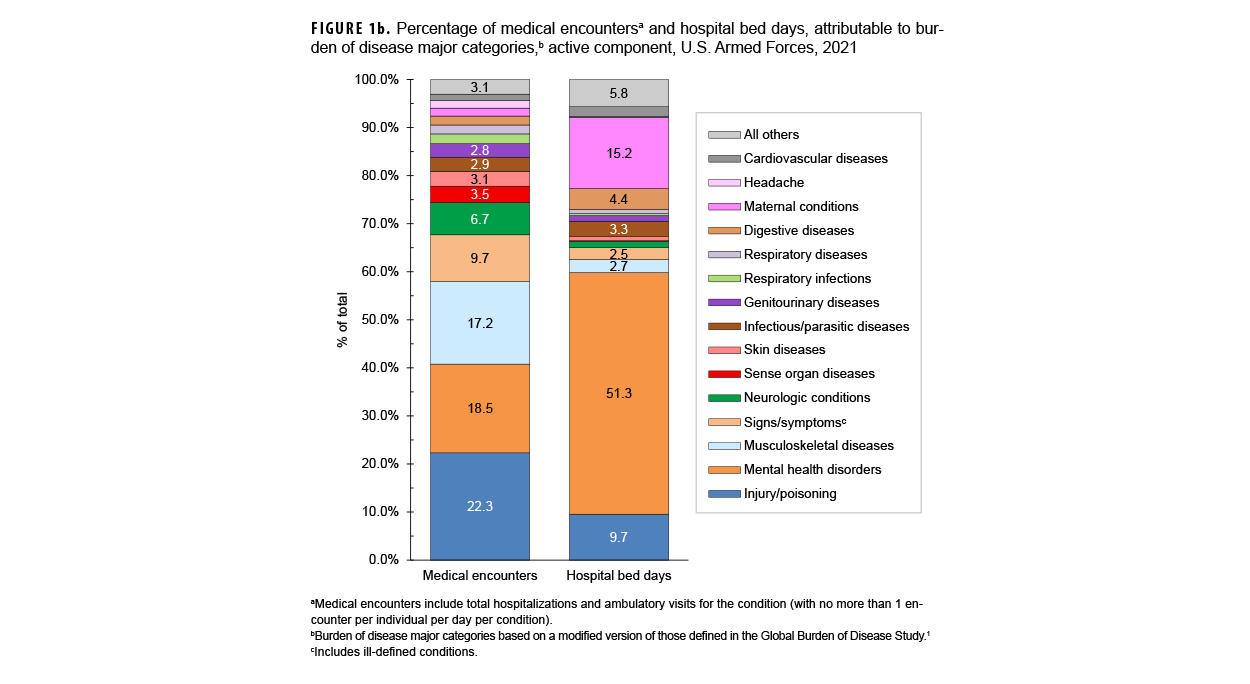
Mental health disorders accounted for more hospital bed days (n=195,726) than any other morbidity-related category, contributing over half (51.7%) of all hospital bed days, ranking fifth for individuals affected (Figures 1a, 1b). Together, the injury and mental health disorder categories accounted for over two-thirds (63.0%) of all hospital bed days and 42.3% of all medical encounters in 2024.
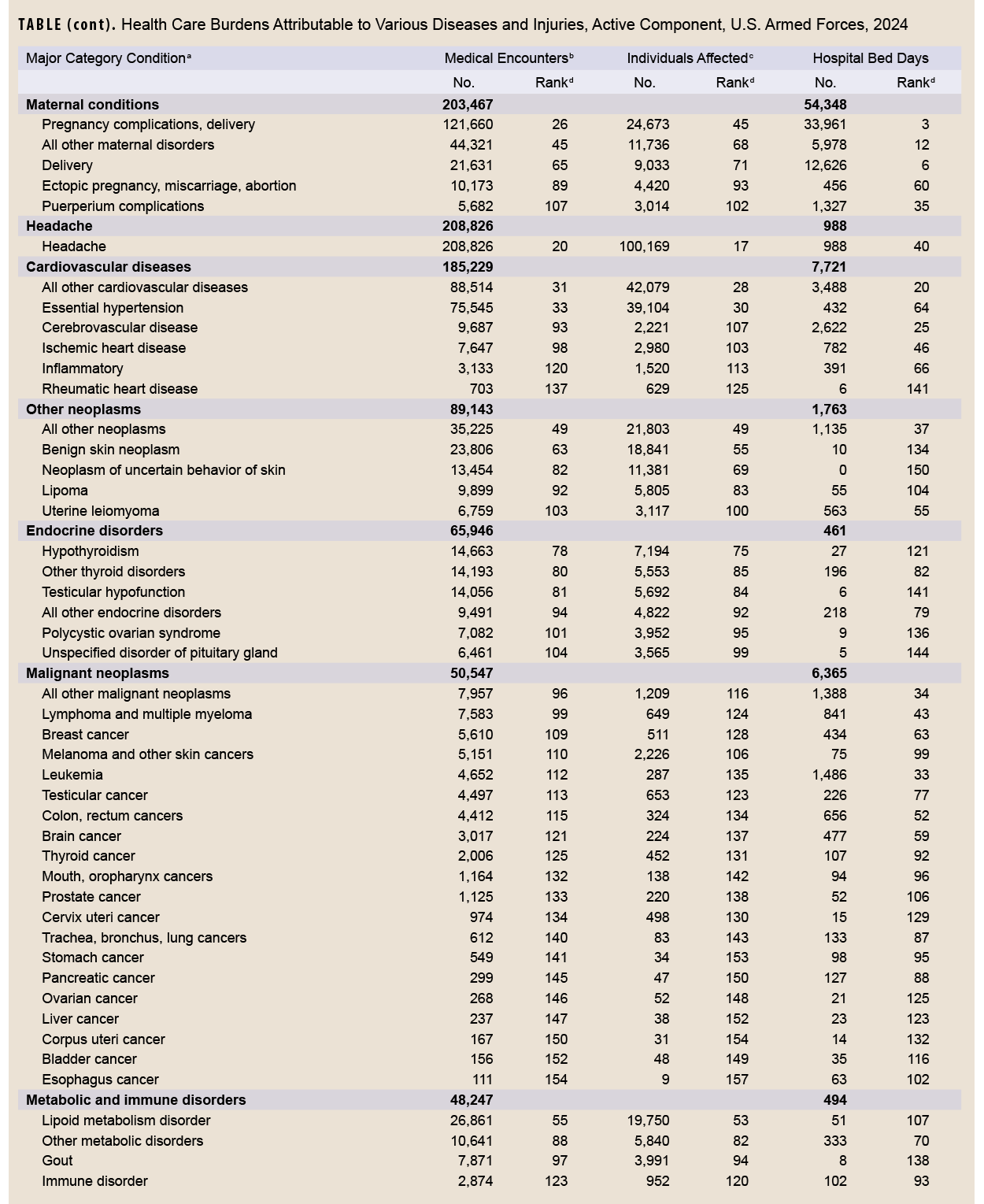
Maternal conditions (pregnancy complications and delivery) accounted for a relatively large proportion of all hospital bed days (n=54,348, 14.4%) but a much smaller proportion of medical encounters overall (n=203,467, 1.4%) (Figures 1a, 1b). As women comprised only 19.4% of the active duty force in 2024, these summary statistics understate the impact of these conditions among that group. Maternal conditions were the most frequent category for hospitalization among women in the active component.
Medical encounters, by condition
In 2024, almost one-third (33.4%) of all illness- and injury-related medical encounters were due to 5 medical conditions: other back problems (lower back pain, other dorsalgia), knee, arm/shoulder, organic sleep disorders (insomnia, obstructive sleep apnea), and anxiety (Figure 2). Moreover, the 10 conditions associated with the most medical encounters constituted more than half (55.3%) of all illness- and injury-related medical encounters.
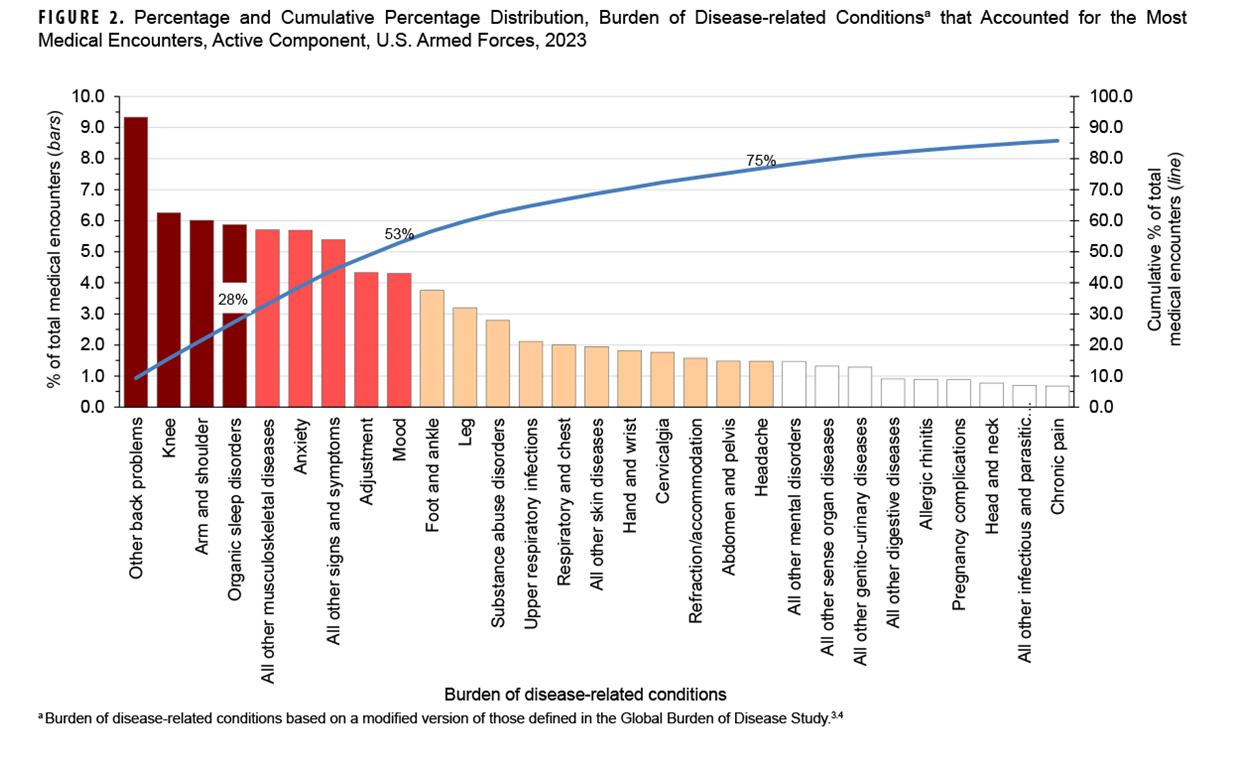
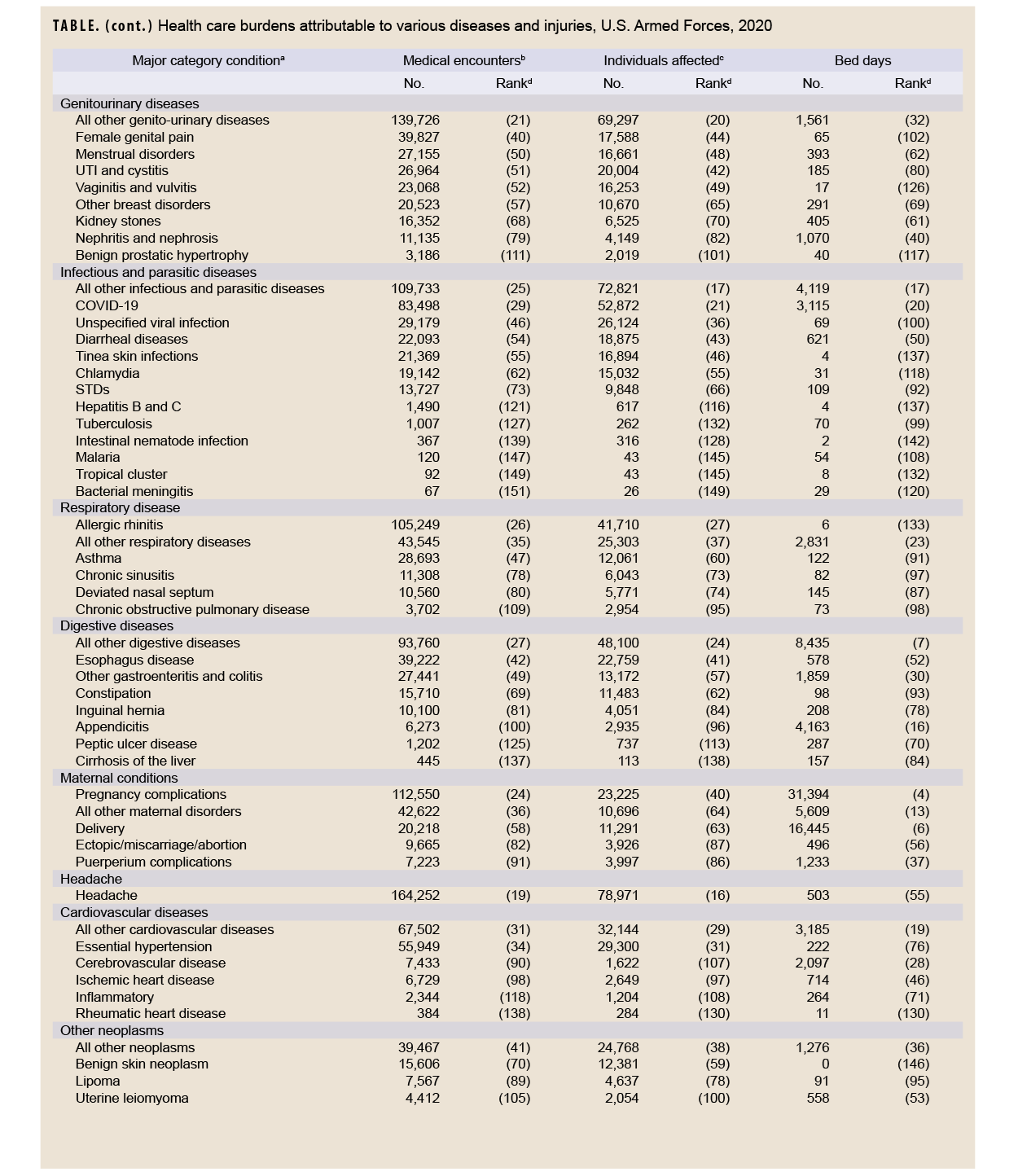
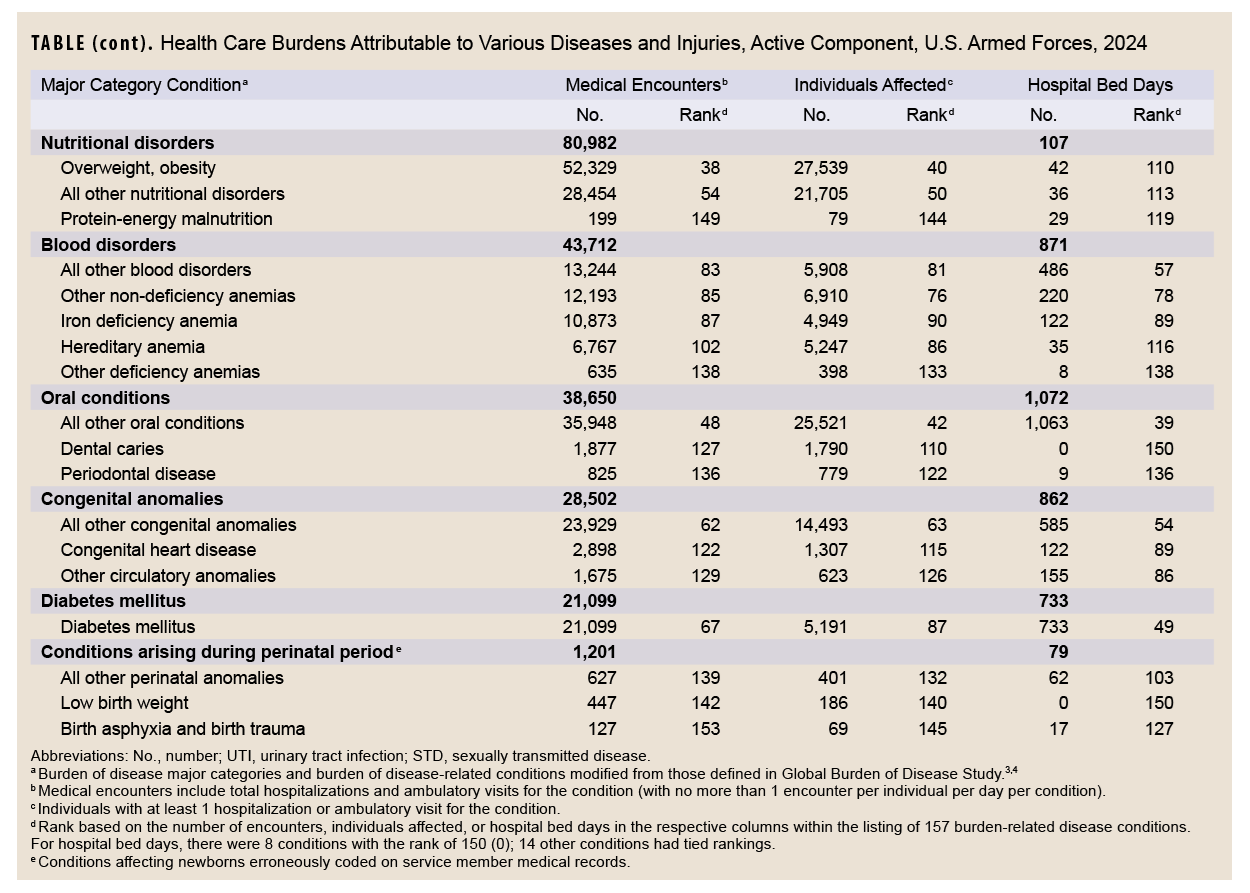
The categories of conditions that accounted for the most medical encounters among ACSMs in 2024 were predominantly injuries, mental health disorders, and musculoskeletal diseases. Among reported injuries, knee (6.4%), arm/shoulder (6.2%), foot/ankle (3.7%), and leg (3.3%) resulted in the most medical encounters (Figure 2 and Table). Mental health disorder diagnoses resulted most frequently from anxiety (5.8%), adjustment (4.2%), mood (4.2%), and substance abuse disorders (2.7%). Other back problems (9.1%), all other musculoskeletal diseases (4.4%), and cervicalgia (1.8%) generated the most medical encounters from musculoskeletal diseases. COVID-19 accounted for 0.2% of total medical encounters in 2024, ranked fifty-eighth, declining from 0.3% in 2023.

Individuals affected, by category
In 2024, the 10 categories of conditions that affected the most service members were signs, symptoms, and other ill-defined conditions (all other signs and symptoms), musculoskeletal diseases (other back problems, all other musculoskeletal diseases), respiratory infections (upper respiratory infections) sensory organ diseases (refraction/accommodation), neurological conditions (organic sleep disorders), injuries (knee, arm/shoulder), respiratory diseases, and skin diseases (all other skin diseases). COVID-19 affected 23,173 ACSMs and ranked forty-seventh for members affected, a considerable decrease in rank from thirty-fifth in 2023.
Hospital bed days, by condition
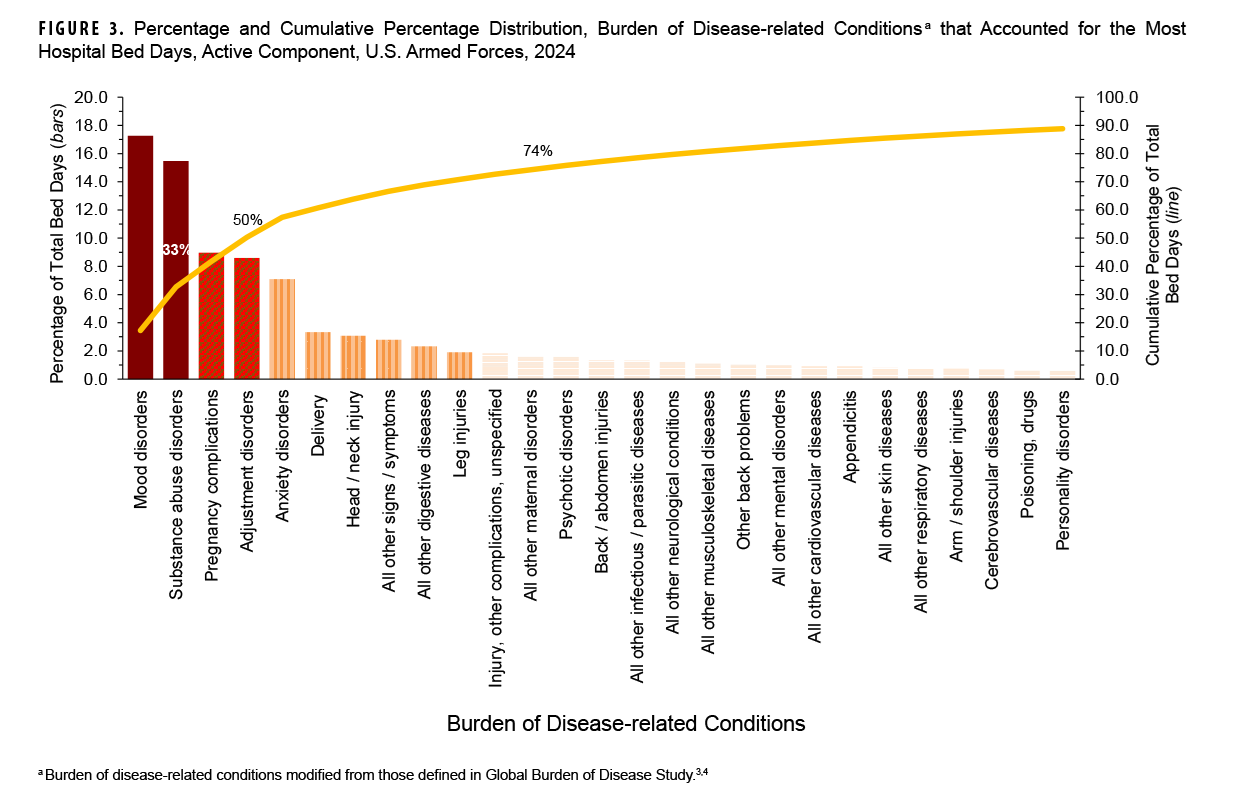 Mood and substance abuse disorders accounted for nearly one-third (32.7%) of all hospital bed days in 2024 (Figure 3). Four mental health disorders (mood, substance abuse, adjustment, anxiety) and two maternal conditions (pregnancy complications, delivery) together accounted for almost two-thirds (60.7%) of all hospital bed days (Table and Figure 3). About 11.3% of all hospital bed days were attributable to injury. COVID-19 accounted for 0.1% of total hospital bed days among ACSMs (Table).
Relationships between health care burden indicators
There was a strong positive correlation between numbers of medical encounters attributable to various medical conditions with numbers of individuals affected by those conditions (r=0.85) (data not shown). The three leading causes of medical encounters were among the five medical conditions that most affected individuals (Table), while weak-to-moderate positive relationships were detected between numbers of hospital bed days attributable to conditions with numbers of individuals affected by those conditions (r=0.20), or numbers of medical encounters related to a medical condition (r=0.40). For example, substance abuse disorders and labor and delivery ranked high in terms of total bed days, these conditions affected relatively few ACSMs in 2024.
Discussion
This MSMR report provides the most recent data available for major disease classification and analysis comparable to previous reports. The total number of conditions reported in 2024 increased by 0.8% compared to 2023, and medical encounters increased by 1.3%. The numbers of affected individuals and hospital bed days decreased, however, by 4.4% and 2.9%, respectively. While numbers of individuals affected and hospital bed days decreased in 2024, the major diseases and conditions observed in this analysis are consistent with previous MSMR reports on the morbidity and health care burdens of the U.S. military.
Compared to 2023, both numbers of medical encounters and hospital bed days decreased for five major categories—mental health disorders, musculoskeletal diseases, respiratory diseases, maternal conditions, and blood disorders—while in the remaining categories, changes in numbers of medical encounters and hospital bed days were inconsistent. Injuries, mental health disorders, and musculoskeletal disorders were the categories in 2024 associated with the most medical encounters, highest numbers of affected service members, and greatest numbers of hospital bed days.
Only 9 of the 157 medical conditions that comprise this report, or just 5.7% of the listed conditions, accounted for slightly more than half (51.6%) of all illness- and injury-related medical encounters: two anatomical, site-defined injuries (knee, arm/shoulder), three mental health disorders (anxiety, adjustment, mood disorders), two musculoskeletal conditions (other back problems, all other musculoskeletal diseases), one sign, symptom or ill-defined condition (all other signs and symptoms), and one neurological condition (organic sleep disorders).
The pattern of illness and injury among U.S. ACSMs is distinct from other population groups, with different demographic distributions and occupational hazards. Injuries, mental disorders, and musculoskeletal diseases are identified in the literature as among the leading causes of morbidity and disability among service members throughout military history, affecting readiness and health care provision.8-10 A previous study reported that injuries were the single leading cause of death, disability, hospitalization, outpatient visits, and manpower loss among U.S. military service members.8 Exposure to intense physical demands during training and in operational environments increases risk of musculoskeletal injury, which contributes to significant morbidity among military personnel.11 Due to lifestyles that can be influenced by operational conditions, multiple combat missions, and familial separations, among other factors, a number of mental disorders including occupational stress, depression, and suicide are common among military personnel.9 Some studies have reported significant associations between major depressive disorder and deployment.10
Reporting on the burden of disease and injury includes reliable quantification of their physical and psychosocial health impacts, as well as risk factors, that can provide valuable information about a population’s health status, for optimal resource allocation for prevention and treatment. Accurate estimates can be used to predict expected health care use and costs, prioritize effective interventions, and evaluate their impacts and cost effectiveness.6 Current, accurate information on the scale of health disorders among service members, groups at significant risk, and trends in their health statuses over time are critical for policy-makers and commanders.
Preventing injuries and illnesses in service members requires not only routine injury and disease monitoring, but informed, pervasive understanding of the link between health-related factors and disease occurrence, a comprehensive medical surveillance system for successful prevention programs, and data-driven research prioritization. These surveillance, analysis, and reporting efforts can culminate in effective partnerships between commanders, policy-makers, and service members for direct actions to prevent disease and injury.8,11
With psychosocial factors shown to be implicated in increased risk of back pain, for example, addressing related health care issues holistically, rather than divided among discrete categories, would be beneficial.12,13 Integrated approaches to care not only address identified burdens of medical conditions but their associated risk factors. The unique health challenges of the military population share risk factors and medical conditions with the civilian population, with the added complexities of service experience and the nature of combat.14
References
- Hernandez JBR, Kim PY. Epidemiology morbidity and mortality. In: StatPearls [internet]. Updated Oct. 3, 2022. StatPearls Publishing;2024. https://www.ncbi.nlm.nih.gov/books/nbk547668
- Roser M, Ritchie H, Spooner F. Burden of Disease. 2024. Accessed Aug. 14, 2025. https://ourworldindata.org/burden-of-disease
- World Health Organization. The Global Burden of Disease: 2004 Update. World Health Organization;2008. Accessed Aug. 14, 2025. https://www.who.int/publications/i/item/9789241563710
- Murray CJL, Lopez AD, eds. The Global Burden of Disease: A Comprehensive Assessment of Mortality and Disability from Diseases, Injuries, and Risk Factors in 1990 and Projected to 2020. Harvard University Press;1996:120-122.
- Murray CJL. The Global Burden of Disease Study at 30 years. Nat Med. 2022;28(10):2019-2026. doi:10.1038/s41591-022-01990-1
- Devleesschauwer B, Maertens de Noordhout C, Smit GS, et al. Quantifying burden of disease to support public health policy in Belgium: opportunities and constraints. BMC Public Health. 2014;14:1196. doi:10.1186/1471-2458-14-11967
- World Health Organization. WHO Methods and Data Sources for Global Burden of Disease Estimates 2000-2019. World Health Organization;2020. Accessed Jun. 4, 2024. https://www.who.int/docs/default-source/gho-documents/global-health-estimates/ghe2019_daly-methods.pdf
- Jones BH, Perrotta DM, Canham-Chervak ML, Nee MA, Brundage JF. Injuries in the military: a review and commentary focused on prevention. Am J Prev Med. 2000;18(3 suppl 1):71-84. doi:10.1016/s0749-379(99)00169-5
- Moradi Y, Dowran B, Sepandi M. The global prevalence of depression, suicide ideation, and attempts in the military forces: a systematic review and meta-analysis of cross sectional studies. BMC Psychiatry. 2021;21(1):510. doi:10.1186/s12888-021-03526-2
- Packnett ER, Elmasry H, Toolin CF, Cowan DN, Boivin MR. Epidemiology of major depressive disorder disability in the US military: FY 2007-2012. J Nerv Ment Dis. 2017;205(9):672-678. doi:10.1097/nmd.0000000000000692
- Lovalekar M, Hauret K, Roy T, et al. Musculoskeletal injuries in military personnel: descriptive epidemiology, risk factor identification, and prevention. J Sci Med Sport. 2021;24(10):963-969. doi:10.1016/j.jsams.2021.03.016
- To D, Rezai M, Murnaghan K, Cancelliere C. Risk factors for low back pain in active military personnel: a systematic review. Chiropr Man Therap. 2021;29(1):52. doi:10.1186/s12998-021-00409-x
- Meints SM, Edwards RR. Evaluating psychosocial contributions to chronic pain outcomes. Prog Neuropsychopharmacol Biol Psychiatry. 2018;87(pt b):168-182. doi:10.1016/j.pnpbp.2018.01.017
- Alruwaili A, Khorram-Manesh A, Ratnayake A, Robinson Y, Goniewicz K. Supporting the frontlines: a scoping review addressing the health challenges of military personnel and veterans. Healthcare (Basel). 2023;11(21):2870. doi:10.3390/healthcare11212870