What are the new findings?
In 2025, U.S. active component service members (ACSMs) completed 17,478,210 ambulatory, or outpatient, visits for health care, yielding an annual rate of 13.7 visits per person-year (p-yr). Over the previous 4 years the rate of ambulatory health care encounters steadily declined, driven primarily by sharp post-pandemic reductions in COVID-19 and ‘other’ administrative health care encounters. Five major categories of diagnosis from ACSM ambulatory care visits in 2025 accounted for almost four-fifths (79.6%) of all ACSM outpatient care: musculoskeletal system diseases, ‘other’ (administrative) encounters, mental health disorders, nervous system and sensory organ diseases, and symptoms, signs and ill-defined conditions; this is consistent with previous years. While the most frequent diagnoses of specific conditions for both male and female ACSMs were joint pain, lower back pain, and adjustment disorders, men had higher rates of sleep apnea and alcohol dependence, while women had higher rates of generalized anxiety and anemia due to iron deficiency.
What is the impact on readiness and force health protection?
The operational burdens of mental health and musculoskeletal disorders pose a critical challenge to force readiness, as these chronic conditions both directly degrade individual deployability and require sustained, resource-intensive medical care. The sex disparity in care provision compounds this challenge, as service women receive ambulatory care for illnesses and injuries at a rate 62.8% higher than service men. Addressing these shared leading diagnoses alongside sex-specific health care needs will be vital for optimizing medical resource allocation, improving military health system capacity, and sustaining overall force readiness.
Background
This report documents the frequencies, rates, trends, and characteristics of ambulatory, or outpatient, health care visits in 2025 of active component members of the U.S. Army, Navy, Air Force, Marine Corps, and Space Force. Ambulatory hospital and clinic visits by U.S. service members in fixed military and non-military (reimbursed through the Military Health System) facilities are documented by standardized records that are routinely archived in the Defense Medical Surveillance System (DMSS) for health surveillance purposes. Ambulatory visits not routinely and completely documented within fixed military and non-military hospitals and clinics (e.g., during deployments, field training exercises, or at sea) are not included in this analysis.
As in prior MSMR reports, all records of ambulatory health care visits by active component service members (ACSMs) were categorized according to the International Classification of Diseases, 10th Revision (ICD-10) codes entered in the primary (i.e., first-listed) diagnostic position of the visit records. Incidence rates were calculated per 1,000 person-years (p-yrs). Percent change in incidence was calculated using unrounded rates.
Frequencies, rates and trends
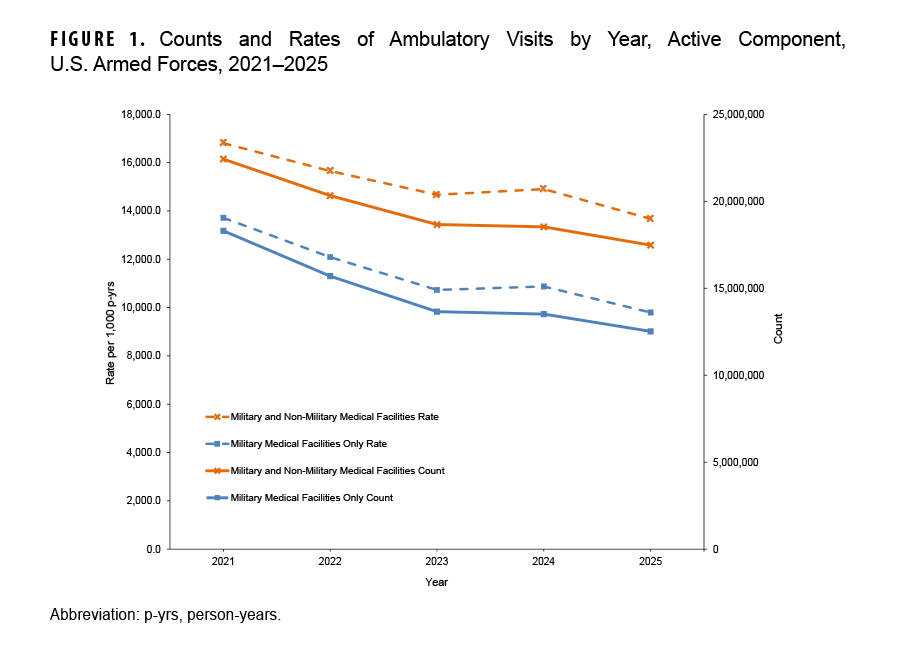
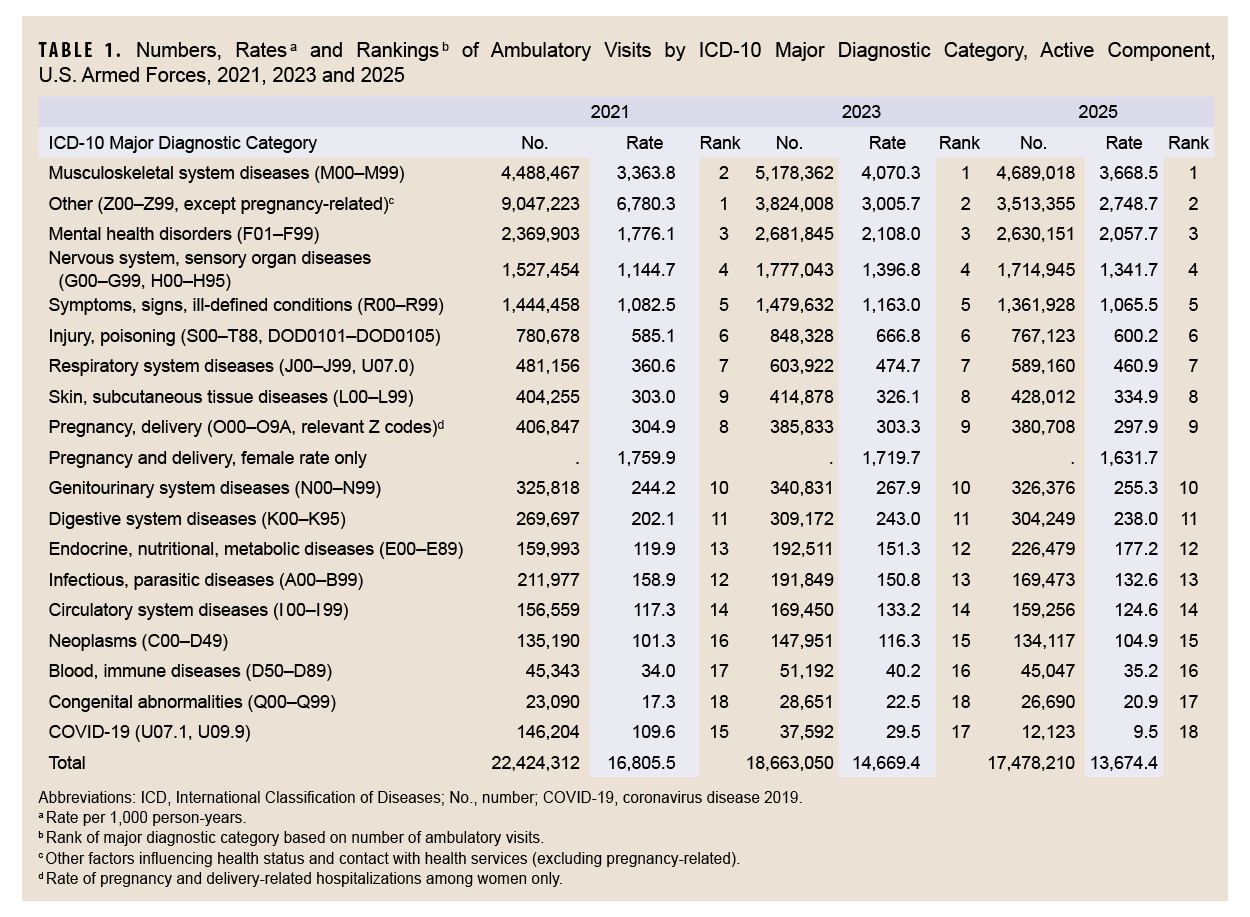 In 2025, U.S. ACSMs completed 17,478,210 ambulatory visits for medical care, resulting in an unadjusted annual rate—for all causes—of 13,674.4 visits per 1,000 p-yrs, or 13.7 visits per p-yr (Table 1). The observed rate represents an 8.3% decrease compared to 2024. Excluding the slight increase (1.6%) recorded in 2024, the rates have shown a continuous downward trend since 2021 (Figure 1). Excluding the ‘other’ major diagnostic category, there were 13,964,855 documented ambulatory visits for illnesses and injuries (ICD-10 A00–T88, including relevant pregnancy ‘Z’ codes) in 2025, corresponding to an unadjusted rate of 10.9 visits per p-yr, which is 6.3% lower than in 2023 (11.7 per p-yr) and 9.0% higher than in 2021 (10.0 per p-yr).
 A ‘Z’ code in the first diagnostic position identifies administrative visits within the ‘other’ category for visits related to other factors influencing health status and contacts with health services (excluding pregnancy). After a sharp decline (55.7%) observed for Z-coded encounters from 2021 to 2023, in 2025 the frequency remained relatively stable, with only an 8.5% rate decrease compared to 2023 (Table 1).
Ambulatory visits, by ICD-10 major diagnostic categories
The leading 5 major diagnostic categories in 2025 remained consistent, accounting for almost four-fifths (79.6%) of all ambulatory visits among ACSMs. Musculoskeletal system and connective tissue disorders (26.8%) were the leading category in 2025, surpassing ‘other’ (20.1%), which was the dominant category in 2021. Mental health disorders (15.0%); disorders of the nervous system and sensory organs (9.8%); and symptoms, signs, and ill-defined conditions (7.8%) maintained stable rankings (Table 1). Rankings for other diagnostic categories were also largely stable.
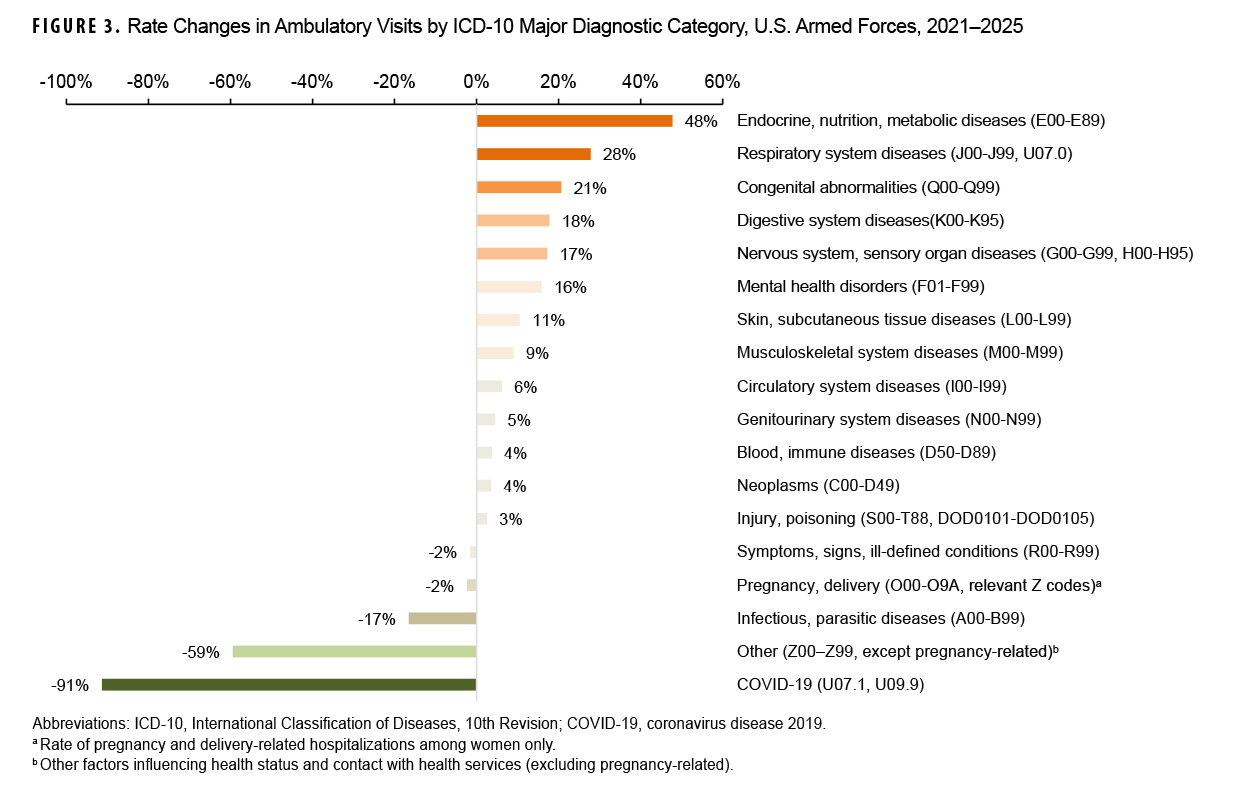
From 2021 through 2025, the categories of ‘other’, pregnancy and delivery, infectious and parasitic diseases, and COVID-19 exhibited a continuous downward trend, while the categories of skin and subcutaneous tissue diseases and endocrine, nutritional and metabolic diseases as well as categories both continuously increased. The remaining categories exhibited fluctuating patterns. The COVID-19 diagnostic category demonstrated the largest decline in both numbers and rates, with the rate of visits decreasing by 91.3%, followed by ‘other’ (-59.5%), infectious and parasitic diseases (-16.5%), and pregnancy and delivery (-2.3%).
In a departure from last year’s findings,1 mental health disorders evinced the highest growth rate during the prior 5 years, rather than musculoskeletal system diseases. Ambulatory visits for mental health-related disorders increased by 260,248 visits (a growth rate of 15.9%), followed by musculoskeletal system diseases, which recorded an increase of 200,551 visits (a growth rate of 9.1%). With the exception of endocrine, nutritional and metabolic diseases, which increased by 47.8%, all other categories with rises in rates exhibited rate increases within the range of 2.6–27.8% (Figure 3).
Ambulatory visits, by sex
For both male and female ACSMs, joint pain contributed to over 44% of all musculoskeletal system diseases category diagnoses. Adjustment disorder was the leading diagnosis in the mental health category for both men and women, representing approximately 20% of mental health diagnoses for both sexes (Tables 2, 3). “Anemia, unspecified” emerged as the most frequent diagnosis among service men within the major diagnostic category of blood and immune disorders, accounting for 19.6% of ambulatory visits by male ACSMs; conversely, “iron-deficiency anemia, unspecified” was the most frequent diagnosis among service women, accounting for 32.2% of their outpatient visits (Tables 2, 3). Unspecified viral infection and unspecified acute upper respiratory infection were the leading diagnoses in 2025 for infectious and parasitic diseases and diseases of the respiratory system, respectively, in both men and women (Tables 2, 3).
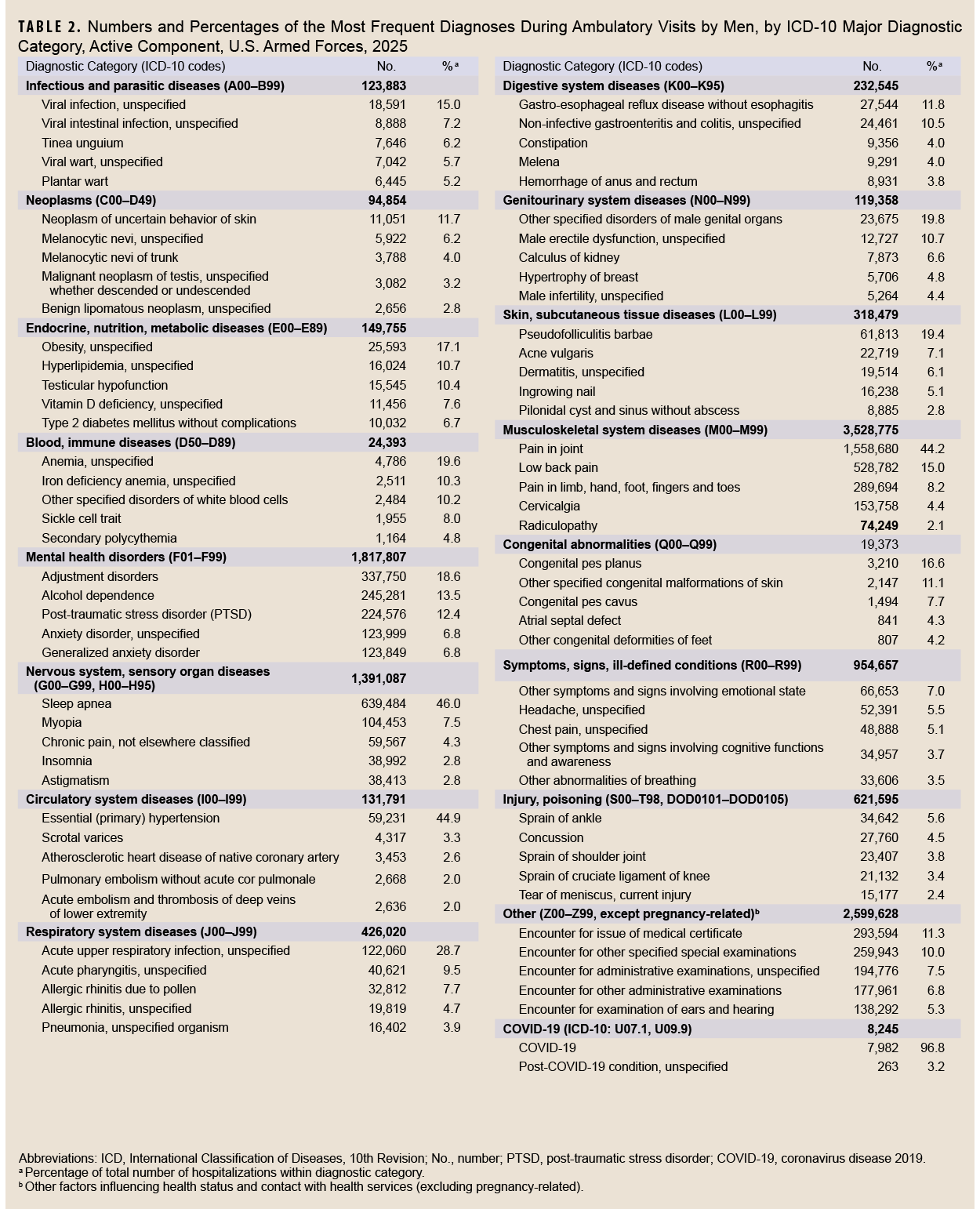
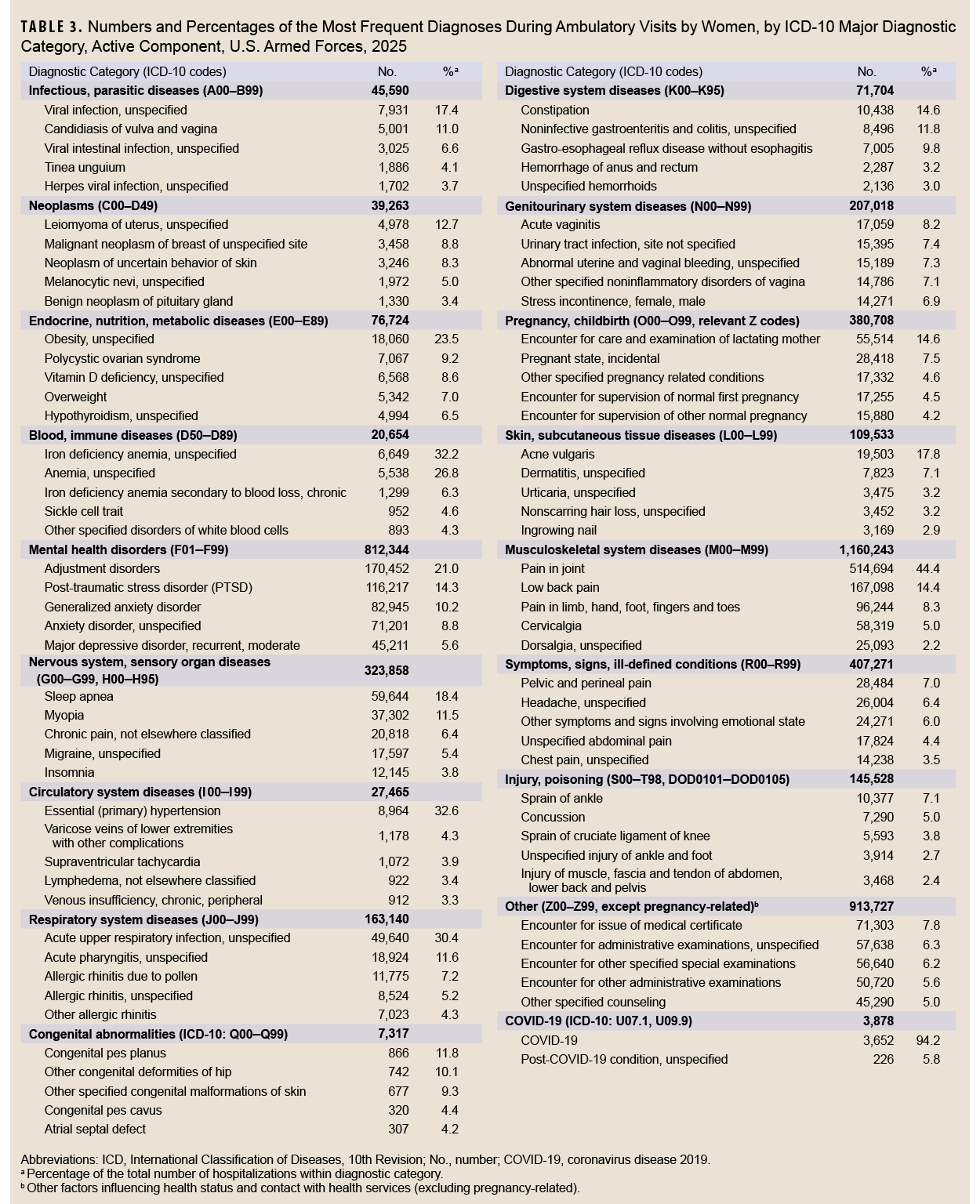
In 2025, service men accounted for nearly three-fourths (71.3%) of all illness- and injury-related visits, but excluding ‘other’ diagnoses, the annual rate (17.2 visits per p-yr) of all encounters for service women was 79.9% higher than among service men (9.5 visits per p-yr) (data not shown). Excluding pregnancy and delivery visits, which accounted for 9.5% of all non-Z-coded (‘other’) ambulatory visits among service women, the illness and injury ambulatory visit rate was 15.5 visits per p-yr, 62.8% higher than among service men.
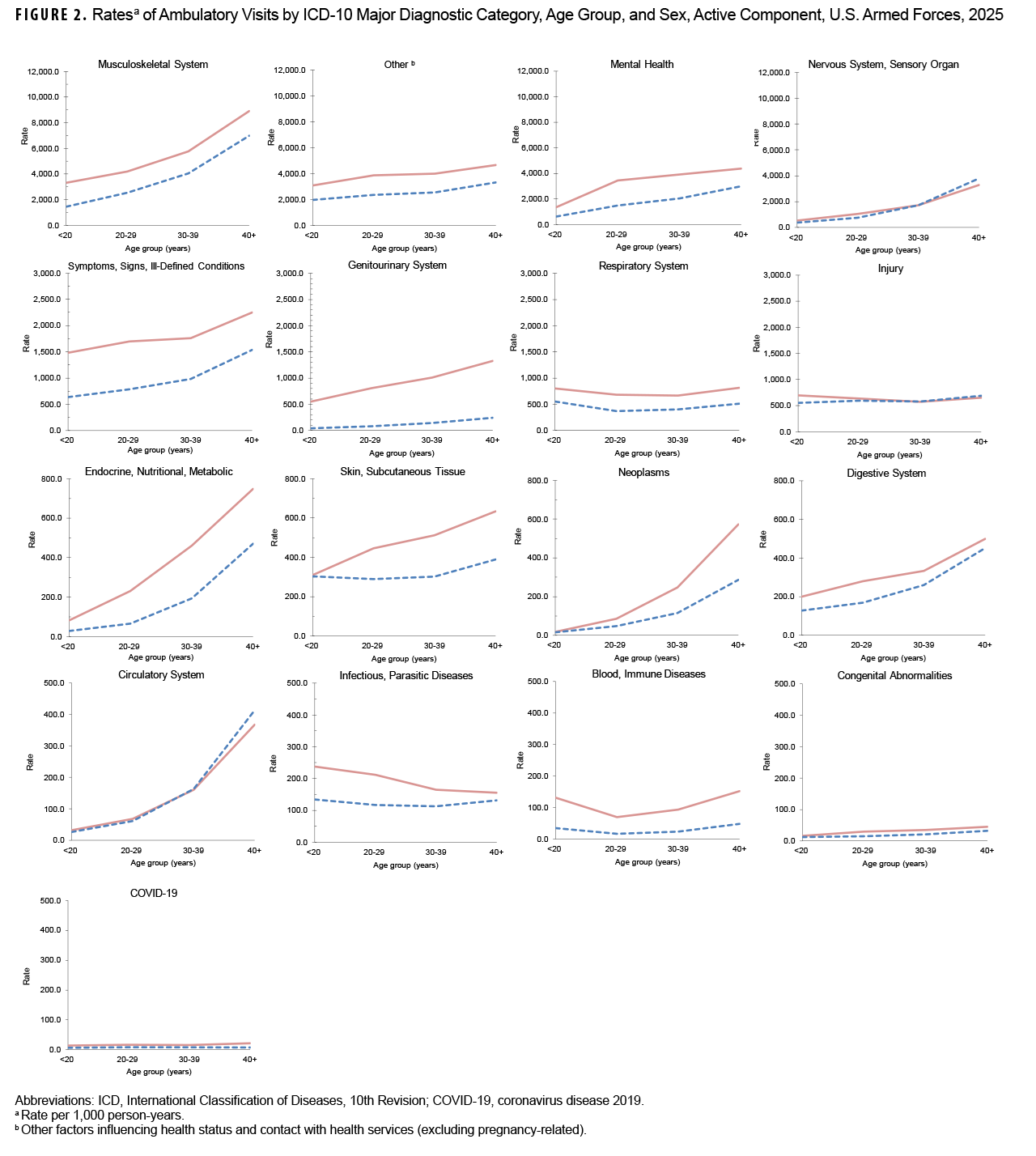
Rates of illness- and injury-specific diagnoses among service women exceeded male rates by over 50% in all major diagnostic categories except diagnoses for nervous system and sensory organ diseases, circulatory system diseases, digestive system diseases, and injury (data not shown). Female rates were more than twice male rates for blood and immune diseases, mental health disorders, genitourinary system diseases, COVID-19, and endocrine, nutritional and metabolic diseases.
Relationships between age group and ambulatory visit rates were broadly similar among men and women within all diagnostic categories (Figure 2). Ambulatory rates for musculoskeletal system diseases, neoplasms, nervous system and sensory organ diseases, digestive system diseases, circulatory system diseases, and endocrine, nutritional and metabolic diseases rose more steeply with advancing age than other categories of illness or injury (Figure 2).
Seven of the 10 leading diagnoses during ambulatory visits were the same for male and female service members: pain in joint; low back pain; adjustment disorders; pain in limb, hand, foot, fingers or toes; post-traumatic stress disorder (PTSD); sleep apnea; and encounter for issue of medical certificate. Sleep apnea was the second-most frequent illness- or injury-specific primary diagnosis for men, while ninth for women. The difference in the rate rank order of mental health disorders is also worth noting. Alcohol dependence was the eighth most frequent diagnosis for men but was not identified among the leading 10 causes of ambulatory visits for women, while generalized anxiety disorder, anxiety disorder (unspecified), and cervicalgia were among the 10 most common diagnoses for women (Tables 2, 3).
Discussion
In 2025, ambulatory health care visits among active component service members (ACSMs) decreased by 8.3% compared to 2024, declining to 13.7 visits per person-year (p-yr)—the lowest level since the 2021 peak. This overall decline was largely driven by a continuous downward trend in 4 major diagnostic categories: ‘other’ administrative encounters, pregnancy and delivery, infectious and parasitic diseases, and COVID-19. The rate of encounters for COVID-19, which peaked in 2021, declined to last place in 2025, correlating to the waning of the pandemic.
Despite these declines in ambulatory visits, the unadjusted annual rate of visits for illness- and injury-related conditions among ACSMs remains elevated, at 13.4 visits per p-yr, far exceeding the rate among civilian adults ages 18-44 years: 324.6 visits per 1,000 persons, or approximately 0.3 visits per p-yr.2 This elevated rate of ambulatory care visits by ACSMs underscores the intense physiological demands of military service. Future analyses comparing specific major diagnostic category rates to civilian counterparts may help further elucidate these medical costs of readiness.
Analysis of illness- and injury-specific health care encounters among ACSMs by sex reveals marked differences: Female service members receive outpatient care at nearly double the rate of male service members (17.2 vs. 9.5 visits per p-yr, respectively). This difference aligns with data from the 2022 National Ambulatory Medical Care Survey, which indicates that civilian women procure health care services at approximately 1.8 times the rate of civilian men.2 Within the U.S. military, female ACSM health care encounter rates in specific diagnostic categories were more than double those of male ACSMs, including blood and immune diseases, mental health disorders, and endocrine, nutritional and metabolic diseases.
While joint pain and adjustment disorders remain the leading diagnoses for both sexes throughout the U.S. Armed Forces, distinct secondary health risks highlight need for nuanced, targeted interventions. Men exhibit a high prevalence of sleep apnea (their second-most frequent illness-specific diagnosis) and alcohol dependence, contrasting with significantly higher rates of generalized anxiety and cervicalgia among women. Addressing these shared occupational burdens along with sex-specific diagnostic trends will be critical for optimizing military health system capacity.
Several limitations should be considered when interpreting these findings. Unit level ambulatory care, care by non-credentialed providers (e.g., medics, corpsmen), and at deployed medical treatment facilities (including ships at sea) were not included. This summary does not reflect the fact that the types and rates of illnesses and injuries may vary between deployed and non-deployed ACSMs.
This summary is based on primary (i.e., first-listed) diagnosis codes reported on ambulatory visit records; the current summary discounts morbidity related to co-morbid and complicating conditions that may have been documented in secondary diagnostic positions of health care records. The accuracy of reported diagnoses likely varies according to medical condition, clinical setting, care provider, and treatment facility, as diagnostic information is collected for non-surveillance purposes. Although specific diagnoses during individual encounters were potentially not definitive, final, or even correct, summaries of the frequencies, trends, and natures of ambulatory health care encounters among ACSMs provide descriptive evidence to inform further research and evaluation.
Rates and frequencies reported do not reflect unique individuals, but a rate of total ambulatory visits per person-year. The data presented in this report were extracted from DMSS on May 1, 2026. This report documents all ambulatory health care visits but does not estimate incidence rates for the diagnoses described. These data provide descriptors of health care provision, which elevate rates for disorders requiring increased numbers of ambulatory visits. In contrast to common, self-limited, and minor illnesses and injuries that require little, if any, follow-up or continuing care, illnesses and injuries necessitating multiple ambulatory visits for evaluation, treatment, and rehabilitation are over-represented in this summary.
References
- Armed Forces Health Surveillance Division. Ambulatory health care visits among active component members of the U.S. Armed Forces, 2023. MSMR. 2024;31(6):19-25. Accessed Aug. 21, 2025. https://www.health.mil/news/articles/2024/06/01/msmr-ambulatory-care-2023
- Santo L, Peters ZJ, Guluma L, Ashman JJ. Visits to health centers among adults, by selected characteristics: United States, 2022. Natl Health Stat Report. 2024;22(211):cS353454. doi:10.15620/cdc/59282