What are the new findings?
In 2025, the burden of health care for U.S. service members in the active component was determined by medical diagnostic categories within a limited range: Injuries, mental health disorders, and musculoskeletal diseases accounted for the vast majority of health care provided. This concentration was most evident in ambulatory, or outpatient, care, to which only 5 specific conditions constituted one-third of all outpatient medical encounters. Inpatient treatment for mental health-related disorders comprised 51.0% of all hospital bed days for active component service member health care.
What is the impact on readiness and force health protection?
The persistent dominance of injuries, mental health disorders, and musculoskeletal diseases in Military Health System provision of care demonstrates a critical, ongoing vulnerability in force health protection that also requires sustained preventive and rehabilitative care. Addressing these outpatient and inpatient health care burdens is essential for minimizing lost duty time and optimizing the operational readiness of the force.
Background
Since 2001, MSMR has published annual reports describing the morbidity burden among U.S. military personnel,1 using a classification system derived from the Global Burden of Disease (GBD) Study.2,3 The GBD is a global, comprehensive epidemiological effort that systematically quantifies the magnitude of hundreds of diseases, injuries, and associated risk factors.4 By measuring disease incidence and prevalence in a highly standardized manner, the GBD framework establishes a vital methodological standard that enables robust health comparisons among diverse populations as well as over time.5
To employ the global GBD standard within a military population, MSMR adapts GBD’s operational framework to adjust for the unique occupational realities and readiness requirements of the U.S. Armed Forces. While the GBD framework relies on the International Classification of Diseases, 10th Revision (ICD-10), Clinical Modification, the standard chapter-based ICD-10 organization of more than 68,000 codes is not suitably structured for a description of specific functional burdens affecting military service members. Consequently, MSMR refines the ICD-10 code groupings into a custom framework that prioritizes the conditions and non-battle injuries with the most impacts on mission readiness.
This specialized framework is fundamentally shaped by the unique demographic composition and occupational requirements of active component service members (ACSMs). As a cohort defined by relative youth and baseline physical fitness, the force primarily consists of individuals who enlist or are commissioned between the ages of 17 and 25 years, with the vast majority concluding service by age 50 years. According to 2025 Defense Medical Surveillance System (DMSS) data, the ages 20-24 years and 25-29 years cohorts remain the largest segments of the force, while women now account for 19.9% of the active component.
Beyond these demographics, the health of the force is driven by systemic military factors that differentiate it from the general population. Rigorous pre-accession medical screening establishes a high baseline of health, while mandatory periodic health assessments facilitate the early detection and management of clinical conditions. Furthermore, the combination of high-intensity training, unique lifestyle stressors, and universal access to no-direct cost health care may concentrate morbidity within specific clinical areas. Collectively, these factors result in a morbidity profile dominated by conditions prevalent in young, physically active populations, most notably injuries, behavioral health conditions, and musculoskeletal disorders.6
Prior MSMR reports indicate that categories of illness and injury requiring hospitalization have historically differed from illness and injury categories that result in the most outpatient visits.7,8 Added requirements for military readiness are likely a major factor in outpatient health care provision, but rarely for hospitalization. T he categories of medical conditions that account for the most medical encounters overall may differ from those that affect the most individuals or have the most debilitating or long-lasting effects.2
This annual summary uses 3 health care burden measures to quantify the impacts of various illnesses and injuries among members of the active component of the U.S. Armed Forces in 2025, including the total number of medical encounters, the number of individuals affected, and total hospital bed days. A consistent and comparative description of the burden of diseases and injuries, and sub-populations affected, provides valuable information to inform policy or preventive measures to sustain the medical readiness of the force.
Methods
The population for this analysis included all individuals who served in the active components of the Army, Navy, Air Force, Marine Corps, or Space Force at any time during the surveillance period of January 1, 2025 through December 31, 2025. Each service member contributed encounters and person-time only for actual months served during the surveillance period.
All data in this analysis were derived from records maintained in the DMSS, which documents both ambulatory care encounters and hospitalizations of active component members of the U.S. Armed Forces. DMSS contains all encounters in military medical and civilian treatment facilities when reimbursed through the Military Health System (MHS). Encounters not routinely and completely documented within fixed military and non-military hospitals and medical clinics (e.g., during deployments, field training exercises, or at sea) were excluded from these analyses.
DMSS data for all inpatient and outpatient medical encounters of ACSMs during the surveillance period were summarized according to the primary (i.e., first-listed) diagnosis if documented with an ICD-10 code between A00 and T88, in addition to an ICD-10 code beginning with Z37 (“outcome of delivery”) or U.S. Department of War (DOW) unique personal history codes DOD0101–DOD0105 (“personal history of traumatic brain injury”).
All illness- and injury-specific diagnoses, as defined by ICD-10 codes, are grouped into 25 burden of disease-related categories, comprising 157 medical conditions, based on a modified version of the classification system developed for the GBD Study.2 This classification system was developed by the MSMR editorial staff in 2001 and is updated annually. The GBD system groups diagnoses with common pathophysiological or etiological bases or significant DOW health policy importance. In this report, some diagnoses grouped into single categories in the GBD system (e.g., mental health disorders) were disaggregated to increase military relevance. In addition, injuries are now classified by affected anatomical site rather than by cause, as external causes of injuries are not required to be documented by health care providers.
The morbidity burdens attributable to various conditions were estimated based on the total number of medical encounters associated with each condition, i.e., total hospitalizations and ambulatory visits for the condition, with a limit of 1 encounter for an individual per condition each day; and numbers of service members affected by each condition, i.e., individuals with at least 1 medical encounter for the condition during the year; as well as total bed days during hospitalizations for each condition.
Results
Morbidity burden, by category
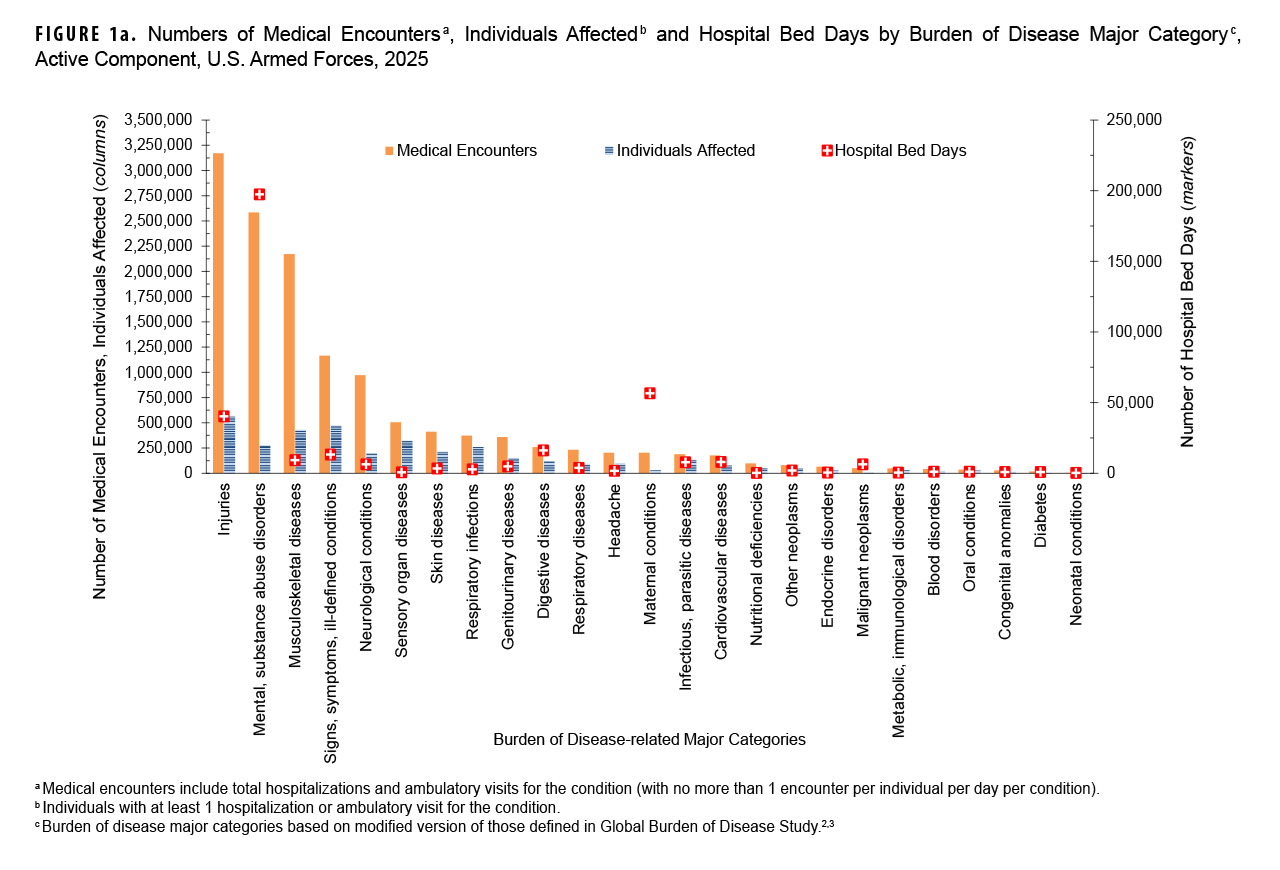 In 2025, U.S. ACSMs (n=561,410) experienced medical encounters due to injury more than any other morbidity-related category (Figure 1a). Ranking third in terms of hospital bed days, injuries accounted for about one-tenth (10.4%) of all hospitalizations (Figure 1b). The injury category combines ICD-10 ‘S’ (“injury”) and ‘T’ codes (“burns and poisonings”), but injuries account for about 98.1% of ambulatory encounters within the category (data not shown).
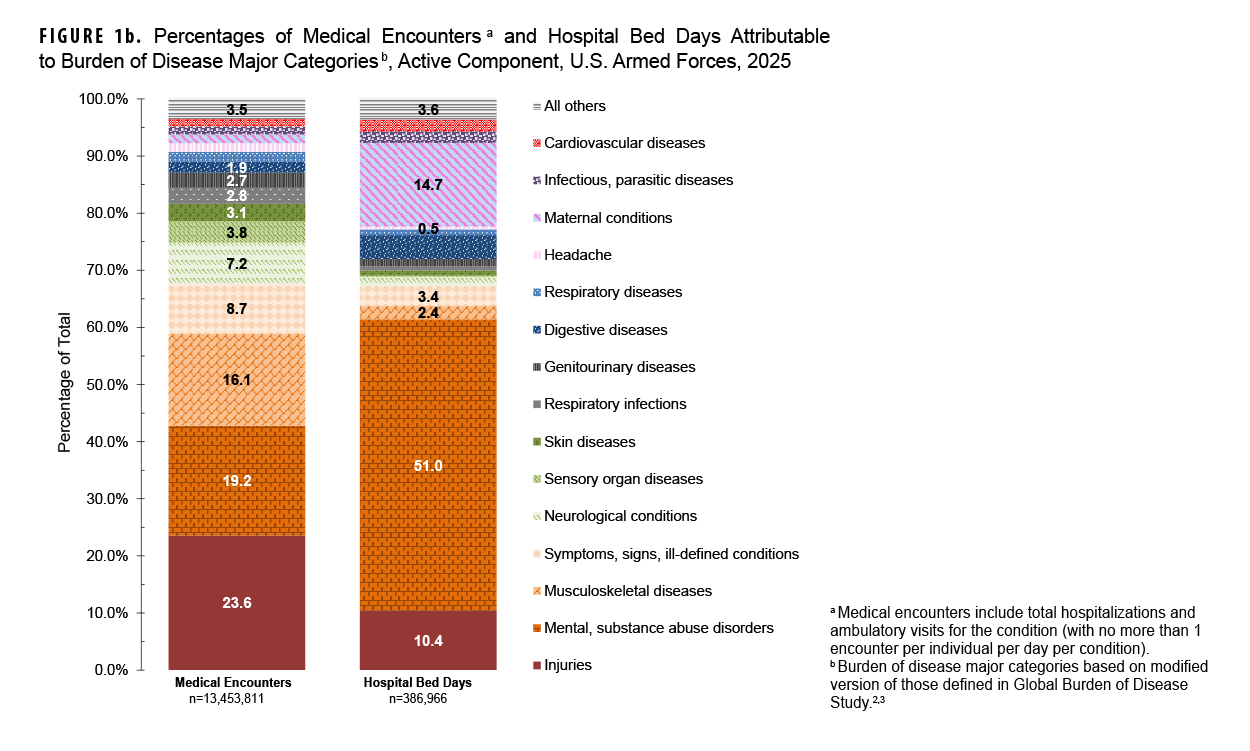
Mental health disorders accounted for more hospital bed days (n=197,442) than any other morbidity-related category, contributing over half (51.0%) of all hospital bed days, ranking fifth for individuals affected (Figures 1a, 1b). Together, the injury and mental health disorder categories accounted for over two-thirds (61.4%) of all hospital bed days and 42.8% of all medical encounters in 2025.
Maternal conditions (pregnancy complications, delivery) accounted for a relatively large proportion of all hospital bed days (n=56,746, 14.7%) but a much smaller proportion of medical encounters overall (n=203,023, 1.5%) (Figures 1a, 1b). As women comprised only 19.9% of the active component in 2025, these aggregated statistics understate the impact of maternal health within the force.
Medical encounters, by condition
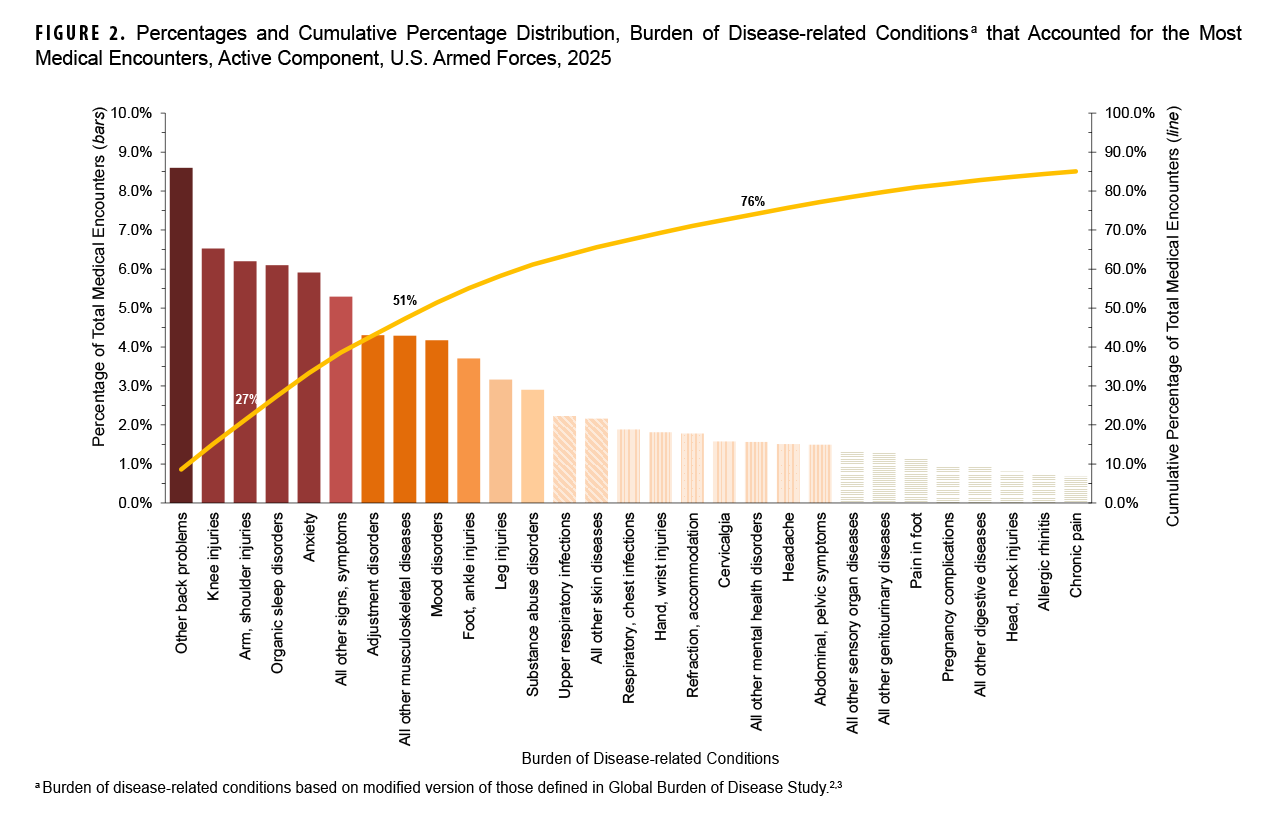 In 2025, almost one-third (33.3%) of all illness- and injury-related medical encounters resulted from 5 medical conditions: other back problems (lower back pain, other dorsalgia), knee injuries, arm and shoulder injuries, organic sleep disorders (insomnia, obstructive sleep apnea), and anxiety (Figure 2). Moreover, the 10 conditions associated with the most medical encounters constituted more than half (55.1%) of all illness- and injury-related medical encounters.
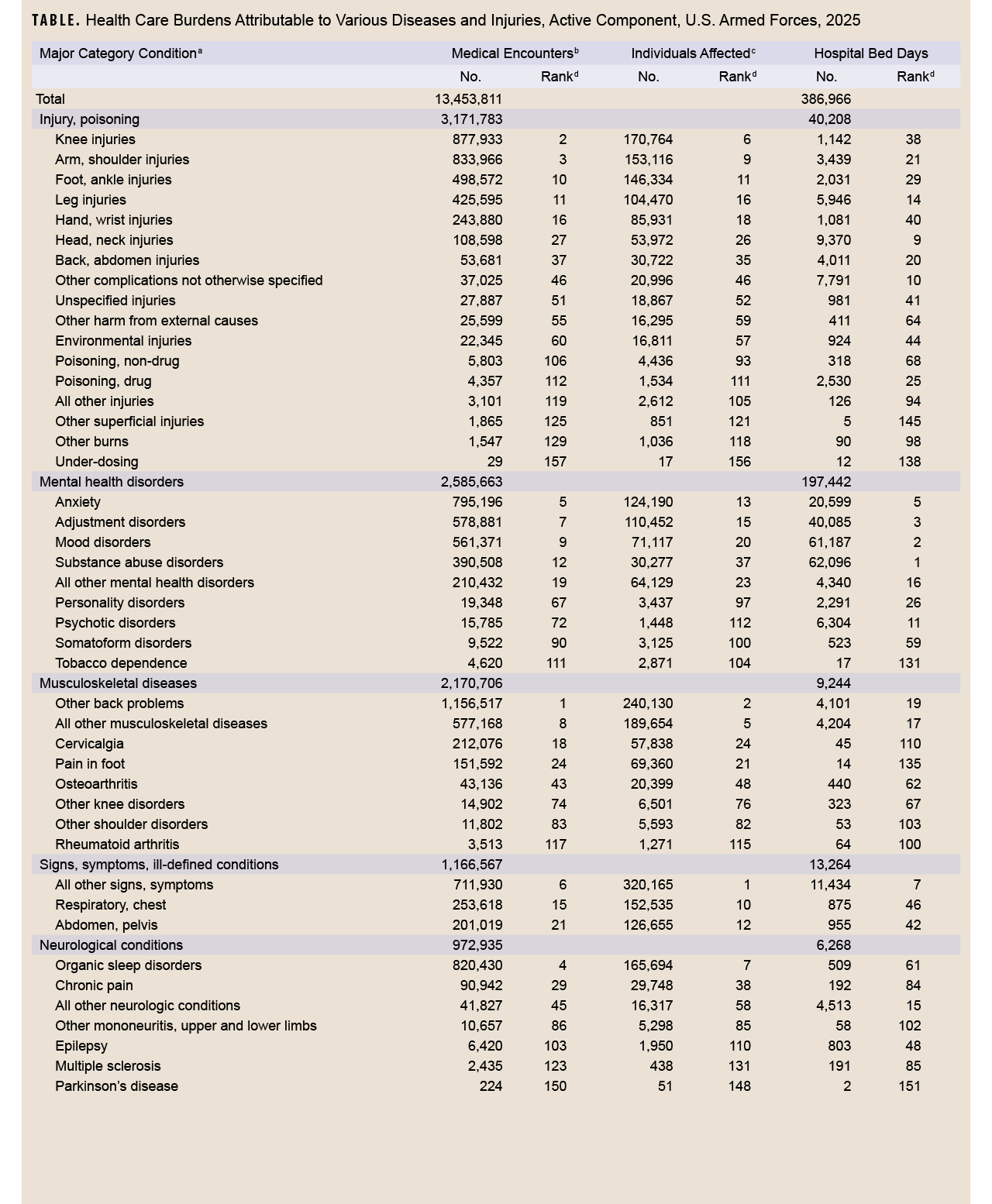
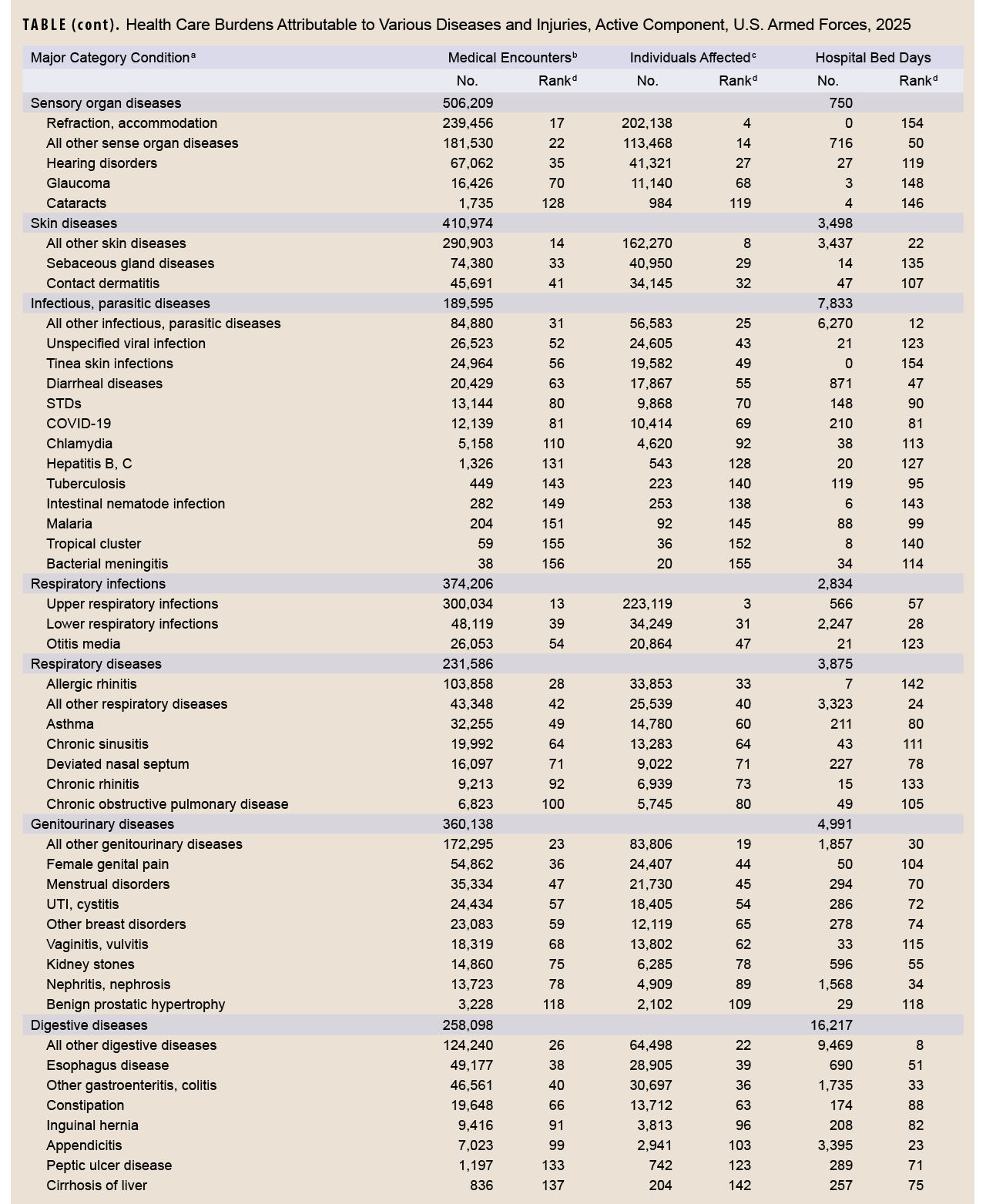
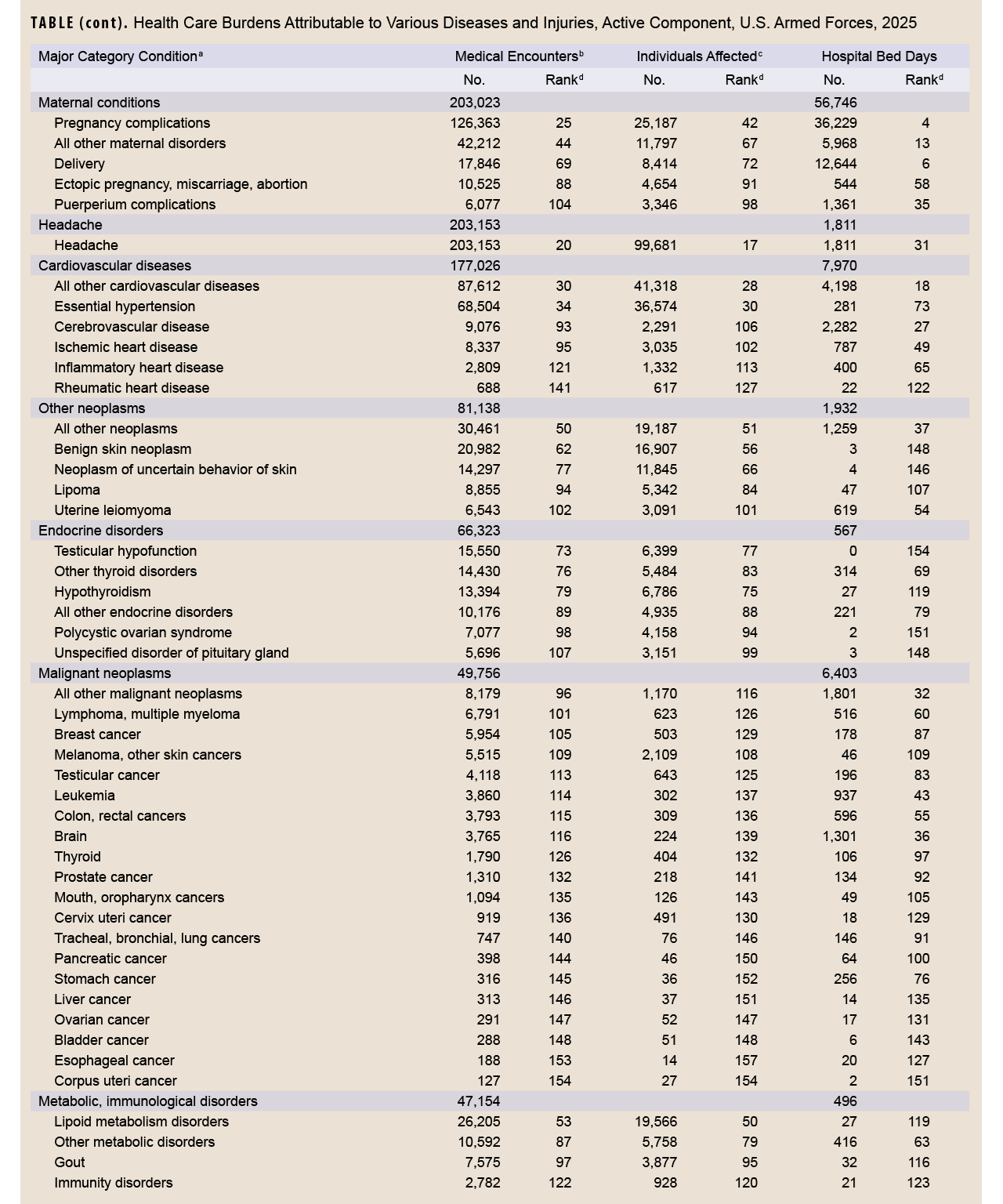
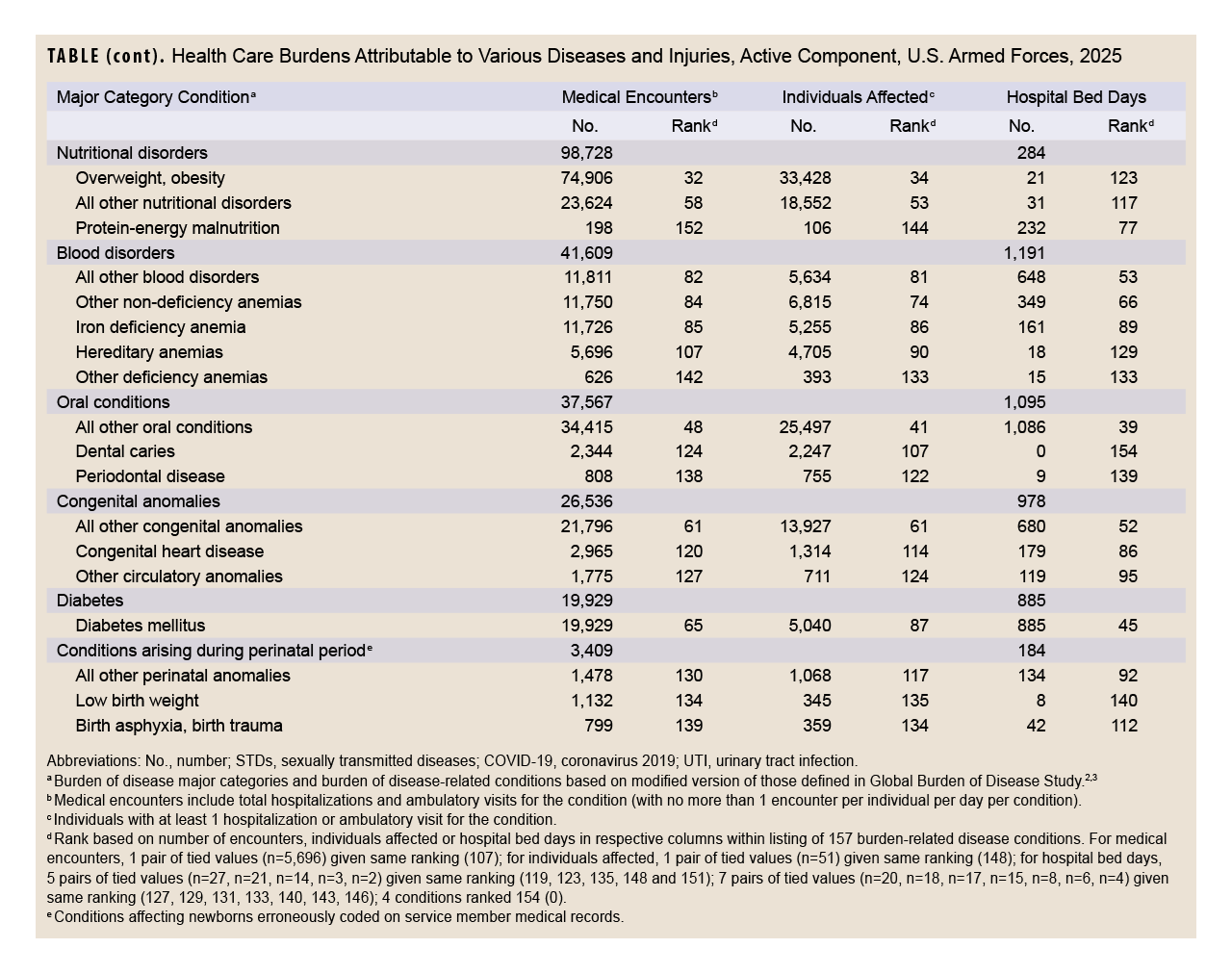
The categories of major medical conditions that accounted for the most health care encounters by ACSMs in 2025 were predominantly injuries, mental health disorders, and musculoskeletal diseases. The most frequent injury-related medical encounters involved the knee (6.5%), arm or shoulder (6.2%), foot or ankle (3.7%), and leg (3.2%) (Table). Mental health-related disorder diagnoses resulted most frequently from anxiety (5.9%), adjustment (4.3%), mood (4.2%), and substance abuse disorders (2.9%). Other back problems (8.6%), all other musculoskeletal diseases (4.3%), and cervicalgia (1.6%) generated the most medical encounters caused by musculoskeletal diseases. COVID-19 accounted for just 0.1% of total medical encounters by ACSMs in 2025, ranking eighty-first.
Individuals affected, by category
In 2025, the 10 categories of conditions that affected the most service members were injuries (knee, arm/shoulder); symptoms, signs, and other ill-defined conditions (all other symptoms, signs); musculoskeletal diseases (other back problems, all other musculoskeletal diseases); respiratory infections (upper respiratory infections); sensory organ diseases (refraction, accommodation); neurological conditions (organic sleep disorders); skin diseases (all other skin diseases); and respiratory diseases. COVID-19 affected 10,414 service members and ranked sixty-ninth for members affected, a considerable decrease in rank from forty-seventh in 2024.
Hospital bed days, by condition
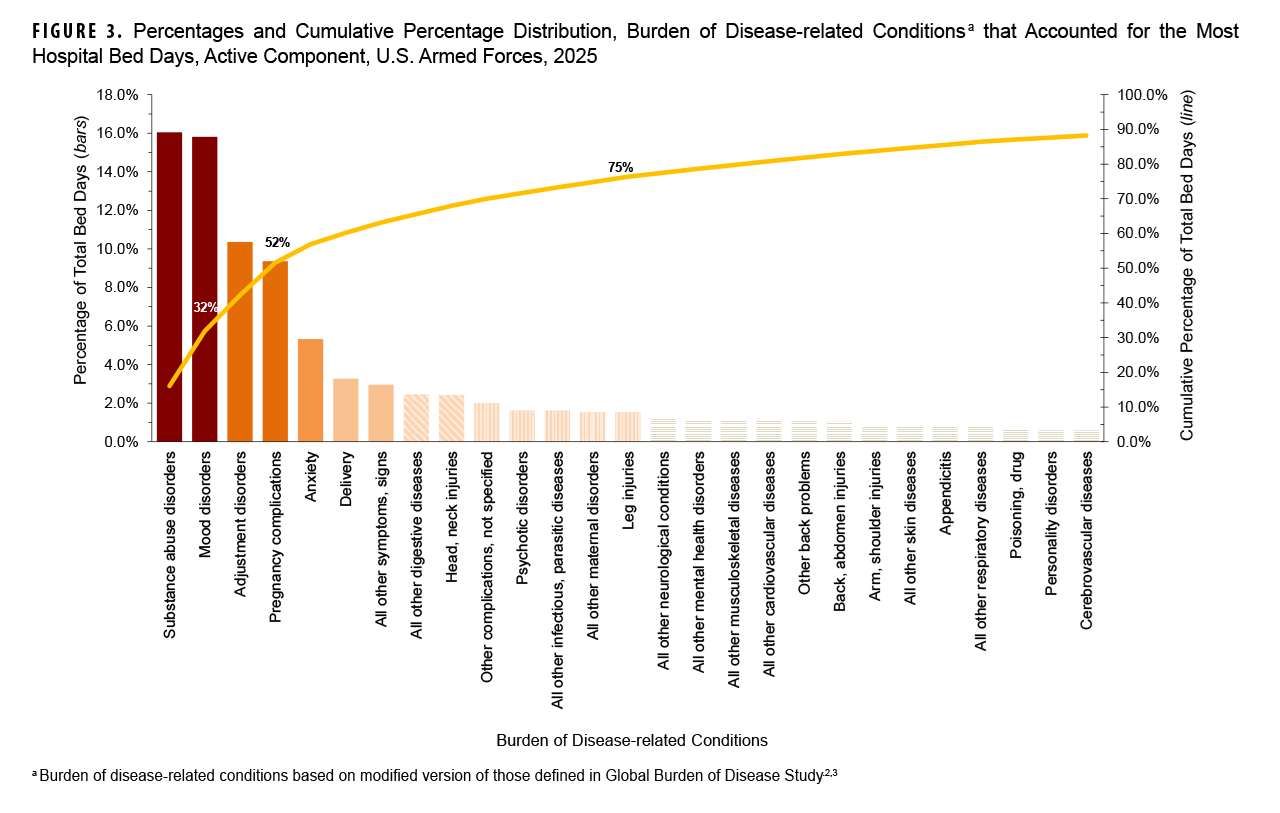 Substance abuse and mood disorders accounted for nearly one-third (31.9%) of all hospital bed days in 2025 (Figure 3). Four mental health disorders (substance abuse, mood, adjustment, anxiety) and 2 maternal conditions (pregnancy complications, delivery) accounted for almost two-thirds (60.2%) of all hospital bed days in 2025 (Table, Figure 3). About 10.4% of all hospital bed days in 2025 were attributable to injury or poisoning. COVID-19 accounted for only 0.05% of total hospital bed days for ACSMs in 2025 (Table).
Relationships between indicators of health care
There was a strong positive correlation between numbers of medical encounters attributable to various conditions with numbers of individuals affected by those conditions (r=0.85) (data not shown). The 3 leading causes of medical encounters were among the 5 conditions that most affected individuals (Table), while weak-to-moderate positive relationships were detected between numbers of hospital bed days attributable to conditions with numbers of individuals affected by those conditions (r=0.21), or numbers of medical encounters related to a medical condition (r=0.41). For example, substance abuse disorders and labor and delivery ranked high in terms of total bed days, but these conditions had relatively small impacts on ACSMs in 2025.
Discussion
Diagnostic category conditions for injuries, mental health disorders, and musculoskeletal diseases continue to represent a collective majority of morbidity burden among ACSMs. In 2025, injuries alone surpassed 3.1 million medical encounters, representing the largest single proportion of the ambulatory care burden; this high frequency of health care provision underscores the persistent challenge of physical trauma to force health protection and readiness.
Analysis of diagnostic distributions reveals a stark divergence between ambulatory medical encounters and inpatient care requirements. While injuries command the largest share of outpatient encounters, mental health disorders impose a disproportionately higher gross burden on both inpatient resources and the force population. In 2025, mental health conditions affected nearly 275,000 ACSMs and resulted in 197,442 hospital bed days. Despite ranking second in total encounters, at approximately 2.6 million, the inpatient burden of mental health care was more than 4 times that of injuries. This disparity indicates that mental health conditions—mood disorders, adjustment disorders, and substance abuse—represent a highly intensive, long-term resource requirement for a substantial portion of the military population. Intensive inpatient provision of care contrasts with the broader, enduring operational impact of physical trauma. As a previous study reported,9 injuries are historically the single leading cause of death, disability, and loss of person-time among U.S. military service members. This sustained ambulatory burden is largely driven by exposure to intense physical demands during training and within operational environments, which continually increases risk of musculoskeletal injury and significant morbidity among military personnel.10
Musculoskeletal diseases also maintain a highly disproportionate impact on overall operational readiness. Ranking third in terms of total medical encounters (approximately 2.2 million encounters), musculoskeletal diseases conditions—such as back problems, knee injuries, and arm/shoulder issues—constitute a major relative share of the daily health strain on the force. While these conditions do not represent a dominant share of hospital bed days, the high volume in ambulatory settings highlights the need for continuous, rehabilitative care to ensure force readiness.
A comparison of proportional health care burdens reveals that medical resource usage remained stable between 2024 and 2025, with only a few notable shifts. In ambulatory care, the most prominent change was a proportional decrease in musculoskeletal disease encounters—falling from 17.1% in the 2024 report6 to 16.1% in 2025—concurrent with a slight increase in mental health disorder encounters (rising from 18.7% to 19.2%). Injury-related hospital bed days demonstrated the largest relative decline, dropping from 11.3% in 2024 to 10.4% in 2025. Conversely, the inpatient burden for infectious and parasitic diseases increased from 1.6% to 2.0%, and maternal conditions rose slightly, from 14.4% to 14.7%.
This analysis, like those of prior years, documents that relatively few illnesses and injury conditions account for most of the morbidity and health care burdens that affect U.S. military members. Illnesses and injuries that disproportionately contribute to morbidity and health care burdens should be high-priority targets for preventive action, research, and resources.
References
- Armed Forces Health Surveillance Division. Relative burdens of selected illnesses and injuries, US Armed Forces, 2000. MSMR. 2021;7(4):20-27. Accessed May 13, 2026. https://health.mil/reference-center/reports/2001/01/01/medical-surveillance-monthly-report-volume-7-number-4
- Murray CJ, Lopez AD, eds. Summary–The Global Burden of Disease: A Comprehensive Assessment of Mortality and Disability from Diseases, Injuries, and Risk Factors in 1990 and Projected to 2020. Global Burden of Disease and Injury Series. World Health Organization, World Bank, Harvard School of Public Health;1996. Accessed May 13, 2026. https://iris.who.int/server/api/core/bitstreams/c5373052-8bac-47bf-a599-45c14cbf4745/content
- World Health Organization. The Global Burden of Disease: 2004 Update. World Health Organization;2008. Accessed May 13, 2026. https://www.who.int/publications/i/item/9789241563710
- Hay S, Ong K, Santomauro D, et al. Burden of 375 diseases and injuries, risk-attributable burden of 88 risk factors, and healthy life expectancy in 204 countries and territories, including 660 sub-national locations, 1990–2023: a systematic analysis for the Global Burden of Disease Study 2023. Lancet. 2025;406:1873-1922. doi:10.1016/s0140-6736(25)01637-x
- Global Burden of Disease Collaborative Network. Global Burden of Diseases, Injuries, and Risk Factors Study (GBD) Protocol. Institute for Health Metrics and Evaluation. Updated Jun. 4, 2024. Accessed May 14, 2026. https://www.healthdata.org/research-analysis/about-gbd/protocol
- Armed Forces Health Surveillance Division. Absolute and relative morbidity burdens attributable to various illnesses and injuries among active component members of the U.S. Armed Forces, 2024. MSMR. 2025;32(9):4-12. Accessed May 13, 2026. https://health.mil/reference-center/reports/2025/09/01/msmr-vol-32-no-9-sep-2025
- Armed Forces Health Surveillance Division. Ambulatory health care visits among active component members of the U.S. Armed Forces, 2024. MSMR. 2025;32(9):21-27. Accessed May 13, 2026. https://health.mil/reference-center/reports/2025/09/01/msmr-vol-32-no-9-sep-2025
- Armed Forces Health Surveillance Division. Hospitalizations among active component members of the U.S. Armed Forces, 2024. MSMR. 2025;32(9):13-20. Accessed May 13, 2026. https://health.mil/reference-center/reports/2025/09/01/msmr-vol-32-no-9-sep-2025
- Jones BH, Perrotta DM, Canham-Chervak ML, Nee MA, Brundage JF. Injuries in the military: a review and commentary focused on prevention. Am J Prev Med. 2000;18(3 suppl 1):71-84. doi:10.1016/s0749-379(99)00169-5
- Lovalekar M, Hauret K, Roy T, et al. Musculoskeletal injuries in military personnel: descriptive epidemiology, risk factor identification, and prevention. J Sci Med Sport. 2021;24(10):963-969. doi:10.1016/j.jsams.2021.03.016