What are the new findings?
In 2025, injuries, mental health disorders, and musculoskeletal system diseases were the categories of medical conditions associated with the most medical encounters, greatest numbers of members affected, and largest numbers of hospital days among active duty U.S. Coast Guard members. The morbidity burdens of Coast Guard members in 2025 are similar to those reported for Department of War active component service members. Mental health diagnoses, particularly mood and substance abuse disorders, in 2025 disproportionately accounted for more than half of all hospital bed days of Coast Guard members.
What is the impact on readiness and force health protection?
The concentrated morbidity burden for mental health disorders, injuries, and musculoskeletal conditions may degrade the operational readiness of the Coast Guard by removing its members from duty for extended inpatient treatment and prolonged recovery periods. This dual burden emphasizes the physical and psychological demands placed on U.S. Coast Guard personnel and indicates critical areas where preventive health measures could substantially improve mission readiness and reduce lost duty time.
Background
Operating under the authority of the U.S. Department of Homeland Security, the U.S. Coast Guard is a branch of the military tasked with maritime safety, law enforcement, and environmental protection, as well as support of naval operations.1,2 As the second smallest branch of the U.S. Armed Forces, comprising roughly 47,568 active component members, the Coast Guard is the sole military service functioning outside the direct purview of the Department of War (DOW).
While Coast Guard personnel are authorized to access Military Health System (MHS) hospitals and clinics, their bases are often not located near MHS facilities. Consequently, the Coast Guard maintains its own network of clinics in high Coast Guard-population areas, but those facilities are strictly limited to primary care.1 This structural limitation contributes to significant health care access challenges for Coast Guard beneficiaries—including active duty members, eligible reservists, retirees, and dependents. Recent assessments of Coast Guard health care provision have underscored systemic issues such as clinic staffing deficits and critical data gaps, among others.1
In recent years, missing and disparate data that precluded comprehensive Coast Guard morbidity surveillance led to its excision from MSMR annual morbidity burden analyses from 2016 through 2021.3,4 A 2021 report on Coast Guard active duty hospitalizations underscored those data issues, reporting a 40% lower observed hospitalization rate than among DOW active component service members.3 To address those gaps in the data and ensure continuous, reliable morbidity surveillance, in 2022 MSMR reinstated separate analyses for the Coast Guard. This report employs the standardized disease classifications and morbidity burden methodologies established for the greater U.S. Armed Forces to quantify the health impacts of various illnesses and injuries on the Coast Guard’s active component in 2025.
Methods
The population for this analysis included all individuals who served in the active component of the U.S. Coast Guard at any time during the surveillance period of January 1, 2025 through November 30, 2025. The methodology used to determine the absolute and relative morbidity burdens for the Coast Guard active component in 2025 is identical to the approach described on page 5 of this issue for the greater U.S. Armed Forces.
Results
In 2025, a total of 37,477 Coast Guard service members required 475,658 total medical encounters, which included 9,695 reported hospital bed days, with a rate of 0.26 hospital bed days per Coast Guard member who received either outpatient or inpatient medical care in 2025.
Morbidity burden, by category
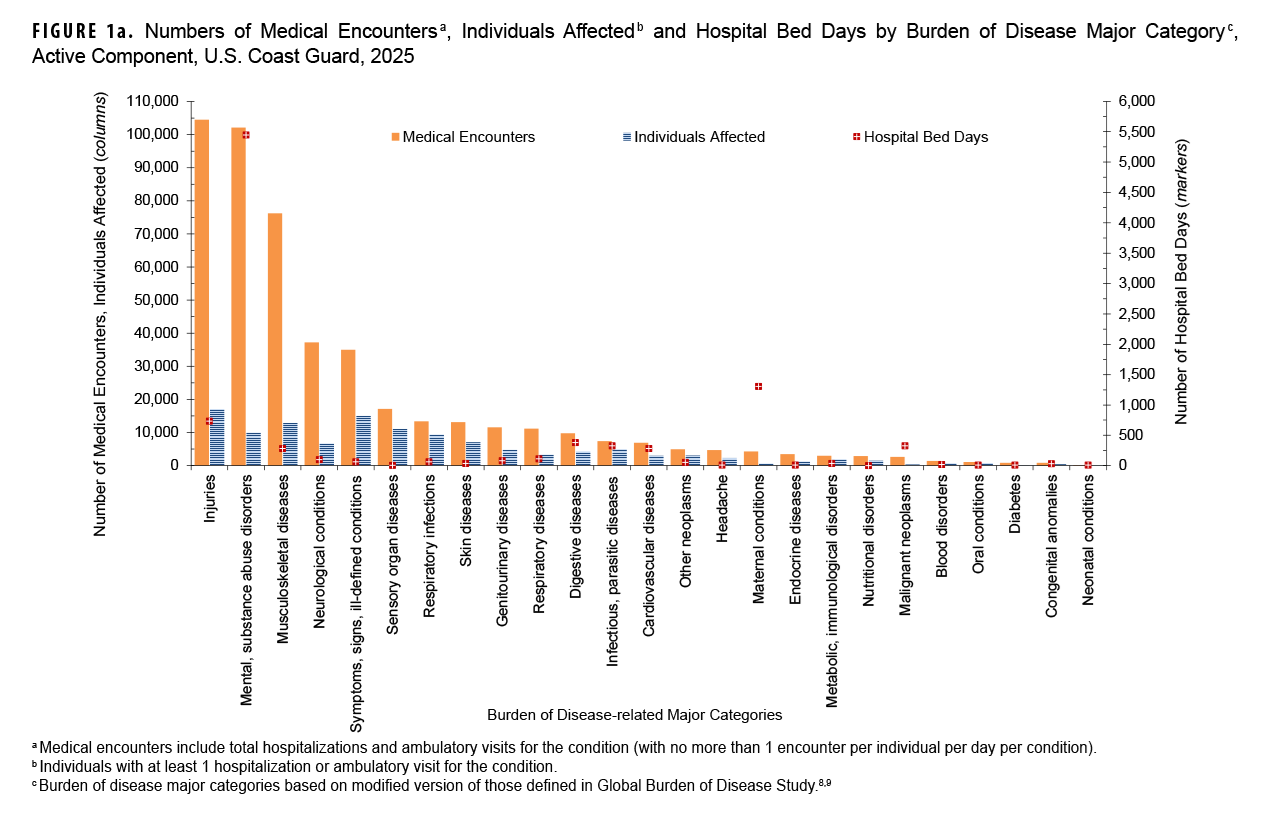 In 2025, injury represented the leading cause of all medical encounters for the Coast Guard active component, affecting 17,034 service members (Figure 1a). In addition to driving 22.0% of all medical encounters, injuries ranked third overall in total hospital bed days (Figure 1b).
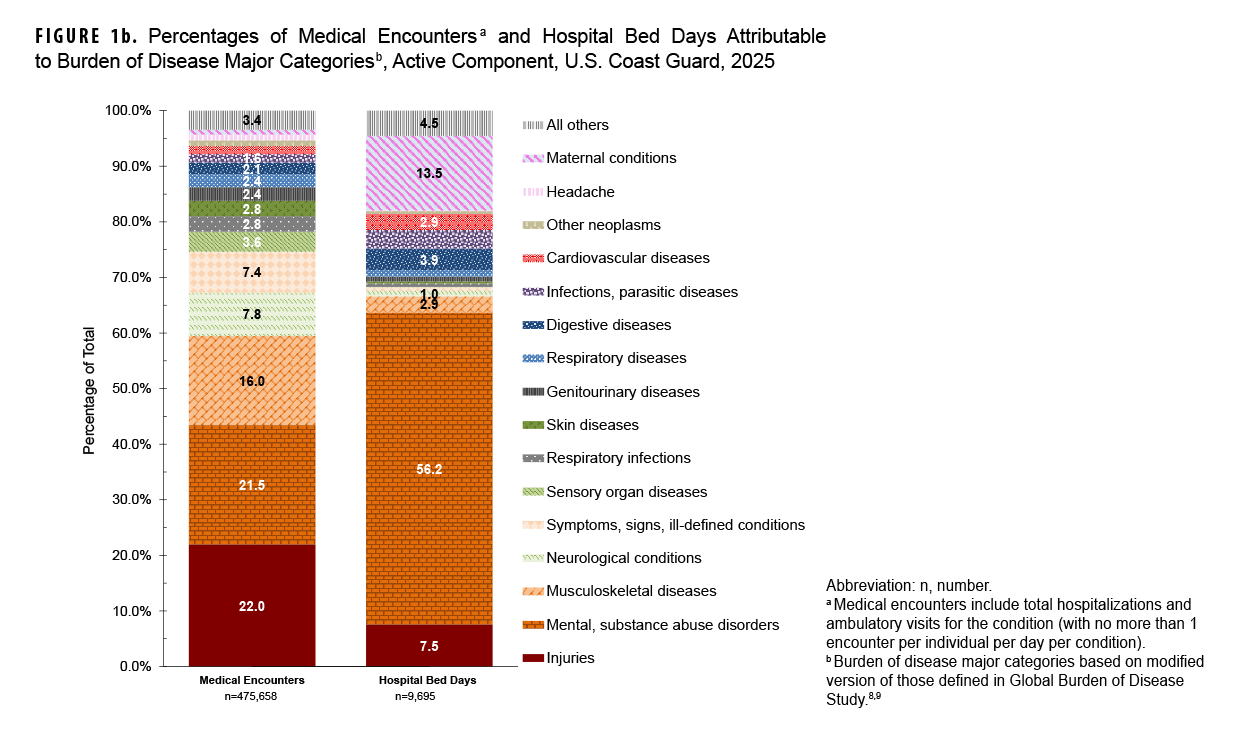
Mental health disorders accounted for more hospital bed days (n=5,444) than any other morbidity-related category, constituting over half (56.2%) of all hospital bed days and ranked fifth in terms of numbers of individuals affected (Figures 1a, 1b). Combined, injury and mental health disorders accounted for over three-fifths (63.7%) of all hospital bed days and more than two-fifths (43.4%) of all medical encounters.
Maternal conditions (pregnancy complications, delivery, all other maternal disorders, puerperium complications, and ectopic pregnancy, miscarriage, abortion), accounted for a relatively large proportion of all hospital bed days (n=1,304, 13.5%) but a much smaller proportion of total medical encounters (n=4,281, 0.9%) (Figures 1a, 1b). Maternal conditions were the most prevalent medical condition among female active component Coast Guard members. Women comprised approximately one-sixth (16.4%) of the active duty Coast Guard in 2025.
Medical encounters, by condition
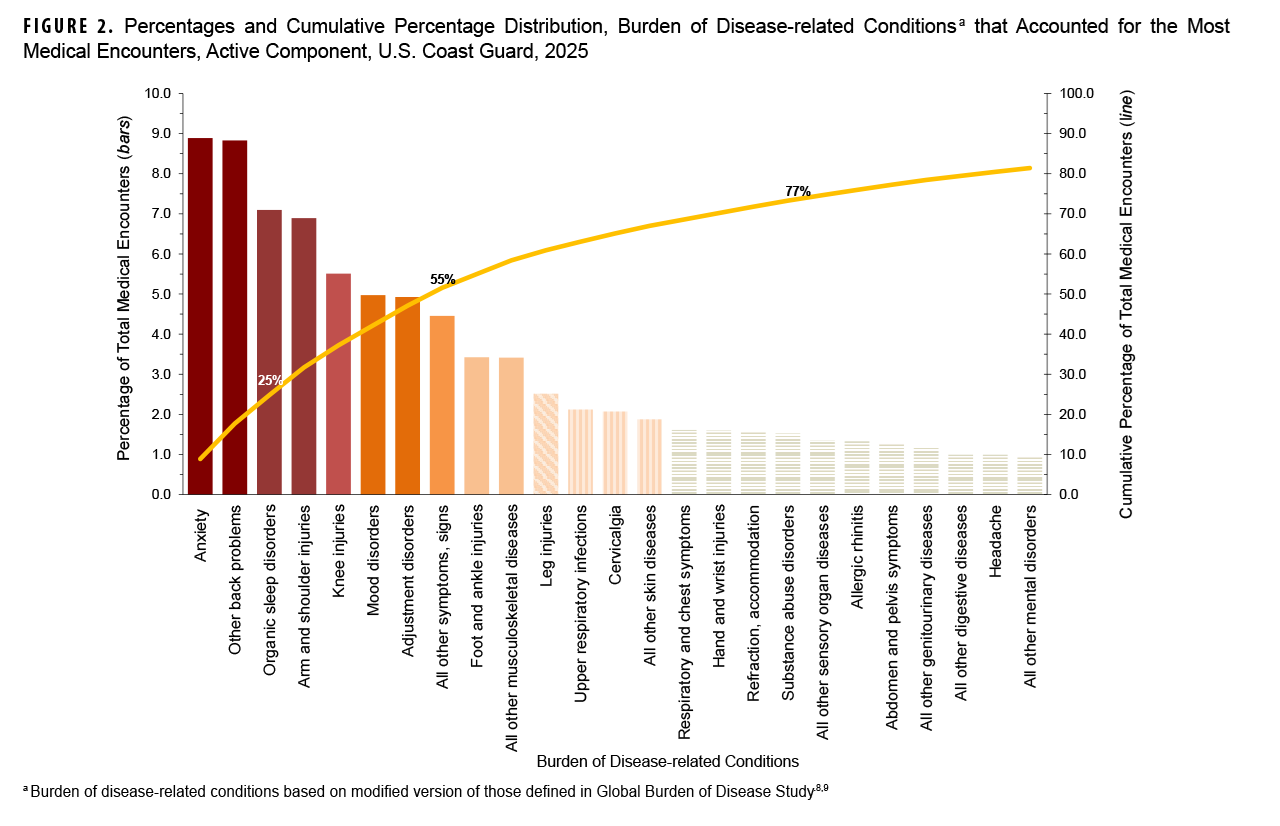 In 2025, 5 disease-related conditions accounted for more than one-third (37.2%) of all illness- and injury-related medical encounters among active component Coast Guard members: anxiety disorders, other back problems (including lower back pain, other dorsalgia), organic sleep disorders (e.g., obstructive sleep apnea, insomnia), arm and shoulder injuries, and knee injuries (Figure 2). Moreover, the 10 conditions associated with the most medical encounters constituted more than half (58.4%) of all illness- and injury-related medical encounters.
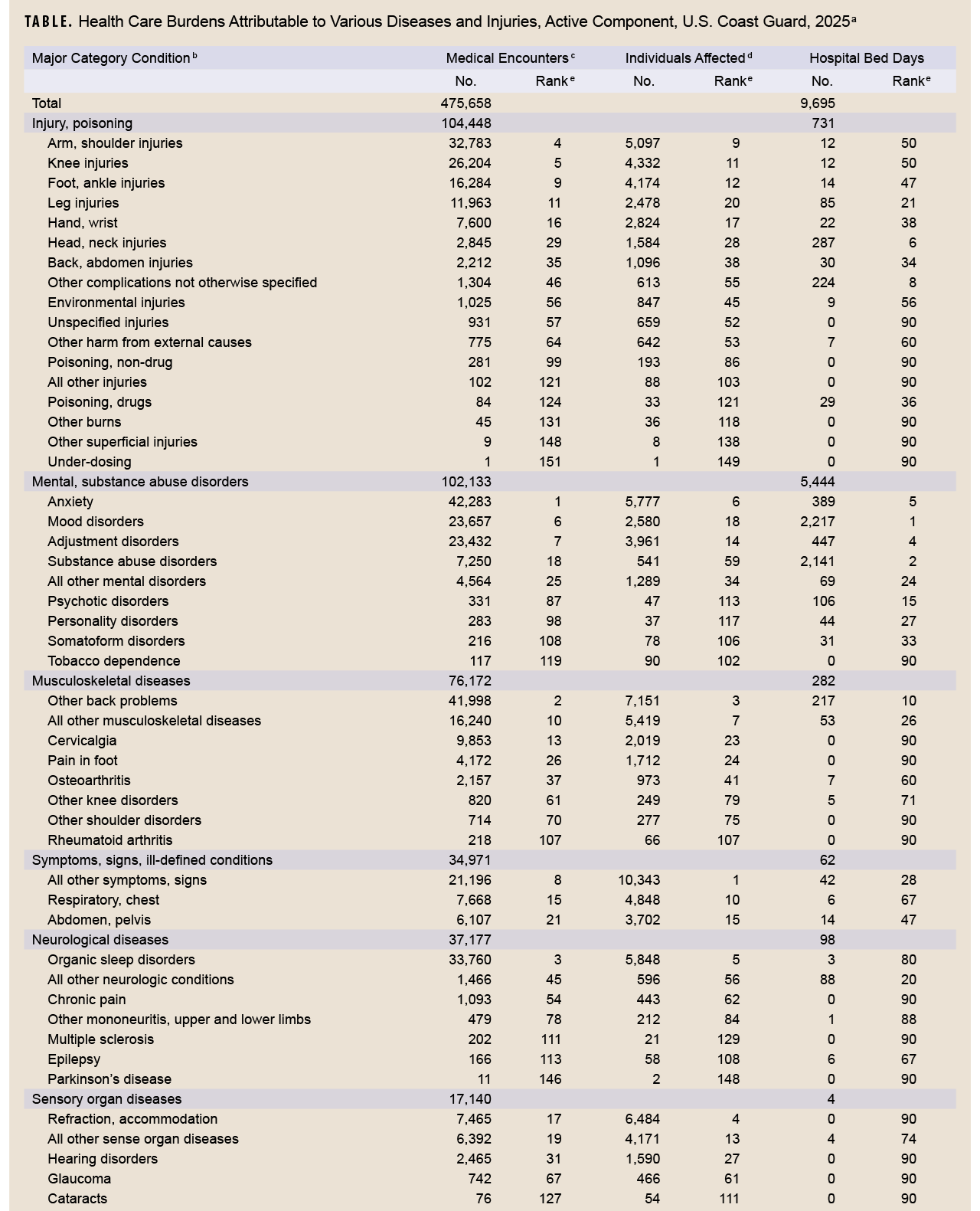
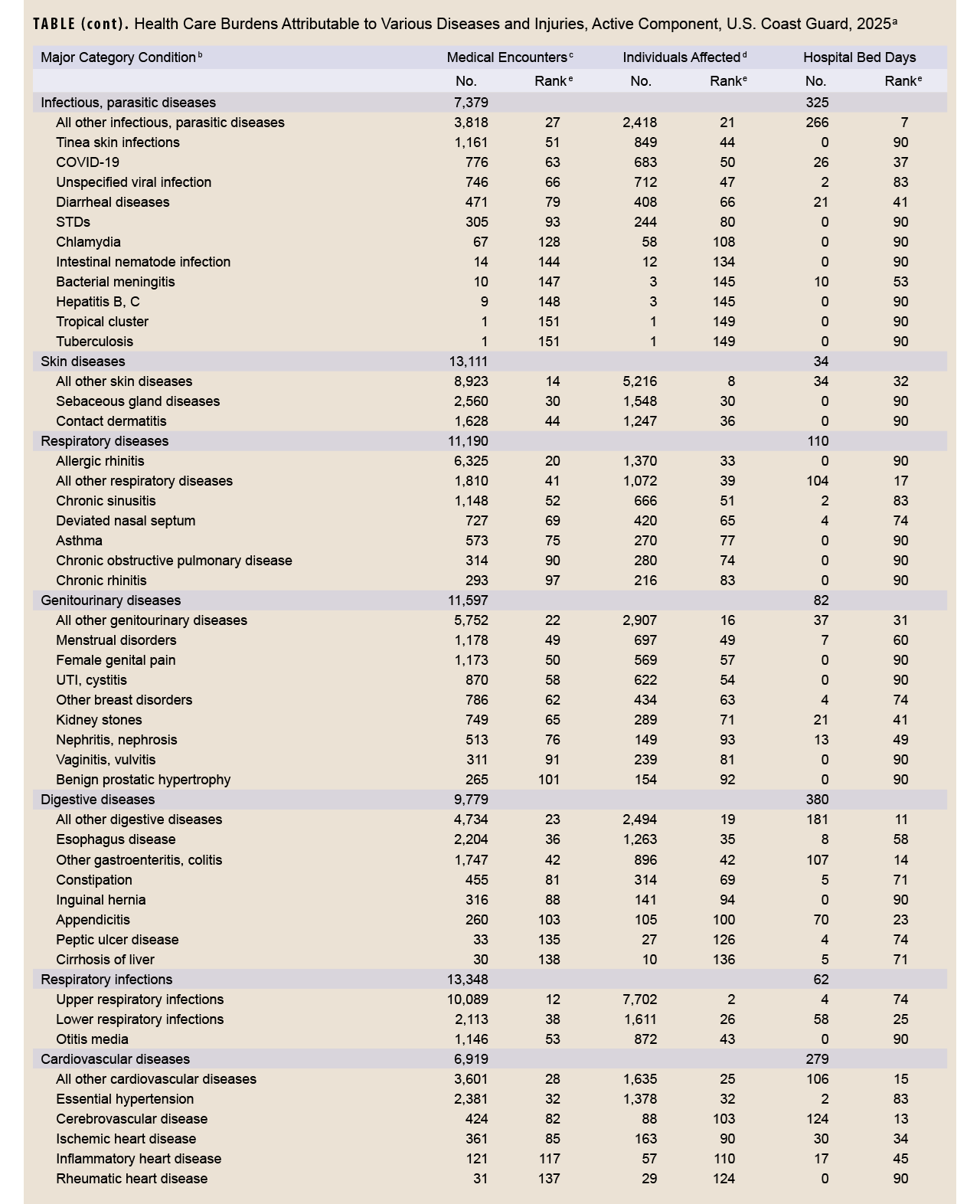
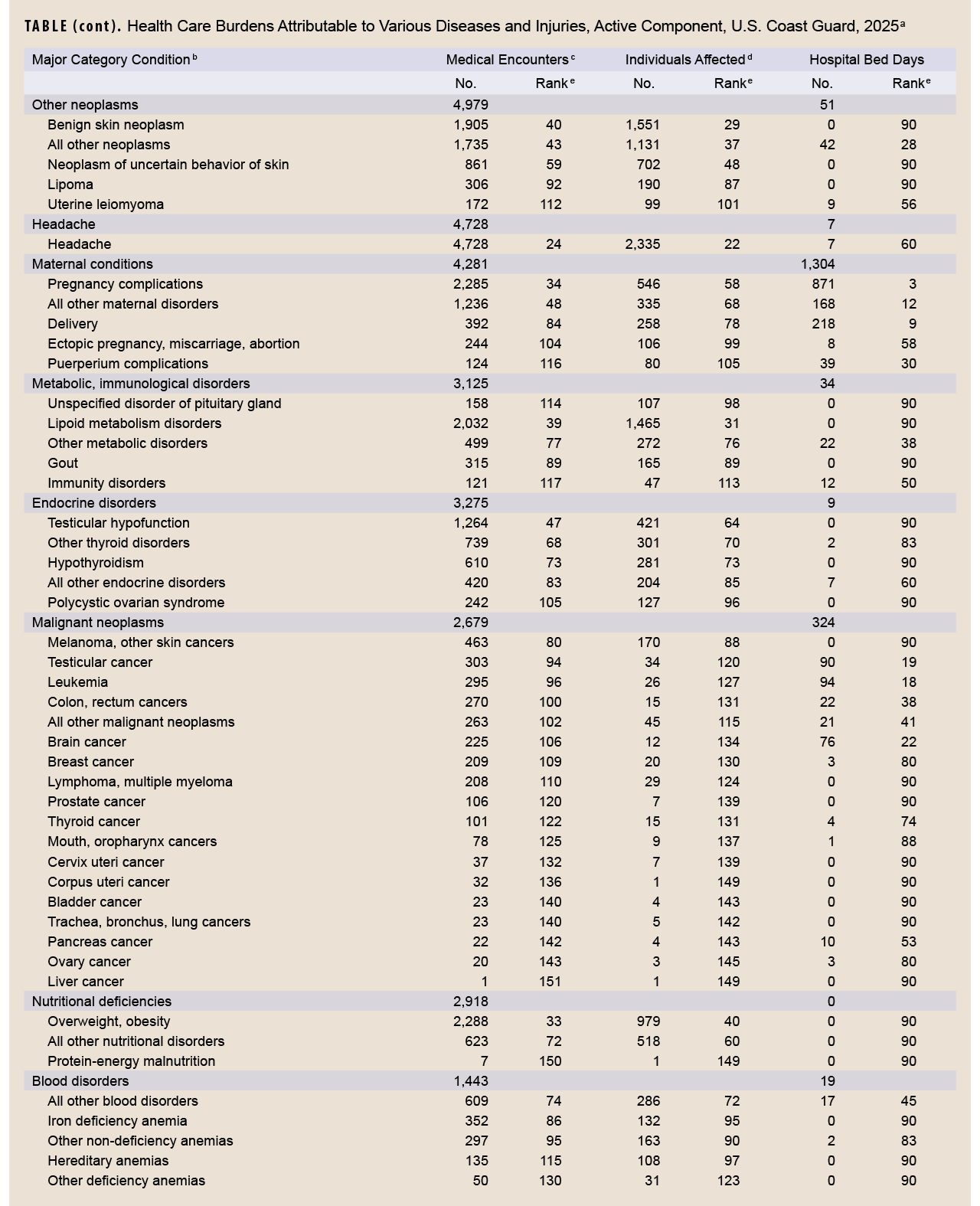
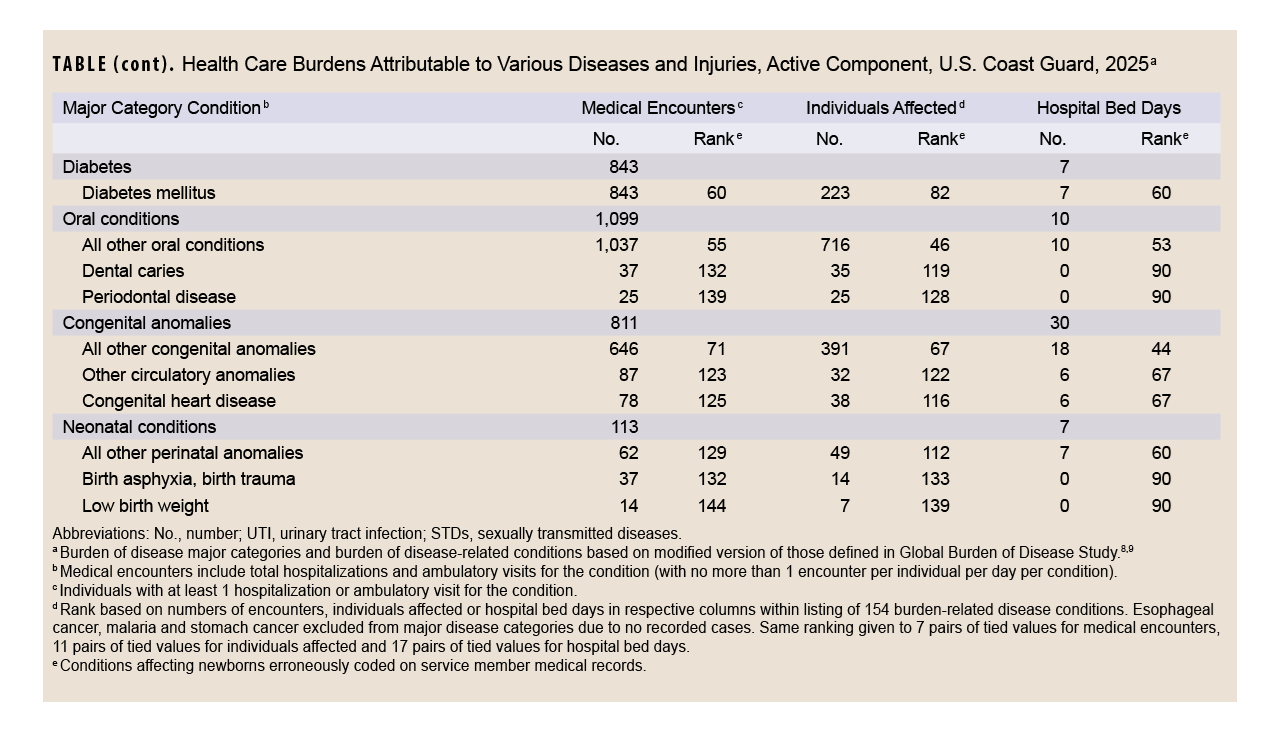
The major category conditions in 2025 that predominantly accounted for medical encounters among active component Coast Guard members included injuries, mental health disorders, and musculoskeletal conditions. Among reported injuries, arm and shoulder (6.9%), knee (5.5%), foot and ankle (3.4%), and leg (2.5%) injuries accounted for the most medical encounters (Figure 2, Table). The 4 most frequent mental health diagnoses were for anxiety (8.9%), mood (5.0%), adjustment (4.9%), and substance abuse (1.5%) disorders. Other back problems (8.8%), all other musculoskeletal diseases (3.4%), and cervicalgia (2.1%) constituted the most medical encounters among musculoskeletal disorders. COVID-19 accounted for 0.2% of total medical encounters in 2025.
Individuals affected, by condition
The 10 categories of conditions that affected the most Coast Guard members in 2025 were all other signs and symptoms, upper respiratory infections, other back problems, refraction and accommodation, organic sleep disorders, anxiety, all other musculoskeletal diseases, all other skin diseases, arm and shoulder conditions, and respiratory and chest issues. COVID-19 affected 683 Coast Guard members, ranking fiftieth for number of individuals affected, a modest decline from thirty-sixth in 2024.
Hospital bed days, by condition
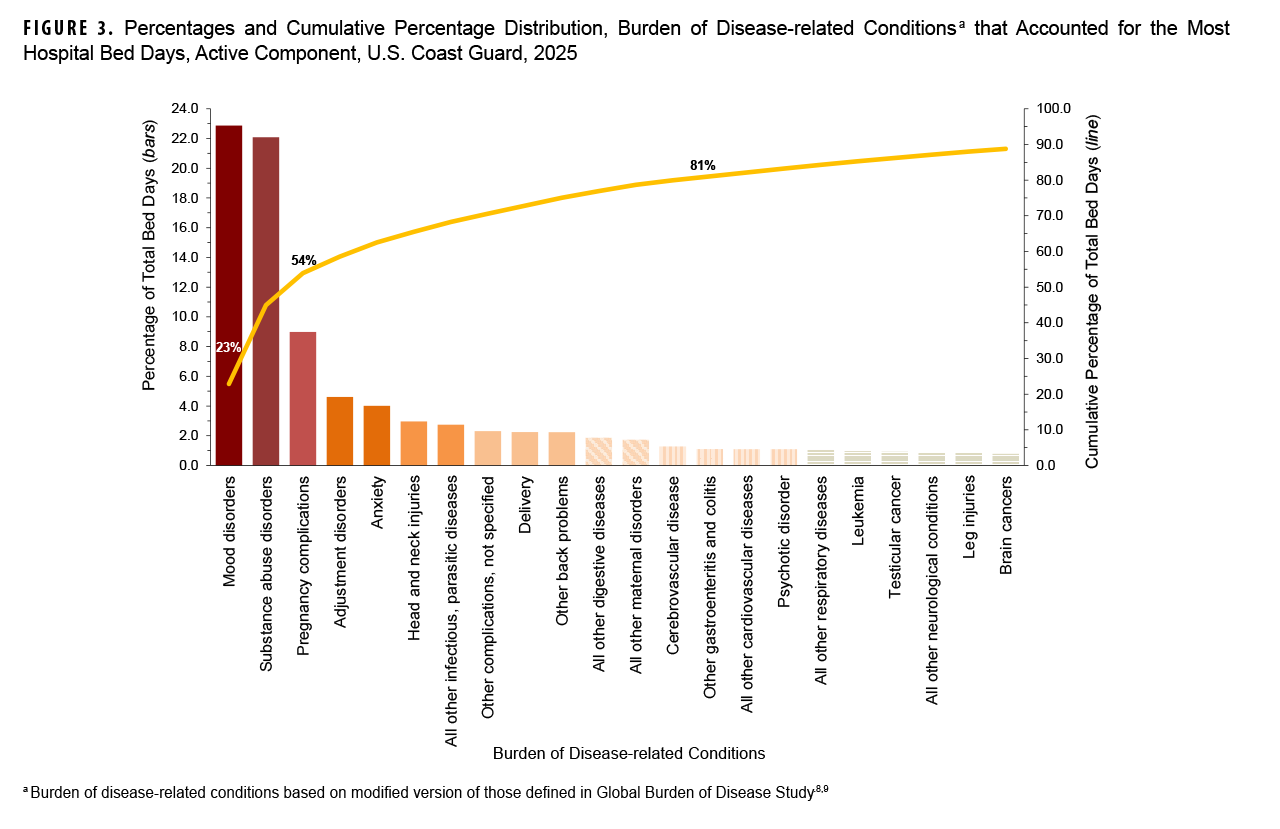 In 2025, substance abuse and mood disorders accounted for about two-fifths (45.0%) of all hospital bed days (Figure 3) among Coast Guard members. Four mental health disorders (mood, substance abuse, adjustment, anxiety) and 2 maternal conditions (pregnancy complications, delivery) combined accounted for more than three-fifths (64.8%) of all hospital bed days (Table, Figure 3). About 7.5% of all hospital bed days were attributable to injuries, declining from 12.8% in 2024.5 In 2025, 0.3% hospitalizations of active component Coast Guard members were due to COVID-19 (Table).
Discussion
In 2025, mental health disorders and injuries presented a major burden to force readiness and health care provision among the active component U.S. Coast Guard; together, those 2 categories accounted for nearly two-thirds (63.7%) of all hospital bed days and more than 43% of all medical encounters. This finding highlights the physical and psychological demands on Coast Guard personnel and reveals critical opportunities for targeted preventive health measures to improve mission readiness.
Musculoskeletal conditions, together with injuries, represented primary causes of ambulatory health care for Coast Guard personnel. The high prevalence of conditions affecting the back, arms, shoulders, and knees likely reflects the physically taxing nature of Coast Guard operations. Notably, more Coast Guard members were affected by other back conditions (n=7,151) than by the top-ranked injury categories of arm and shoulder (n=5,097) and knee injuries (n=4,332), underscoring the widespread impact of musculoskeletal strain.
While mental health disorders ranked fifth in the total number of individuals affected, they constituted the most severe inpatient medical burden for the Coast Guard. Specifically, conditions such as mood, substance abuse, adjustment, and anxiety disorders were responsible for over 56% of all hospital bed days. Such a disproportionate ratio suggests that when Coast Guard members require inpatient care for mental health, the acuity of those conditions necessitates extended, resource-intensive treatment. These clinical findings also align with self-reported data from the 2018 Health Related Behaviors Survey of the Coast Guard, which highlighted significant behavioral and psychological challenges for Coast Guard members: 33.9% had engaged in binge drinking in the past 30 days; 10.6% met the criteria for serious psychological distress in the past year; 4.3% needed mental health services in the past year but did not receive them; 21.9% were moderately or severely bothered by sleep-related lack of energy; 35.4% reported current tobacco or nicotine use; and 4.7% had thought about attempting suicide in the past year.6
This report’s findings are consistent with prior morbidity reports for active component U.S. service members, with the leading categories of medical conditions involving injury, mental health disorders, and musculoskeletal conditions.7 Furthermore, both Coast Guard and DOW service members shared diagnoses for many specific and prevalent conditions, including back problems, arm, shoulder and knee injuries, anxiety disorders, and organic sleep disorders. In comparison with 2025 health care encounter data for DOW active component personnel, the Coast Guard experienced a similar rate of medical encounters per person but a lower rate of hospitalization. In 2025 the Coast Guard recorded 12.7 encounters and 0.26 hospital bed days per service member, whereas the DOW reported 11.7 encounters and 0.34 bed days per service member.
In conclusion, the health of the active duty Coast Guard in 2025 was defined by the significant and sustained impact of mental health disorders, injuries, and musculoskeletal conditions. While injuries and musculoskeletal conditions drove a high volume of outpatient care, mental health disorders were the primary contributor to inpatient hospital stays, indicating a need for robust and accessible mental health services. The similarities in morbidity trends with the greater DOW underscore the shared health challenges facing the U.S. military. Future efforts to maintain force readiness should focus on targeted injury prevention programs, proactive mental health support, and ergonomic interventions to mitigate the physical and psychological stressors inherent to military service.
References
- Cohen C, Chan EW, Tong PK, et al. Health Services for Coast Guard Beneficiaries: Improving Access to Care for Active Duty Service Members, Reservists, Dependents and Retirees. RAND Homeland Security Research Division, Homeland Security Operational Analysis Center;2025. Accessed Aug. 15, 2025. https://www.rand.org/pubs/research_reports/RRA3018-1.html
- United States Coast Guard. U.S. Dept. of Homeland Security. Accessed Aug. 15, 2025. https://www.uscg.mil
- Pillai S, Chau M, Kamara I, Thomas D, Iskander J. Hospitalizations among active duty members of the U.S. Coast Guard, fiscal year 2021. MSMR. 2023;30(2):3-5. Accessed May 15, 2026. https://www.health.mil/reference-center/reports/2023/02/01/msmr-vol-30-no-2-508
- Armed Forces Health Surveillance Branch. Hospitalizations among members of the active component, U.S. Armed Forces, 2015. MSMR. 2016;23(4):8-16. Accessed Aug. 15, 2025. https://www.health.mil/reference-center/reports/2016/01/01/medical-surveillance-monthly-report-volume-23-number-4
- Armed Forces Health Surveillance Division. Absolute and relative morbidity burdens attributable to various illnesses and injuries among active component members of the U.S. Coast Guard, 2024. MSMR. 2025;32(9):37-44. Accessed Jun. 17, 2026. https://health.mil/reference-center/reports/2025/09/01/msmr-vol-32-no-9-sep-2025
- Pulkkinen AJ. Let’s talk about your behavioral health. My Coast Guard. U.S. Coast Guard. 2024. Accessed Aug. 15, 2025. https://www.mycg.uscg.mil/News/Article/3671040/lets-talk-about-your-behavioral-health
- Armed Forces Health Surveillance Division. Absolute and relative morbidity burdens attributable to various illnesses and injuries among active component members of the U.S. Armed Forces, 2024. MSMR. 2025;32(9):4-12. Accessed Jun. 17, 2026. https://health.mil/reference-center/reports/2025/09/01/msmr-vol-32-no-9-sep-2025
- World Health Organization. The Global Burden of Disease: 2004 Update. World Health Organization;2008. Accessed Aug. 14, 2025. https://www.who.int/publications/i/item/9789241563710
- Murray CJL, Lopez AD, eds. The Global Burden of Disease: A Comprehensive Assessment of Mortality and Disability from Diseases, Injuries, and Risk Factors in 1990 and Projected to 2020. Harvard University Press;1996:120-122.