Abstract
The Military Health System (MHS) GENESIS transition aimed to modernize electronic health records for the MHS, which brought adoption challenges and process changes that led to temporary delays in data workflows. Understanding how the transition to MHS GENESIS affects the public health surveillance of reportable medical events (RMEs) is essential for interpreting recent findings as well as improving future Department of War (DOW) surveillance efforts. Using both the MHS Data Repository (MDR) and Disease Reporting System internet (DRSi), the 9 most frequently reported RMEs among DOW beneficiaries from January 1, 2016 through November 1, 2023 were identified. MDR medical encounters were matched to DRSi records by matching on the closest available encounter date to the date first reported to DRSi. Piecewise Cox proportional hazard models, adjusting for the MHS GENESIS transition, estimated medical personnel, and RME categories, were used to analyze timeliness of reporting to DRSi for DOW beneficiaries. The rate of reporting for RMEs occurring among the active component during the post-MHS GENESIS transition was 34% lower, at any given time, compared to the pre-MHS GENESIS transition period. Reporting of RMEs from facilities with estimated small and medium medical personnel was 10-12% higher compared to facilities with estimated large medical personnel, respectively.
What are the new findings?
The rate of active component RME reporting for post-MHS GENESIS transition, at any given time, was 34% lower compared to pre-MHS GENESIS transition from the Composite Health Care System (CHCS) and Armed Forces Health Longitudinal Technology Application (AHLTA). Small and medium Military Health System facilities, based on estimated medical personnel, had 10–12% higher rates of RME reporting, at any given time, compared to large military hospitals and clinics.
What is the impact on readiness and force health protection?
Timely RME reporting is essential for accurate monitoring of trends in disease incidence among warfighters and MHS beneficiaries; accurate health surveillance is necessary to mitigate disease and maintain readiness of the fighting force. The observed reduction in active component RME reporting rates during the post-MHS GENESIS transition period is a meaningful decrement in surveillance data that could have negatively affected force health protection efforts throughout the DOW.
Background
Rapid reporting of notifiable medical conditions that pose threats to public health is vital for swift initiation of effective public health responses. The Armed Forces Reportable Medical Events Guidelines and Case Definitions provides precise case definitions for medical conditions that present significant potential threats to public health and military operations, in addition to specific guidelines for required reporting to military public health by military hospitals and clinics.1-5 Within the U.S. Department of War (DOW), reportable medical events (RMEs) are reported directly through a centralized system, the Disease Reporting System internet (DRSi). Military public health personnel have relied on data from electronic health records (EHRs) since the 1990s to conduct routine disease surveillance. The military’s EHR infrastructure evolved from the non-integrated, inconsistent data standard Composite Health Care System (CHCS), launched in 1989, to the Armed Forces Health Longitudinal Technology Application (AHLTA) system of 2004, encumbered by performance shortcomings, that was supplemented in 2007 by the deployment of Essentris, a dedicated inpatient EHR to complement AHLTA.6-9
From 2017 through 2024, under Congressional mandate, the Military Health System (MHS) GENESIS, the latest inter-operable EHR component, went live throughout the MHS.8,10 The phased implementation of MHS GENESIS presented adoption challenges, however; in addition, it caused process changes that led to temporary workflow delays.7 In addition, the COVID-19 pandemic emerged as the first MHS hospitals and clinics began their ‘go-live’ transition. Subsequent phases of the MHS GENESIS migration—from 2020 through 2022—were concurrent with evolving public health guidelines and urgent requirements for real-time COVID-19 surveillance within the MHS.
No published reports have described how the reporting of RMEs was affected by the transition to the MHS GENESIS as the new inter-operable EHR system.10 Three reports published in MSMR investigated the reporting completeness and timeliness of RMEs in 1998-2007, 2008-2014, and 2018-2022.3-5 Hurt and Ying (2015) describe annual increases from 2008 to 2014 in reporting timeliness (i.e., time required for medical encounter reporting to DRSi) for cases reported within 1 week for active component ambulatory and inpatient care cases.4 The most recent MSMR report found fluctuations in timeliness of 2018–2022 reporting of inpatient cases and decreases in timeliness of reporting of ambulatory cases.5
According to the most recent MSMR report, between 2018 and 2022 military hospitals and clinics reported 60.0% to 74.7% of RMEs for hospitalized non-active component service member beneficiaries to DRSi within 1 week of the medical encounter, and reported 92.9–100% of their RMEs to DRSi within 1 month.5 Military hospitals and clinics reported 37.5–44.5% of RMEs associated with ambulatory care of non-active component service member beneficiaries to DRSi within 1 week, and within 1 month 85.1–89.0% of the time.5
The prior reports substantiated differences in reporting metrics over time but did not examine potential reasons for measured inconsistencies. The purpose of the current analysis is to determine 1) if the transition from the legacy EHR systems, CHCS and AHLTA, to the new MHS GENESIS system was associated with the time from medical encounter to DRSi report (i.e., reporting timeliness) and 2) whether the estimated size of the medical personnel at military hospitals and clinics was associated with reporting timeliness.
Methods
Incident RMEs were obtained from DRSi for all DOW beneficiaries from January 1, 2016 through November 1, 2023. Incident RMEs were limited to the 9 most frequently reported events, which were reportable for all DOW beneficiaries, not just active component service members (ACSMs), during the surveillance period.
The 9 most frequently reported RMEs were 1) chlamydia trachomatis, 2) gonorrhea, 3) syphilis, 4) COVID-19-associated hospitalization or death, 5) influenza-associated hospitalization, 6) campylobacteriosis, 7) norovirus, 8) salmonellosis, and 9) post-exposure prophylaxis (PEP) against rabies. These RMEs were classified into 4 categories based on similar characteristics: 1) sexually transmitted infections (STIs), 2) gastrointestinal (GI) conditions, 3) respiratory conditions, and 4) rabies prophylaxis. In October 2022, the case definition for COVID-19 was updated from any confirmed case, regardless of hospitalization or death status, to include only confirmed hospitalizations or deaths.2 This report includes only cases of COVID-19-associated hospitalization or death that occurred prior to the updated October 2022 case definition.
Incident medical encounter data were obtained from the MHS Data Repository (MDR). The MDR contains administrative records for all medical encounters of DOW beneficiaries who received care at military hospitals or clinics as well as civilian care (i.e., through TRICARE). MHS GENESIS data were sourced from the Bulk Data Extract 3.0. RMEs were identified using International Classification of Diseases, 10th Revision, Clinical Modification (ICD-10-CM) diagnostic codes and the case definitions listed in Table 1.
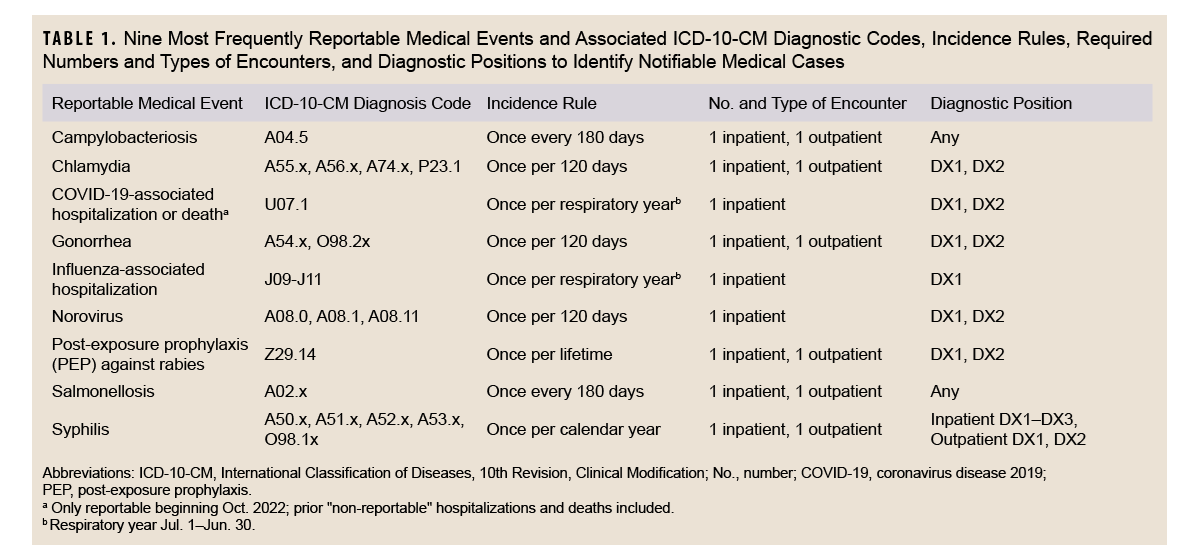
Incident RMEs from DRSi were matched to medical encounters in the MDR based on diagnostic codes corresponding to the RME, patient identifiers (e.g., social security number, DOD person identifier), and closest DRSi event date to the incident medical encounter date. The DRSi event date was derived from the date of diagnosis recorded for the RME. If a diagnosis date was missing, then a sequence of dates was prioritized: 1) date of clinic visit, 2) onset date, or 3) date first reported to DRSi. In cases where more than 1 RME matched with a single medical encounter, an additional row was added to match to the second incident RME—for example, if chlamydia and gonorrhea met the case definition on the same medical encounter, the encounter was split into 2 separate encounters on the same day to match DRSi reporting.
Cases reported from deployed and shipboard locations were excluded. Records identified solely through DRSi without a corresponding medical encounter were excluded. Potentially notifiable cases identified solely via the MDR from Purchased CareThe TRICARE Health Program is often referred to as purchased care. It is the services we “purchase” through the managed care support contracts.purchased care (i.e., care not rendered at a military hospital or clinic) were excluded due to lack of an associated MHS medical facility for estimation of medical personnel and MHS GENESIS transition phase.
The outcome of interest—timeliness of RME reporting—was estimated by calculating the number of days between the incident medical encounter and date of first report to DRSi. Weekends and federal holidays were excluded from the reporting timeliness calculation.
The primary exposure of interest was the MHS GENESIS transition phase. Transition dates, identified using the MHS GENESIS ‘go-live’ dates available in the MDR for each military hospital and clinic, divided the surveillance period into 2 phases: the period prior to implementation, or ‘pre-transition’ period, and the period following implementation, or ‘post-transition’ period. MHS hospitals and clinics that transitioned within 1 year before or after November 1, 2023 (e.g., Okinawa, Guam, Seoul, Landstuhl) were excluded due to limited post-transition data availability.
Additional variables included beneficiary type, estimated medical personnel (e.g., “manpower”), and RME category. DOW beneficiaries were categorized as either active component or ‘other DOW beneficiary’ based on beneficiary category. The ‘other DOW beneficiary’ category included service members in the reserve or Guard components, retirees, civilians, and dependents. Medical personnel were estimated using full-time equivalent (FTE) person-months from Medical Expense and Performance Reporting personnel data from fiscal year (FY) 2016 through FY 2024. The median FTE value per facility during the surveillance period was categorized into tertiles (e.g., small: 1,413-3,314 person-months; medium: 3,315-8,401 person-months; large: 8,402-90,242 person-months) to estimate medical personnel. Reporting locations without estimated medical personnel data during the surveillance period were excluded.
Analyses
Piecewise Cox proportional hazards (PH) models with non-informative prior distributions were used to address non-proportional hazards at different points in time. Time intervals were selected separately for active component and other DOW beneficiaries to ensure the PH assumption was met for each model. The primary exposure of interest was the MHS GENESIS transition phase (e.g., reference=pre-transition). Adjusted models additionally controlled for estimated medical personnel category (e.g., reference=large), and RME category (e.g., reference=STI). An adjusted hazard rate of less than 1 indicated that reporting occurred more slowly in the post-transition period; this indicated reduced reporting timeliness (i.e., longer duration from the medical encounter to DRSi reporting) rather than reduced reporting completeness.
Records were censored if there was no matching incident medical encounter to the RME from DRSi. To ensure the incident medical encounter matched to the same event as the RME from DRSi, records prior to the fifth percentile (-78 days) and after the ninety-fifth percentile (156 days) were excluded.
Percentiles were calculated as the difference between the RME date and incident medical encounter date. Differences less than 0 were set to 0, as the RME may have occurred earlier than the diagnosis in the medical record, due to preliminary information. Sensitivity analyses adjusting for different percentile exclusions were performed. All analyses were performed using SAS version 9.4 software (SAS Institute, Cary, NC) with significance level set to 0.05.
To assess the robustness of the primary findings, a sensitivity analysis was conducted excluding chlamydia and COVID-19. Chlamydia was considered for exclusion because it comprised 71% of all RMEs, which may have disproportionally influenced model estimates. COVID-19 was considered for exclusion because it was not reportable throughout the entire study period, and its emergence coincided with the MHS GENESIS transition, introducing potential confounding that could have obscured the independent association between the MHS GENESIS transition and RME reporting timeliness.
Results
From January 1, 2016 through November 1, 2023, there were 625,246 incident medical records meeting the case definition for the 9 RMEs most frequently reported to DRSi. Approximately 43% of records were excluded due to a sole medical record originating from civilian care (i.e., through TRICARE), and about 17% of records were excluded due to an RME from DRSi without a corresponding medical encounter (Figure 1). The remaining 4% of excluded records were due to unavailable medical personnel estimates for a location, less than 1 year post-transition, or the RME from DRSi was matched with a different medical record (Figure 1).
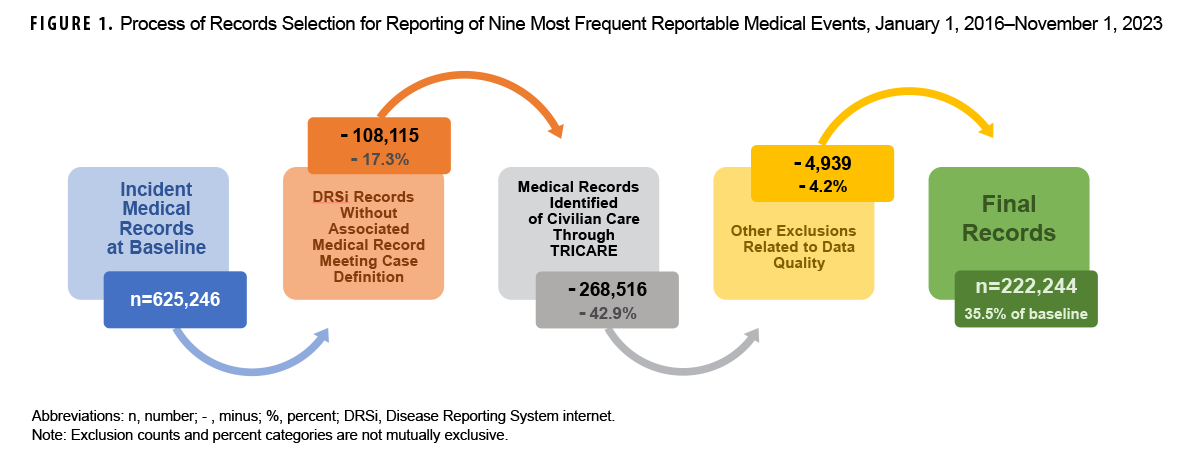
The final analytic dataset contained 138,318 (62.2%) pre-transition ACSM records and 12,226 (5.5%) post-transition ACSM records, while pre-transition DOW beneficiary records comprised 63,612 (28.6%), and post-transition DOW beneficiary records constituted 8,088 (3.6%) (Table 2).
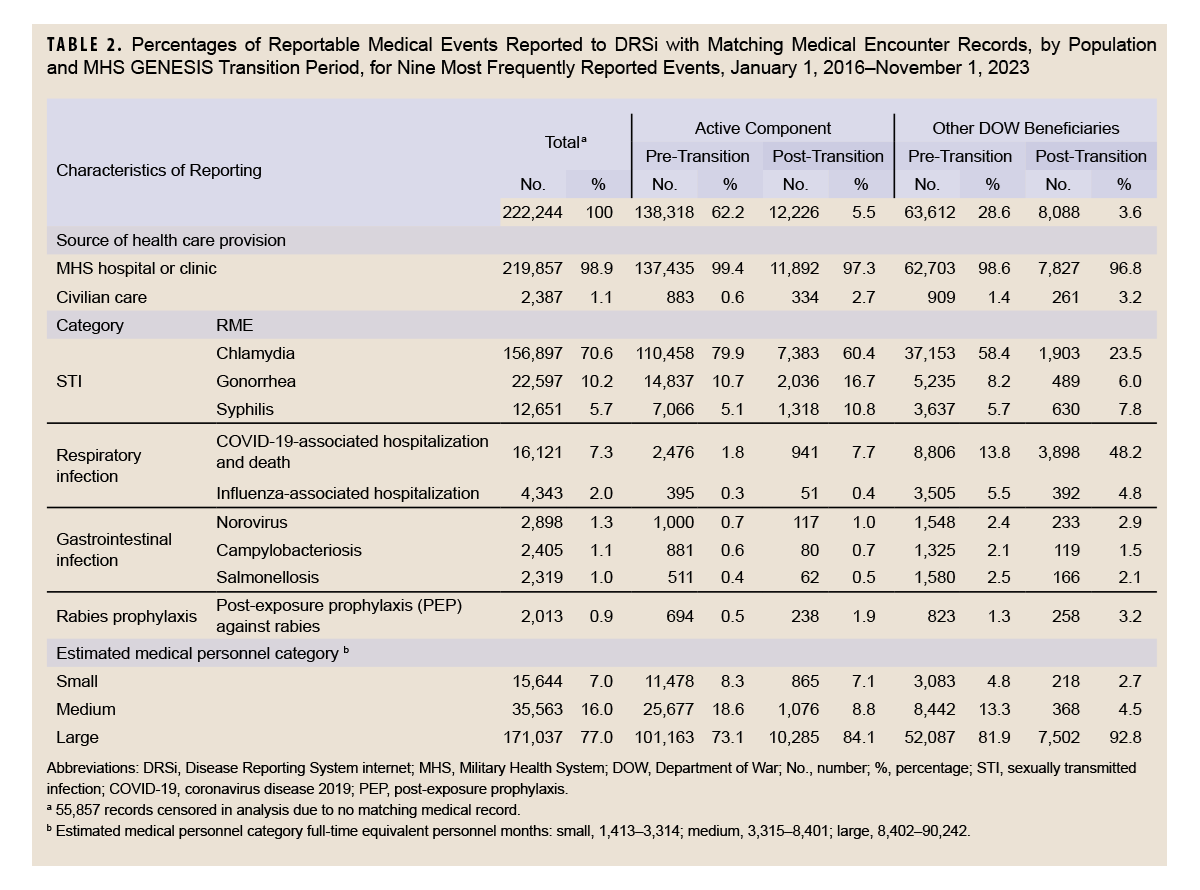
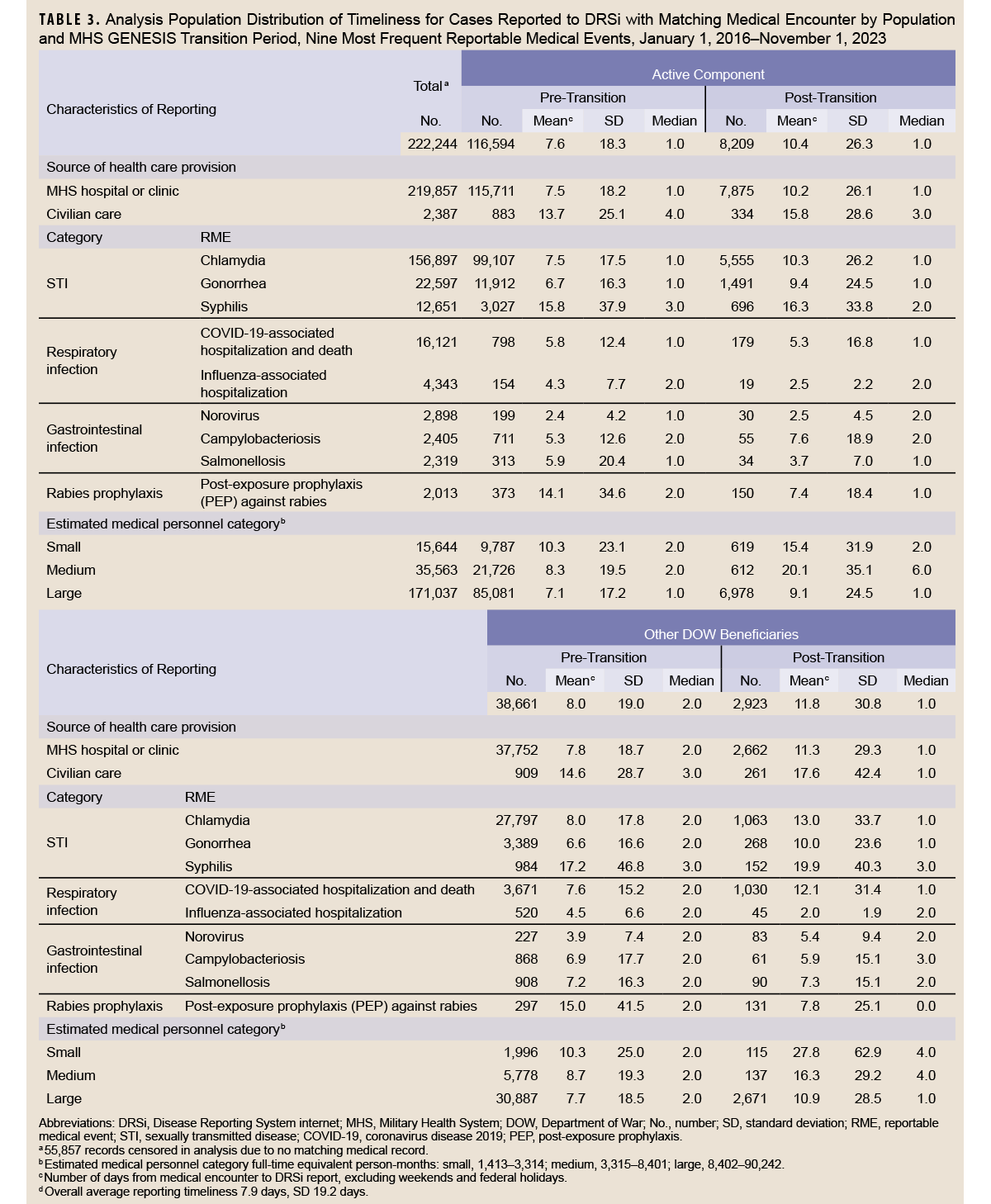
The average overall reporting timeliness was within 7.9 days (SD=19.2) (Table 3). About 25% (n=55,857) of all records were censored, with 22.1% more post-transition censored records than pre-transition censored records (data not shown).
Active component service members
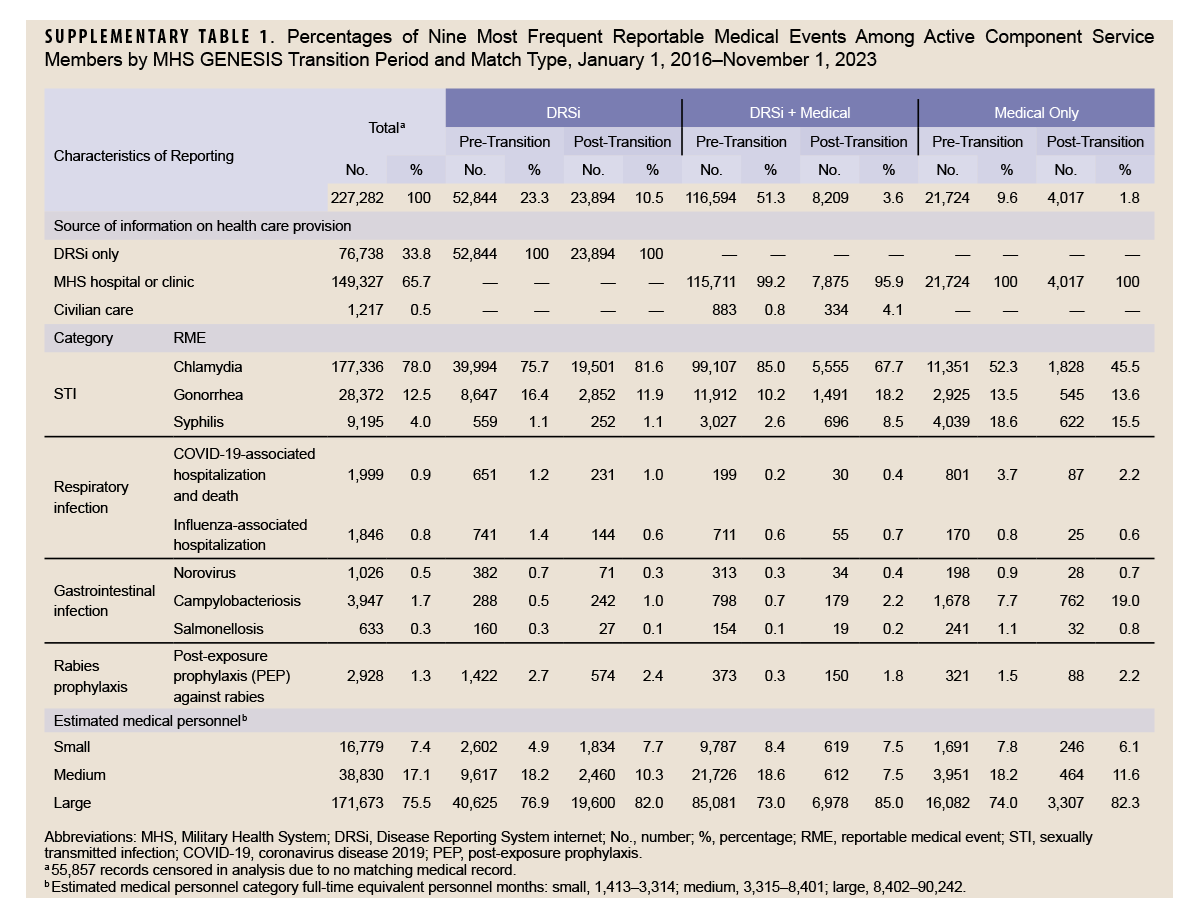
Post-transition, the proportion of RMEs originating from civilian care providers increased by 2.1% (Table 2). The proportion of reported chlamydia cases decreased by 19.5%, while gonorrhea and syphilis cases increased by 6.0% and 5.7%, respectively (Table 2). The proportion of reported COVID-19-associated hospitalization or death cases increased by 5.9%, with little change observed for the other RMEs (Table 2). The proportion of reporting at MHS hospitals and clinics decreased by 1.2% and 9.8% for facilities with small and medium medical personnel estimates, respectively, while facilities with large medical personnel estimates increased by 11.0% (Table 2).
Cases reported directly to DRSi without a matching medical encounter varied post-transition for chlamydia (+5.9%) and gonorrhea (-4.5%), and from facilities with small (+2.8%), medium (-7.9%), and large medical personnel estimates (+5.1%) (Supplementary Table 1).
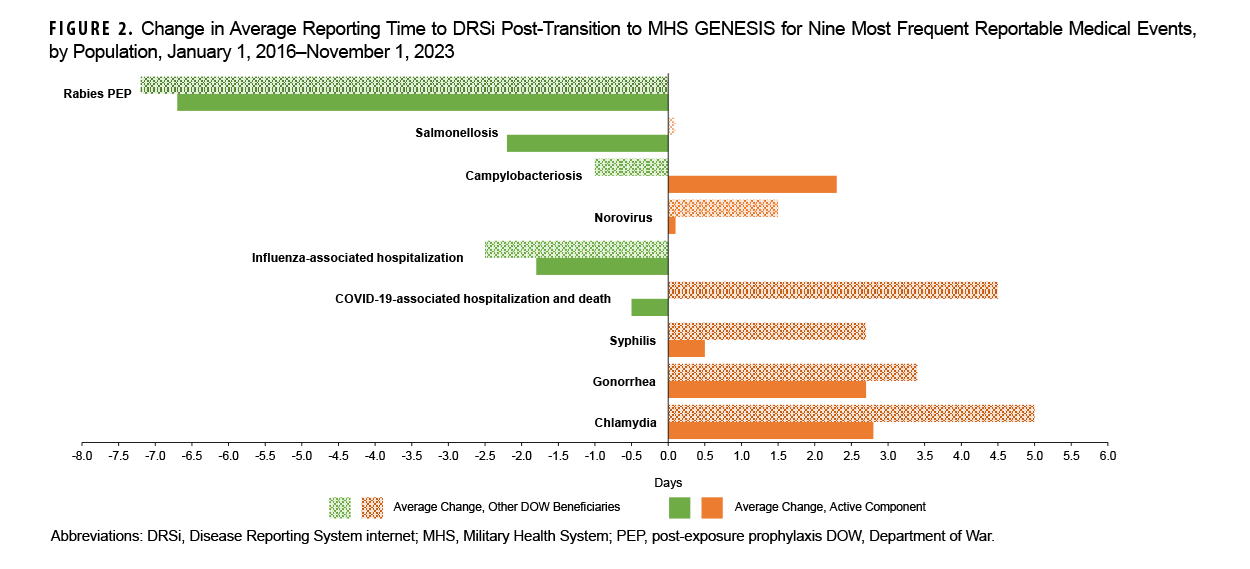
Post-transition, average reporting time generally worsened, by about 3 days, with largest differences in campylobacteriosis, gonorrhea, and chlamydia reporting (Table 3, Figure 2). Reporting timeliness improved for post-exposure prophylaxis (PEP) against rabies, salmonellosis, and influenza-associated hospitalizations. RME reporting timeliness deteriorated within all medical personnel categories, with the greatest increase in medium medical personnel facilities, where mean reporting time increased from approximately 8 days pretransition to approximately 20 days post-transition (Table 3).
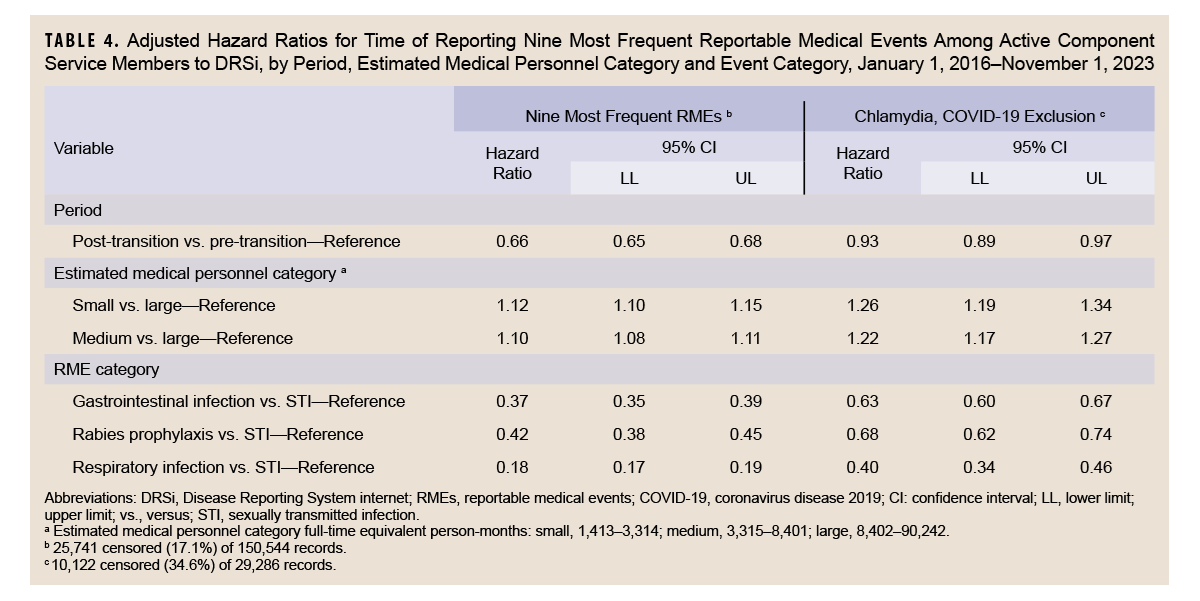
Compared to the pre-transition period, the rate of reporting for ACSMs, at any given time, was 34% lower (hazard ratio [HR]: 0.66; 95% confidence interval [CI] 0.65, 0.68) than post-transition, adjusting for estimated medical personnel and condition (Table 4). Military hospitals and clinics with small and medium medical personnel estimates had 12% (HR 1.12; 95% CI 1.10, 1.15) and 10% (HR 1.10; 95% CI 1.08, 1.11) higher rates of reporting to DRSi compared to facilities with large medical personnel estimates, respectively (Table 4). When compared to STI reports, reporting rates were lower, at any given time, for rabies prophylaxis, by 58% (HR 0.42; 95% CI 0.38, 0.45), as well as 63% lower for GI conditions (HR 0.37; 95% CI 0.35, 0.39) and 82% lower for respiratory conditions (HR 0.18; 95% CI 0.17, 0.19) (Table 4).
Other Department of War beneficiaries
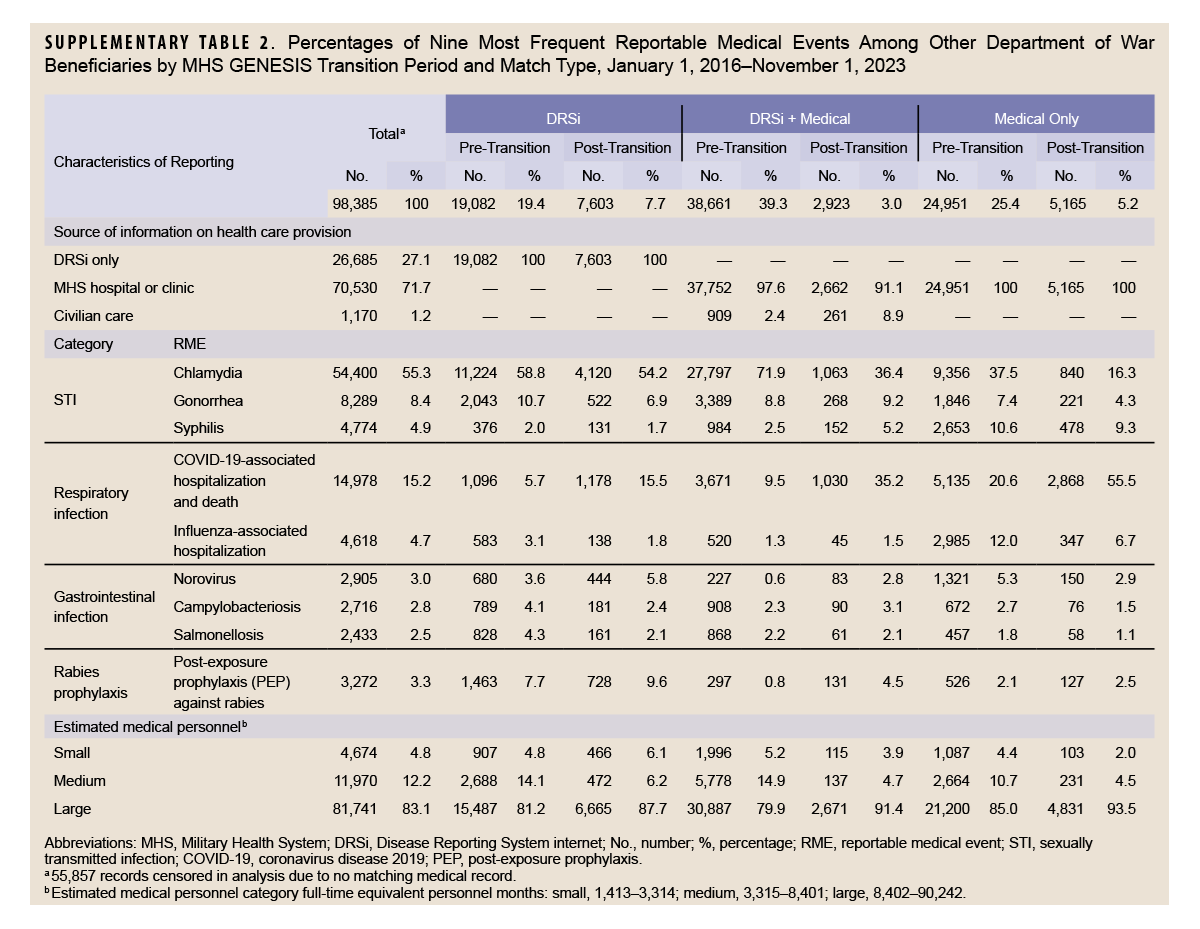
Post-transition, the proportion of RMEs identified through civilian care increased by 1.8% (Table 2). Reported chlamydia and gonorrhea cases decreased by 34.9% and 2.2%, respectively, while syphilis cases increased by 2.1% (Table 2). Reported COVID-19-associated hospitalization or death cases rose by 34.4%, while the other RMEs were generally unchanged (Table 2). Reporting improved at large medical personnel facilities by 10.9%, whereas small and medium medical personnel facilities decreased by 2.1% and 8.8%, respectively (Table 2).
As with ACSMs, other beneficiary cases reported directly to DRSi without a matching medical encounter varied post-transition for chlamydia (-4.6%) and gonorrhea (-3.8%), in addition to COVID-19-associated hospitalization or death (+9.8%), norovirus (+2.2%), and salmonellosis (-2.2%), as well as from medium (-7.9%) and large medical personnel facilities (+6.5%) (Supplementary Table 2).
Post-transition, reporting timeliness worsened by almost 4 days, with increases for chlamydia, gonorrhea, syphilis, COVID-19-associated hospitalization or death, and norovirus cases (Table 3, Figure 2). Reporting timeliness improved for PEP against rabies and influenza-associated hospitalization cases (Table 3, Figure 2). Reporting timeliness worsened for all medical personnel categories, with small medical personnel facilities lagging by nearly 18 days (Table 3).
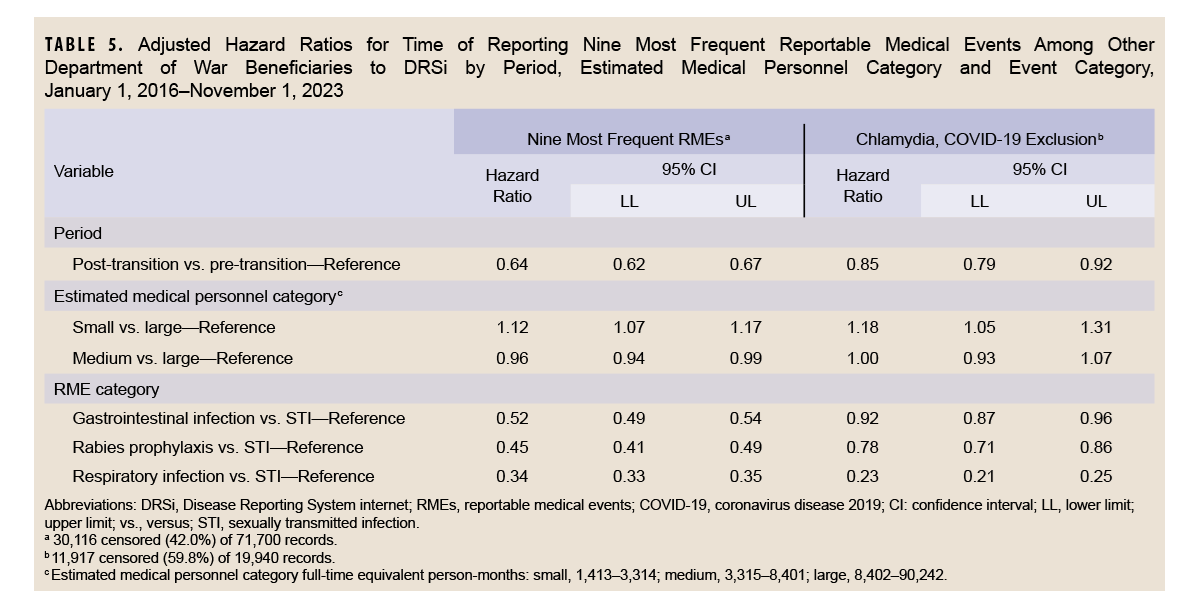
Compared to the pre-transition period, the rate of reporting for other DOW beneficiaries, at any given time, was 36% lower (HR 0.64; 95% CI 0.62, 0.67) during the post-transition period, adjusting for estimated medical personnel and condition (Table 5). Military hospitals and clinics with small and medium medical personnel estimates had reporting rates, at any given time, 12% higher (HR 1.12; 95% CI 1.07, 1.17), and 4% lower (HR 0.96; 95% CI 0.94, 0.99) than facilities with large medical personnel estimates, respectively (Table 5). Compared to STIs, rate of reporting at any given time for respiratory conditions was lower by 66% (HR 0.34; 95% CI 0.33, 0.35), 55% for rabies prophylaxis (HR 0.45; 95% CI 0.41, 0.49), and 48% for GI conditions (HR 0.52; 95% CI 0.49, 0.54) (Table 5).
Sensitivity analyses
In sensitivity analyses excluding chlamydia and COVID-19, the direction of associations was generally unchanged in both populations, although several associations were attenuated (Tables 4 and 5). The post-transition reduction in reporting rate decreased from 34% to 7% among ACSMs (HR 0.93; 95% CI 0.89, 0.97) and from 36% to 15% among other DOW beneficiaries (HR 0.85; 95% CI 0.79, 0.92). Among ACSMs, associations by medical personnel category were stronger in the sensitivity analysis, with higher reporting rates among facilities with small (HR 1.26; 95% CI 1.19, 1.34) and medium (HR 1.22; 95% CI 1.17, 1.27) medical personnel estimates versus large medical personnel estimates. Among other DOW beneficiaries, the association for small medical personnel facilities persisted (HR 1.18; 95% CI 1.05, 1.31), whereas the association for medium versus large medical personnel facilities was attenuated to null (HR 1.00; 95% CI 0.93, 1.07). Compared to STIs, reporting rates for other RMEs remained lower, although the magnitude differed by population. Among ACSMs, reporting rates for GI conditions were 37% lower (HR 0.63; 95% CI 0.60, 0.67), 32% lower for rabies prophylaxis (HR 0.68; 95% CI 0.62, 0.74), and 60% lower for respiratory conditions (HR 0.40; 95% CI 0.34, 0.46). Among other DOW beneficiaries, reporting rates were 8% lower for GI conditions (HR 0.92; 95% CI 0.87, 0.96), 22% lower for rabies prophylaxis (HR 0.78; 95% CI 0.71, 0.86), and 77% lower for respiratory conditions (HR 0.23; 95% CI 0.21, 0.25).
Discussion
After implementing MHS GENESIS, variations occurred in the timeliness of reporting medical encounters on DRSi reports, with some improving and others worsening compared to pre-MHS GENESIS. The large reporting time standard deviations observed for RMEs indicate substantial variability in reporting timeliness that is not fully captured by the means. The stability of median reporting times—generally within 1 day for most RMEs—suggests, however, that observed increases in mean reporting times may have been driven by a subset of cases with markedly delayed reporting rather than a broad deterioration in surveillance timeliness. While the reason for the delay in reporting timeliness is unknown based on available data, it may be indicative of more challenges with identifying RMEs through the EHR following the transition to MHS GENESIS.
A pilot study at 1 installation that was transitioning from the legacy EHR to MHS GENESIS found no meaningful differences in health care provider satisfaction, system usability, and “burnout” between the 2 systems; but satisfaction scores, system usability scores, and ‘burnout’ did not improve at 1, 6, and 12 months post-implementation, indicating some ongoing challenges with use of MHS GENESIS.11 That pilot study was not replicated at other installations, so it may not be generalizable to the experiences of health care professionals throughout the MHS. According to a 2024 Government Accountability Office (GAO) report, self-reported satisfaction with MHS GENESIS increased from 2022 to 2024, but remained lower than with legacy systems.6
Active component RMEs were reported faster than other DOW beneficiaries’ RMEs. This difference may be because service member reports are prioritized in a low-resource environment or because service members are more likely to receive care directly from a military hospital or clinic, rather than civilian care.
Compared to all other RME categories, STIs demonstrated higher reporting rates at any given time, likely reflecting the frequency with which these are reported and the more robust identification and reporting workflows established for high-volume conditions. Notably, chlamydia comprised 71% of all RMEs during the study period, benefitting from a straightforward laboratory workflow that directly feeds positive results into the DRSi, facilitating timely reporting. In contrast, GI and respiratory illnesses may be subject to greater under-reporting, as providers may forgo pathogen-specific testing when illnesses resolve with symptomatic management alone. Many RME case definitions require laboratory confirmation.
Prior to MHS GENESIS, laboratory results were uploaded daily, whereas MHS GENESIS laboratory results are uploaded weekly, which may contribute to slower reporting post-transition. In correspondence with the Defense Centers for Public Health (DCPH)–Portsmouth, the DRSi technical team noted that initial MHS GENESIS laboratory results were loaded into DRSi in November 2021, and gaps were identified in laboratory results imported to DRSi between February and April 2023. During those gaps, DRSi reporters relied on alternative case finding mechanisms while also learning a new EHR system, presenting a potential reason that the reporting rate decreased post-transition compared to the pre-transition period.
The sensitivity analyses excluding chlamydia and COVID-19 supported the overall robustness of the primary findings, with the direction of the associations remaining largely consistent between the full model and sensitivity analyses for both populations. Meaningful differences in the magnitude of the observed associations were revealed in both populations, however, particularly for the post-transition reporting rate. The attenuated findings suggest that the reporting dynamics of chlamydia and COVID-19 were primary drivers of the overall decline in RME reporting rates observed post-transition. Chlamydia likely exerted disproportionate influence on model estimates relative to other conditions. COVID-19, which emerged during the MHS GENESIS transition period, may have further compounded reporting disruptions through competing clinical and administrative priorities, staffing reductions, and changes in care-seeking behavior, all of which may have independently affected RME reporting timeliness regardless of the EHR transition.
A particularly notable finding emerged for respiratory conditions among other DOW beneficiaries, where the sensitivity analysis diverged from the pattern observed for all other condition categories. While most condition-specific associations were attenuated after excluding chlamydia and COVID-19, the reporting rate for respiratory conditions relative to STIs was stronger in the sensitivity analysis (77% lower; HR 0.23; 95% CI 0.21, 0.25) compared to the full model (66% lower; HR 0.34; 95% CI 0.33, 0.35). This finding suggests that COVID-19 may have inflated the respiratory RME reporting rates in the full model, partially masking the true magnitude of the difference between respiratory and STI reporting rates.
Among the active component population, less estimated medical personnel (e.g., small and medium categories) was associated with higher reporting rates of RMEs to DRSi, at any given time, to DRSi compared to MHS hospitals and clinics with large medical personnel estimates. The results were mixed for the other DOW beneficiary population, however. Military hospitals and clinics with medium or large medical personnel estimates have more cases of RMEs to report to DRSi. They may also have more resources at their disposal for crowdsourcing, building, and adopting new processes required to identify potential RMEs to report to DRSi. Estimated medical personnel was derived from FTE person-months for all medical personnel, however, and did not directly measure preventive medicine or public health staffing resources allocated toward RME surveillance and reporting, which may have obscured the true relationship between public health capacity and reporting rates.
Regardless of the MHS GENESIS transition period, approximately 25% of the analyzed records were censored due to lack of reporting in DRSi. The administrative medical data do not provide insights into why specific RMEs were not reported to DRSi. RMEs are reported to the DRSi based on specific case definitions, which may differ from the criteria used to document medical diagnostic codes in the EHR. Providers may presumptively treat some conditions, such as STIs, prior to laboratory confirmation, which may not be reflected in the EHR. Furthermore, DRSi reporters are rarely the health care providers for patients diagnosed with an RME and rely on information available in the EHR, including laboratory results and an accurate description of symptoms to determine reportability. Reporters may have insufficient information to determine if a case should be reported to DRSi. A backlog of professionally-coded medical encounters, primarily admission records, occurred in FY 2023 and may have disproportionately affected RME reporting at specific installations such as Brooke Army Medical Center. MHS GENESIS features a Discern Reporting Portal for extraction of live EHR data for facilities under the DRSi reporter’s responsibility, which are matched with the Armed Forces Reportable Medical Events Guidelines and Case Definitions. Anecdotally, DRSi reporters have noted limitations to the volume of data that can be extracted from the Discern Reporting Portal, an inability to view all ordered laboratory tests, and a requirement for physician certification of laboratory results that impedes ready communication of available results. DRSi allows manual data entry for some fields including sponsor and patient identifiers, which increases probability of errors that could prevent medical event report matching of medical encounters. Data entry errors were likely to occur at the same frequency, regardless of EHR transition period, during the surveillance period.
This analysis had several additional limitations. Estimated medical personnel FTEs may not be the best proxy for available public health staff who report RMEs; however, it is challenging to ascertain which resources are available for reporting at a given installation due to recurrent personnel transition. Second, the case definitions in Table 1 did not include laboratory records, like the timeliness report by the Armed Forces Health Surveillance Division (2023), which are typically included for DRSi reporting and other surveillance case definitions.5 Furthermore, complete case analysis was used in the Cox piecewise analysis with no prior missing data imputation; it is unknown if the data were missing completely at random, potentially due to gaps in case definitions or other aspects of the data systems. Finally, the Cox piecewise analysis did not include interaction terms; consequently, this analysis cannot attest to whether MHS hospitals and clinics with small or medium medical personnel estimates fared better in the post-transition period compared to MHS hospitals or clinics with large medical personnel estimates.
Timely DRSi reporting is crucial for monitoring RME trends and mitigating the spread of diseases within the DOW beneficiary population. These findings reveal that reporting rates at any given point were slower post-transition, after adjusting for estimated medical personnel and RME categories. Implementation of systematic monitoring for discontinuity between DRSi reporting and laboratory results should be prioritized to limit delayed reporting or unreported RME cases. This would provide reporters with a practical tool to identify and close reporting gaps. Further surveillance efforts should incorporate laboratory and medical encounter data to monitor metrics for reporting timeliness.
References
- Deputy Secretary of Defense. Directive 6490.02E, Comprehensive Health Surveillance. Incorporating Change 2. U.S. Dept. of War. Updated Aug. 28 2017. Accessed Dec. 4, 2023. https://www.esd.whs.mil/portals/54/documents/dd/issuances/dodd/649002ep.pdf
- Armed Forces Health Surveillance Division. Armed Forces Reportable Medical Events Guidelines and Case Definitions. Health.mil. Defense Health Agency, U.S. Dept. of War. Accessed Aug. 14, 2023. https://www.health.mil/reference-center/publications/2022/11/01/armed-forces-reportable-medical-events-guidelines
- Armed Forces Health Surveillance Center. Completeness and timeliness of reporting of notifiable medical conditions among active component service members, US Armed Forces, 1998-2007. MSMR. 2008;15(7):12-23. Accessed Dec. 4, 2023. https://www.health.mil/reference-center/reports/2008/01/01/medical-surveillance-monthly-report-volume-15-number-7
- Hurt L, Ying S. Completeness and timeliness of reporting of notifiable medical conditions, active component, US Armed Forces, 2008–2014. MSMR. 2015;22(11):8-21. Accessed Dec. 4, 2023. https://www.health.mil/reference-center/reports/2015/01/01/medical-surveillance-monthly-report-volume-22-number-11
- Armed Forces Health Surveillance Division. Completeness and timeliness of reporting notifiable medical events, U.S. military active component and other DOD beneficiaries, 2018–2022. MSMR. 2023;30(10):12-22. Accessed Dec. 4, 2023. https://www.health.mil/reference-center/reports/2023/10/01/msmr-october-2023-volume-30-issue-10
- U.S. Government Accountability Office. Electronic Health Records: DoD Has Deployed New System But Challenges Remain. Report to Congressional Committees GAO-24-106187. Apr. 2024. https://www.gao.gov/assets/gao-24-106187.pdf
- U.S. Government Accountability Office. Electronic Health Records: DoD Has Made Progress Implementing a New System, But Challenges Persist. Report to Congressional Committees GAO-21-571. Sep. 20, 2021. https://www.gao.gov/assets/gao-21-571.pdf
- Defense Health Agency. Genesis of MHS GENESIS. Health.mil. U.S. Dept. of War. Accessed Dec. 4, 2023. https://www.dvidshub.net/video/716564/moments-military-medicine-genesis-mhs-genesis
- Mendez BH. MHS Genesis: Background and Issues for Congress. Report 45987. Congressional Research Service. Oct. 28, 2019. Accessed Dec. 4, 2023. https://www.congress.gov/crs_external_products/R/PDF/R45987/R45987.2.pdf
- 113th Congress. National Defense Authorization Act for Fiscal Year 2014. House Resolution 3304. Congress.gov. U.S. Congress. 2013. Accessed Dec. 4, 2023. https://www.congress.gov/bill/113th-congress/house-bill/3304
- Knobloch G, Milliren A, Winnie K. Clinician perceptions of transition from legacy electronic health record to MHS GENESIS: a pilot study. Mil Med. 2023;188(9-10):2850-2855. doi:10.1093/milmed/usac236
Author Affiliations
Disease Epidemiology Program, Defense Centers for Public Health–Aberdeen (DCPH–Aberdeen), Defense Health Agency, Aberdeen Proving Ground, MD: Mr. Smith, LTC Yun, Dr. Maule, Ms. McCrea, Ms. Aguirre, Ms. Scatliffe-Carrion, Dr. Malmi, Dr. Ambrose; Battelle Memorial Institute, supporting DCPH–Aberdeen: Ms. McCrea, Dr. Malmi; Oak Ridge Institute for Science and Education, supporting DCPH–Aberdeen: Ms. Aguirre
Disclaimers
The views expressed in this report are those of the authors and do not necessarily reflect official policy nor position of the Defense Health Agency, Department of War, or the U.S. Government. Mention of any non-federal entity or its products is for informational purposes only, and is not to be construed, implied, or interpreted, in any manner, as federal endorsement of that non-federal entity or its products.
Any opinions, findings and conclusions or recommendations in this report are those of the authors and do not necessarily reflect the views of the U.S. Navy and Marine Corps Force Health Protection Command (NMCFHPC), 774th Enterprise Sourcing Squadron, Air Force Installation Contracting Center, Defense Technical Information Center (DTIC), Department of War Information Analysis Center Program Management Office (IAC PMO), or institutions and companies affiliated with the authors. This material is based upon work supported by IAC PMO and sponsored by DTIC and NMCFHPC under contract FA807518D0005-FA807523F0016.
This work was funded in part through Battelle Memorial Institute’s contract with the Information Analysis Center Multiple Award Contract FA807518D0005-FA807523F0016: Ongoing Force Health Protection (FHP) Analysis, Assessment, and Evaluation for Navy and Marine Corps Force Health Protection Command (NMCFHPC). Ms. McCrea and Dr. Malmi performed this work as employees of Battelle Memorial Institute.
This report was supported in part by an appointment to the Department of War Research Participation Program, which is administered by the Oak Ridge Institute for Science and Education (ORISE) through an inter-agency agreement between the U.S. Department of Energy and the Department of War. ORISE is managed by Oak Ridge Associated Universities under contract DE-SC0014664. All opinions expressed in this report are the authors' and do not necessarily reflect the policies nor views of the Department of War, Department of Energy, or ORAU/ORISE.