Skip main navigation

Official websites use .mil
A .mil website belongs to an official U.S. Department of Defense organization.

Secure .mil websites use HTTPS
A lock ( ) or https:// means you’ve safely connected to the .mil website. Share sensitive information only on official, secure websites.

Military Health System


Skip subpage navigation

Emergency Medicine


At A Glance

Program Type: Military Medical Center

Location: San Antonio, TX

Accredited: Accreditation Council for Graduate Medical Education (ACGME)

Program Length: 3 years

Required Pre-Requisite Training: Medical School Graduation. All applicants must be active duty members of the U.S. Military.

Categorical Year in Specialty Required: Yes

Total Approved Complement: 51

Approved per Year (if applicable): 17

Dedicated Research Year Offered: No

Medical Student Rotation Availability: MS4 (contact us 8-9 months in advance to start scheduling rotation); MS3 Space Available

Additional Degree Concurrent with Training (e.g. MPH): No

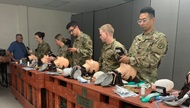
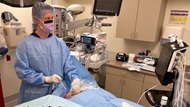
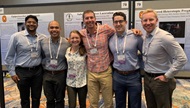
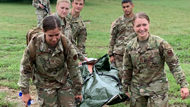
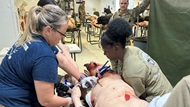
Our Residents in Action
Program Description

Welcome to the San Antonio Uniformed Services Health Education Consortium Emergency Medicine Residency Program. The SAUSHEC EM Residency was established in 1977 before EM was even designated as a specialty (1979). Our program has a legacy of excellence, but our storied past does not define us. We continue to innovate in medical education to provide you with the best possible opportunities to become an amazing military emergency physician, not just a physician working in the military. We believe we are the most well-rounded and comprehensive training program, providing the ideal combination of military and civilian training. We are truly honored and humbled to know that you are taking the time and energy to see if joining our family is right for you.

The SAUSHEC EM Residency Program is a joint, 3-year program at Brooke Army Medical Center in San Antonio, Texas, the 7th largest city in the U.S. We graduate 17 Army, Air Force, and Navy residents annually to serve our operational forces and beneficiaries around the globe. Our curriculum includes thirteen 4-week blocks per year, with most emergency department rotations at our primary site at BAMC, the DOD's only Level 1 Trauma Center and Burn Center, seeing  more than 80K patients annually, and accounting for nearly 1/5th of all admissions in the DOD. Approximately ~40% of rotations are at outside partner civilian institutions in San Antonio, Houston, Austin, Denver, and internationally in Honduras. These away rotations ensure exposure to diverse and complex patient populations. Residents have innovative weekly academic didactics, known as" Grand Rounds," monthly comprehensive emergency procedure labs, and a deliberate focus on well-being through connection with purpose, building autonomy, and achieving clinical mastery. Our residents are trained by 40+ EM tri-service faculty including multiple fellowship-trained physicians.

Mission, Vision, and Aims

Mission

To save lives on the battlefield, alleviating human suffering during war.

Vision

All graduates achieve their full potential to care for any patient under any circumstance at any time, in relentless pursuit of zero preventable bad patient outcomes.

Aims

  1. Care - Empower graduates to be well while doing well.
  2. Lead - Inspire residents to dare greatly to build clinical proficiency. 
  3. Win - Build trust through principle-centered action and achievement in the practice of medicine.

Curriculum and Schedules

Overview

  • On-shift Teaching is typically led by EM 3rd Year Resident, faculty, or discussions regarding the sickest patients in the Emergency Department.
  • Grand Rounds: Didactics program that includes a combination of traditional lectures and interactive teaching sessions to allow residents to learn by doing and prepare every trainee for national emergency medicine qualifying exams.
  • Asynchronous learning with supplementary readings and quizzes.

Emergency Ultrasound Curriculum

  • Interns attend a comprehensive ultrasound course during their orientation month.
  • Residents receive four additional weeks of dedicated training during the EM1 and EM3 years with ultrasound procedural training, mastery of core emergency ultrasound modalities, and emergency resuscitative ultrasound under the guidance of our in-house Emergency Ultrasound Fellowship Accreditation Council-Accredited Advanced Emergency Medicine Ultrasound Fellowship Program. These weeks include ultrasound didactics, quality assurance, scanning shifts, and journal club.
  • Emergency Department shifts throughout residency emphasize incorporating ultrasound at the bedside for diagnosis and resuscitation. Residents receive immediate and quality assurance feedback on image acquisition in interpretation to enhance ultrasound skills.

Emergency Medical Systems / Disaster Medicine Curriculum 

  • Residents conduct Emergency Medical Services ride-alongs with our EMS/Disaster Medicine Fellowship Program.
  • The longitudinal EMS curriculum includes didactics delivered at journal clubs.
  • EM3 residents execute a culminating Mass Casualty exercise with local EMS, medical directors, and Special Weapons and Tactics teams.
  • The SAUSHEC EM Residency Program is three years (36 months) in length and follows the training requirements outlined by the American Board of Emergency Medicine and the Accreditation Council for Graduate Medical Education.
  • The SAUSHEC EM Residency Program blends military rotations (~60%) with civilian partner rotations (~40%) across eight diverse health systems, providing the broadest training experience possible.
  • EM rotations consist of ED rotations at BAMC, University of Texas Health San Antonio, Baptist Health Systems, Christus Santa Rosa Health System, Methodist Hospital Systems, Methodist Children's Hospital, Dell Children's Medical Center, and Texas Children's Hospital in Houston. These rotations focus on building a foundation for professional emergency medicine practice. Residents are expected to be proactive in learning the art and science of emergency medicine and to attain a degree of proficiency in the profession to perform in an unsupervised setting upon graduation.
  • Additional rotations include: Pediatric Intensive Care Unit, Medical ICU, Neuro ICU, Burn ICU, Surgical Trauma ICU, Anesthesia, Toxicology, EM Electives, and OBGYN.
Emergency Medicine residency rotation schedule per year.
1st Year 2nd Year 3rd Year
  • EM Crash Course
  • BAMC ED (6 blocks)
  • University Hospital (civ; 2 blocks)
  • Texas Children's ED (civ)
  • Anesthesia (civ)
  • Surgical / Trauma ICU
  • Ob-Gyn / Ultrasound / EMS
  • BAMC ED (6 blocks)
  • Methodist Children's ED (civ)
  • Methodist Stone Oak ED (civ)
  • Methodist Main ED (civ)
  • Elective (mil or civ) 
  • University Hospital Neuro ICU (civ)
  • Burn ICU
  • Pediatric ICU (civ)
  • Dell Children's ED (civ)
  • Electives (mil or civ; 1.5 blocks)
  • Methodist ICU (civ)
  • Denver Health Toxicology (civ)
  • Ultrasound
  • Operational EM
  • Military Unique Curriculum in Honduras
  • Residents are authorized 3 elective rotations throughout the residency.
  • Options include additional Community Emergency Department, urban/underserved ED, Pediatric ED, critical care/intensive care unit, operational opportunities, and international rotations.
  • Residents have also used elective time to attend Critical Care Air Transport training, Air Assault/Airborne School, Expert Field Medical Badge training, and other military opportunities.
  • BAMC ED Blocks are 8-hour shifts, with thoughtful waterfall scheduling to optimize resident wellness.
  • Each resident will have at least one day (24 hours) per week free from clinical duties.
  • During a BAMC ED block, residents are scheduled for one to two 24-hour "on-call" shifts to help cover unforeseen shift changes due to personal emergencies.

Military Operational Curriculum

  • Longitudinal and individualized military operational curricula prepare our residents for their first military assignments.
  • Dedicated military-specific pearls during grand rounds and incorporation of operational medicine during procedure labs.
  • Built-in field simulation during grand rounds to ensure our residents are experts In Damage Control Resuscitation and Tactical Combat Casualty Care.
  • Military Unique Curriculum In Honduras Rotation: A capstone military rotation in Honduras prepares residents for the challenges of providing trauma and medical care in an austere and resource-limited environment, like a deployment.
  • Opportunities for additional operational experiences are possible. Previous operational missions include Chile, Peru, Philippines, Honduras, Uganda, El Salvador, and Guatemala.
  • Capstone Operational Emergency Medicine Course/Emergency Medicine Exercise: The last EM block of residency provides a working knowledge of the operational experiences military emergency physicians might encounter in their military careers. The course culminates with a simulated combat field exercise, giving the resident the opportunity to put into practice the theory of operational medicine in a more realistic setting.

Required courses include an intern orientation EM crash course during first month of residency, as well as an intern research course and periodic re-certification of Advanced Life Support /Basic Life Support/Pediatric Advanced Life Support.

Procedure Lab

  • Provides an opportunity for residents to learn life-saving procedures not commonly done by civilian emergency physicians but may be essential in deployed environments. Procedures performed include but are not limited to:
    • thoracostomy
    • transvenous pacing
    • pericardiocentesis
    • resuscitative thoracotomy
    • cricothyrotomy
    • suturing techniques
    • lateral canthotomy
    • other procedures.
  • At least two (2) dedicated cadaveric procedure labs are offered throughout the year.

Simulation

  • Longitudinal 3-year curriculum starting intern orientation month and then weekly Grand Rounds and on-shift simulations allows residents to utilize BAMC's state-of-the-art Simulation Department and train on high-fidelity simulators.
  • Regular oral board cases prepare residents for American Board of Emergency Medicine Oral Board exam.
  • Residents will routinely execute intradepartmental training with nursing, medics, and physician assistants, and interdepartmental simulation cases with other medical specialties.

Leadership development opportunities start from day one with increasing levels of responsibility over the 36-months of residency. The curriculum includes:

  • Leadership and team building exercises
  • Peer and faculty mentorship
  • Quarterly program leadership and mentoring sessions
  • Progressive leadership responsibilities on shift, during medical resuscitations, and in the management of trauma patients
  • Resident leadership roles, including educational, clerkship, research, wellness, etc.

Scholarly and Professional Development Opportunities

Opportunities

Robust research opportunities are available with hundreds of publications generated per year and tens of millions of dollars in grant funded research. Completing a scholarly project is a requirement for graduation from the residency program.

Scholarly Track Program

An optional program allows residents to dedicate additional time during their training in a specific area of interest. Residents receive mentorship by distinguished faculty and have the opportunity to participate in local, regional, national, and international experiences.

Available STP areas:

  • Emergency Medical Services/Disaster Medicine/Operational Medicine
  • Advanced Emergency Ultrasound
  • Research
  • Hyperbaric Medicine
  • Toxicology
  • Health Policy
  • Critical Care Medicine
  • Simulation

Residents improve the healthcare system for our patients. Residents receive education in quality improvement and patient safety principles and learn how to participate in patient safety activities and execute QIPS projects with outcome measures. 

While developing excellent emergency medicine skills, the SAUSHEC EM Residency also focuses on developing future military EM leaders through mentoring and modeling.

Residents may receive funding to attend at least one professional conference during residency when presenting a scholarly activity. Residents have given national lectures, research podium presentations, held national leadership board positions, and taught procedural courses at:

  • American College of Emergency Physicians/Emergency Medicine Resident's Association
  • American Academy of Emergency Medicine
  • Society for Academic Emergency Medicine
  • Government Services Chapter of American College of Emergency Physicians
  • Special Operations Medical Association
  • Military Health System Research Symposium
  • Association for Military Osteopathic Physicians & Surgeons
  • Council on Residency Directors of Emergency Medicine
  • American Association of Nurse Practitioners
  • Air Force Physician Assistant Refresher Course 
  • Other professional societies

Participating Sites

Participating Sites in San Antonio include: 

  • University of Texas Health San Antonio
  • Christus Santa Rosa Westover Hills Medical Center
  • Methodist Stone Oak Hospital
  • Methodist Main Hospital
  • Methodist Children's Hospital
  • Methodist Texsan Hospital
  • CHRISTUS Children’s
  • Baptist Health System
  • Christus Santa Rosa Health System
  • Methodist Health System

Participating Sites outside San Antonio include: 

  • Texas Children's Hospital - Houston, Texas
  • Rocky Mountain Position Center - Denver, Colorado
  • Dell Children's Medical Center - Austin, Texas
  • Hospital Escuela - Honduras

Applicant Information, Rotation, and Interview Opportunities

  • Our program offers rotations to fourth-year medical students interested in applying to Emergency Medicine. Rotations may be possible for third year medical students pending space availability. 
  • Rotations are typically four weeks (one block) long and include multiple clinical shifts, didactic opportunities, simulation experiences, and catered time for learning about the values and culture of the program.
  • Students interested in rotating with our program should contact dha.jbsa.brooke-amc.list.saushec-em@health.mil and follow guidance through SAUSHEC Graduate Medical Education regarding rotation logistics.

If you would like to schedule an interview with our program, please contact dha.jbsa.brooke-amc.list.saushec-em@health.mil.

Program graduates take the American Board of Emergency Medicine qualifying examination and oral exam, offered annually.

To become fully board certified, applicants are eligible to take the first portion of their board certification exam approximately 3 months following graduation.

To be eligible to take specialty board exams, graduates must complete all pre-requisites required by the ABEM by October 31st. Board eligibility is described on the ABEM website. Graduates remain board eligible for up to two five-year periods following completion of the residency.

Teaching Opportunities

Residents assume increasing levels of responsibility as teachers to their peers in the department throughout their training.

Residents will have opportunities to teach courses and local, regional, national, and international conferences including ultrasound, emergency procedural skills, and lecture military and emergency medicine.

Faculty and Mentorship

Our faculty have subspecialty training in the following:

  • Advanced Emergency Medicine Ultrasound
  • Emergency Medical Services, Disaster Medicine, Operational Medicine
  • Critical Care Medicine
  • Pediatric Emergency Medicine
  • Hyperbaric Medicine
  • Toxicology
  • Research
  • Administration

Residents all have assigned faculty to serve as mentors. Mentor "families" participate together during grand rounds, flipped classroom, journal club, and offsite wellness events.

Well-Being

We have focused on resident wellness and have had an established wellness/resiliency curriculum for many years.  

  • The entire residency program and its curriculum have been restructured to optimize opportunities for resident wellness consistently over the course of the 36-month residency. We have consolidated all official activities to maximize off time without reducing the maximal opportunities for training.
  • Residents have four (4) Resident Wellness Days for morale building with their classmates every academic year.
  • Residents may participate in an optional Wellness Committee geared at optimizing program wellness and involvement with hospital-wide peer wellness and support groups.

Contact Us

Emergency Medicine Residency Program

Location: Brooke Army Medical Center ED, 1st Floor, Consolidated Tower (CoTo)

Hours of Operation:

Monday–Friday
7 a.m. to 3 p.m.

Follow us on Instagram Follow us on LinkedIn Follow us on Facebook Follow us on X Follow us on YouTube Subscribe to updates from the MHS Other Social Media