Surveillance Snapshot: Illness and Injury Burdens Among Reserve Component Members of the U.S. Coast Guard, 2023
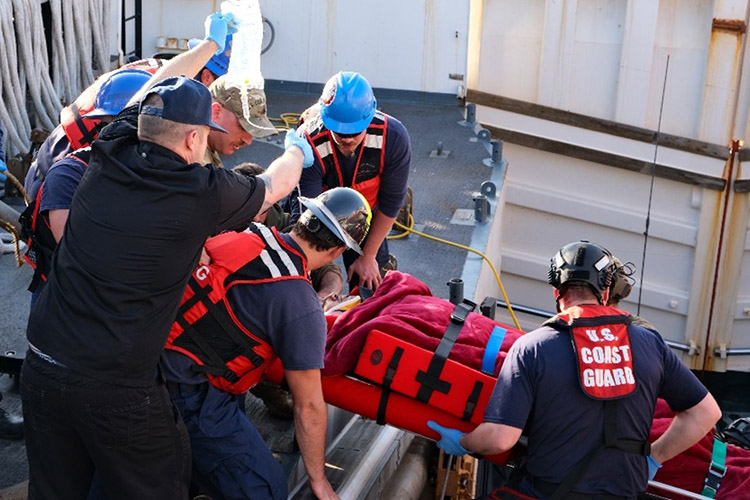 This annual summary article uses several health care burden measures to quantify the impacts in 2023 of various illnesses and injuries among members of the active component of the U.S. Coast Guard.
You also may be interested in...
Topic
Sept. 26, 2026
The Medical Surveillance Monthly Report, a peer-reviewed journal launched in 1995, is the Armed Forces Health Surveillance Division's flagship publication. The MSMR provides monthly evidence-based estimates of the incidence, distribution, impact, and trends of health-related conditions among service members.
Article
Sept. 1, 2026
This report examines research that utilized the Department of War Serum Repository from 2013 through 2024, updating the findings of a 1985–2012 review.
Article
Sept. 1, 2026
This report describes the standardized process developed and applied by the Air Force School of Aerospace Medicine (USAFSAM) to objectively investigate potential non-infectious disease clusters.
Article
Sept. 1, 2026
This report compares the Department of War’s Global Emerging Infections Surveillance (GEIS) network influenza surveillance data to the World Health Organization’s Global Influenza Surveillance and Response System (GISRS) data.
Article
Sept. 1, 2026
This retrospective cohort study examined incidence of initial diagnoses of traumatic brain injury, insomnia, migraine headache, depressive or anxiety disorders, noise-induced hearing injury, and essential hypertension among U.S. active component service members, stratified by those who served in occupations at high risk for blast overpressure exposure ...
Report
Sept. 1, 2026
 .PDF |
2.51 MB
.PDF |
2.51 MB
The September 2026 MSMR presents four full reports, beginning with a retrospective cohort study on health outcomes of U.S. active component service members working in high risk occupations for blast overpressure exposure; followed by an inaugural Public Health Practice feature on a standardized approach to non-infectious disease cluster investigations ...
Article
Aug. 1, 2026
MSMR publishes a quarterly report on reportable medical events among both active component service members as well as their beneficiaries who receive care through the Military Health System.
Article
Aug. 1, 2026
This annual report summarizes the numbers, types, and incidence rates of mental health disorder diagnoses among U.S. active component service members from 2021 through 2025.
Article
Aug. 1, 2026
This study analyzed the genetics of circulating influenza viruses during the 2025-2026 influenza season to better understand antigenic drift and inform future influenza prevention efforts.
Article
Aug. 1, 2026
This study characterized chronic insomnia disorder, utilizing data from the Defense Medical Surveillance System, to identify incident cases of chronic insomnia from 2014 through 2023 among U.S. active component service members.
Article
Aug. 1, 2026
This retrospective cohort study evaluated trends in postpartum depression and postpartum anxiety diagnoses among 138,588 active component service women with live infant births from 2010 through 2024.
Report
Aug. 1, 2026
.PDF |
3.15 MB
The August 2026 issue of MSMR presents the annual report on diagnoses of mental health disorders among U.S. active component service members (ACSMs), 2021-2025; with a related report on trends in postpartum depression and anxiety diagnoses among U.S. active component service women, 2010-2024; complemented by a report on chronic insomnia and military ...
Article
July 1, 2026
This brief annual summary presents trends in telehealth service use among members of the active component of the U.S. Armed Forces, using Defense Medical Surveillance System (DMSS) outpatient and demographic records from January 2021 through December 2025 and identifies the 10 most frequent diagnoses addressed via telehealth.
Article
July 1, 2026
This annual summary quantifies the impacts of various illnesses and injuries among members of the active component of the U.S. Coast Guard in 2025, employing the same disease classification system and morbidity burden measures as in the general active component burden analysis report.
Article
July 1, 2026
This annual summary documents the nature, numbers, and trends of conditions of medical evacuations from U.S. Africa Command, U.S. Central Command, U.S. Pacific Command, and U.S. Southern Command in 2025, with comparisons to the prior four years.
You are leaving Health.mil
The appearance of hyperlinks does not constitute endorsement by the Department of Defense of non-U.S. Government sites or the information, products, or services contained therein. Although the Defense Health Agency may or may not use these sites as additional distribution channels for Department of Defense information, it does not exercise editorial control over all of the information that you may find at these locations. Such links are provided consistent with the stated purpose of this website.
You are leaving Health.mil
View the external links disclaimer.
Last Updated: July 26, 2024