What are the new findings?
From 2021 to 2025, disease and non-battle injuries, rather than combat trauma, led to nearly all medical evacuations within 4 U.S. combatant commands: U.S. Africa Command (AFRICOM), U.S. Central Command (CENTCOM), U.S. Pacific Command (PACOM), and U.S. Southern Command (SOUTHCOM). In 2025 CENTCOM and PACOM had the highest volumes of medical evacuations, with mental health disorders the leading cause in both theaters of operations.
What is the impact on readiness and force health protection?
Optimization of operational readiness and the minimization of preventable lost duty time each requires the prioritization of robust, in-theater mental health assets and targeted musculoskeletal injury prevention programs. In addition, the adaptation of force health protection strategies to the unique logistical and demographic challenges of each combatant command remains essential.
Background
This report summarizes the nature, numbers, and trends of conditions for medical evacuations of U.S. service members in 2025 from U.S. areas of responsibility (AORs) U.S. Africa Command (AFRICOM), U.S. Central Command (CENTCOM), U.S. Pacific Command (PACOM, formerly U.S. Indo-Pacific Command or INDOPACOM), and U.S. Southern Command (SOUTHCOM), with historical comparisons to the prior 4 years. During deployment operations, initial medical care is provided by military medical personnel in the operational theater, but some injuries and illnesses require treatment outside the theater of operation. Individuals may be transported to a permanent military medical facility, usually in Europe or the U.S., for definitive diagnosis or care. Because medical evacuations are resource-intensive, they are initiated for serious conditions, some directly related to participation in, or support of, military operations. Conditions unrelated to operational activities but which necessitate medical evacuation may be preventable.
To accurately reflect the geographic distribution of U.S. force deployment, medical evacuation surveillance has expanded. In 2021 AFRICOM was first included in this report; after the reduction of large-scale U.S. combat operations in CENTCOM in late 2021, global distribution of U.S. military operations shifted significantly, but to sustain counterterrorism successes, force deployments continue to assist, advise, and accompany allied security forces.1 In accordance with the National Defense Strategy’s focus on global strategic competition, operational tempos remain high, with U.S. forces increasingly dispersed in multiple theaters to deter aggression and build regional alliances.2 Consequently, this year’s report includes 4 geographic combatant commands.
Methods
The surveillance population for this analysis includes all members of the active and reserve components of the U.S. Army, Navy, Air Force, Marine Corps, and Space Force deployed to AFRICOM, CENTCOM, PACOM, or SOUTHCOM for any duration from January 1, 2021 through December 31, 2025. Medical evacuations by the U.S. Transportation Command (TRANSCOM) were assessed in records maintained in the TRANSCOM Regulating and Command & Control Evacuation System (TRAC2ES). Combatant command evacuation data are presented separately.
Specific constraints were applied to AOR origin and destination pairings. For movements originating in AFRICOM, CENTCOM, and SOUTHCOM, the destination theater had to be distinct from the origin theater, to filter for inter-theater transportation. Conversely, a destination restriction was omitted for movements originating in PACOM; given the vast geographic distribution and operational necessity of intra-theater transportation within PACOM, evacuation destinations within the same theater of origin were permitted for that AOR.
Medical evacuations were classified by cause and nature of the precipitating medical condition, based on relevant evacuation and medical records. All medical evacuations were classified as battle- or non-battle injuries and illnesses, based on TRAC2ES evacuation record entries. Evacuations due to non-battle injuries and illnesses were further classified into 18 illness and injury categories based on International Classification of Diseases, 9th and 10th revisions (ICD-9 and ICD-10, respectively) diagnostic codes reported in medical records following evacuation.
All records of hospitalizations and ambulatory visits at a military medical facility in the U.S. or Europe, within 5 days preceding to 10 days following the reported date of each medical evacuation, were identified from Defense Medical Surveillance System (DMSS) data. The primary (i.e., first-listed) diagnosis for either hospitalization or earliest ambulatory visit after evacuation was used to classify the condition that necessitated evacuation. If the first-listed diagnostic code specified an external cause of injury (ICD-9 ‘E’ code, ICD-10 ‘V’, ‘W’, ‘X’, ‘Y’ codes) or an encounter for a condition other than a current illness or injury, the secondary diagnosis code (ICD-9, 001–999; ICD-10, A00–T88, U07.1, U09.9) was used. If no secondary diagnosis was provided, or if the secondary diagnosis also was an external cause code, the first-listed code of a subsequent encounter was used.
Results
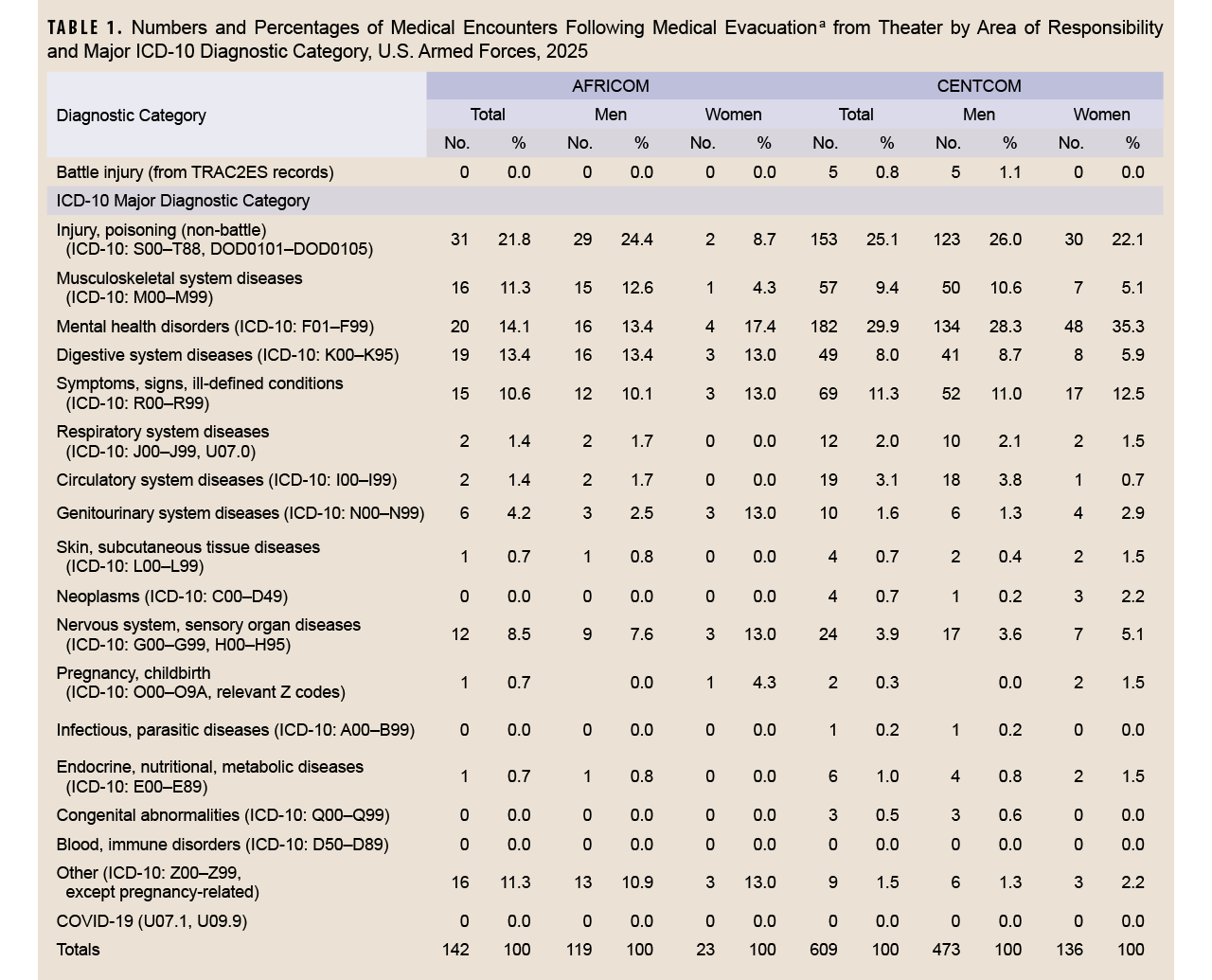
In 2025, the U.S. Armed Forces recorded a total of 1,107 medical evacuations in the 4 combatant commands, with the majority originating from CENTCOM (n=609) and PACOM (n=336). AFRICOM and SOUTHCOM accounted for substantially lower operational volumes in 2025, reporting 142 and 20 evacuations, respectively. Service men comprised most evacuated personnel, reflecting the broader demographic composition of deployed forces, although proportional trends within specific diagnostic categories varied by sex.
Only 5 battle injuries were recorded in total, in all 4 AORs—with all 5 originating in CENTCOM—representing less than 1% of specific in-theater evacuations (Table 1). Mental health disorders constituted the leading cause of evacuation in PACOM (39.9% of total) and CENTCOM (29.9%). Conversely, non-battle injuries and poisonings were the leading cause for evacuations out of SOUTHCOM (40.0%) and AFRICOM (21.8%), which also represented the secondary cause of evacuations from CENTCOM (25.1%). In PACOM, diagnoses related to the musculoskeletal system accounted for the secondary cause (21.1%) of medical evacuation.
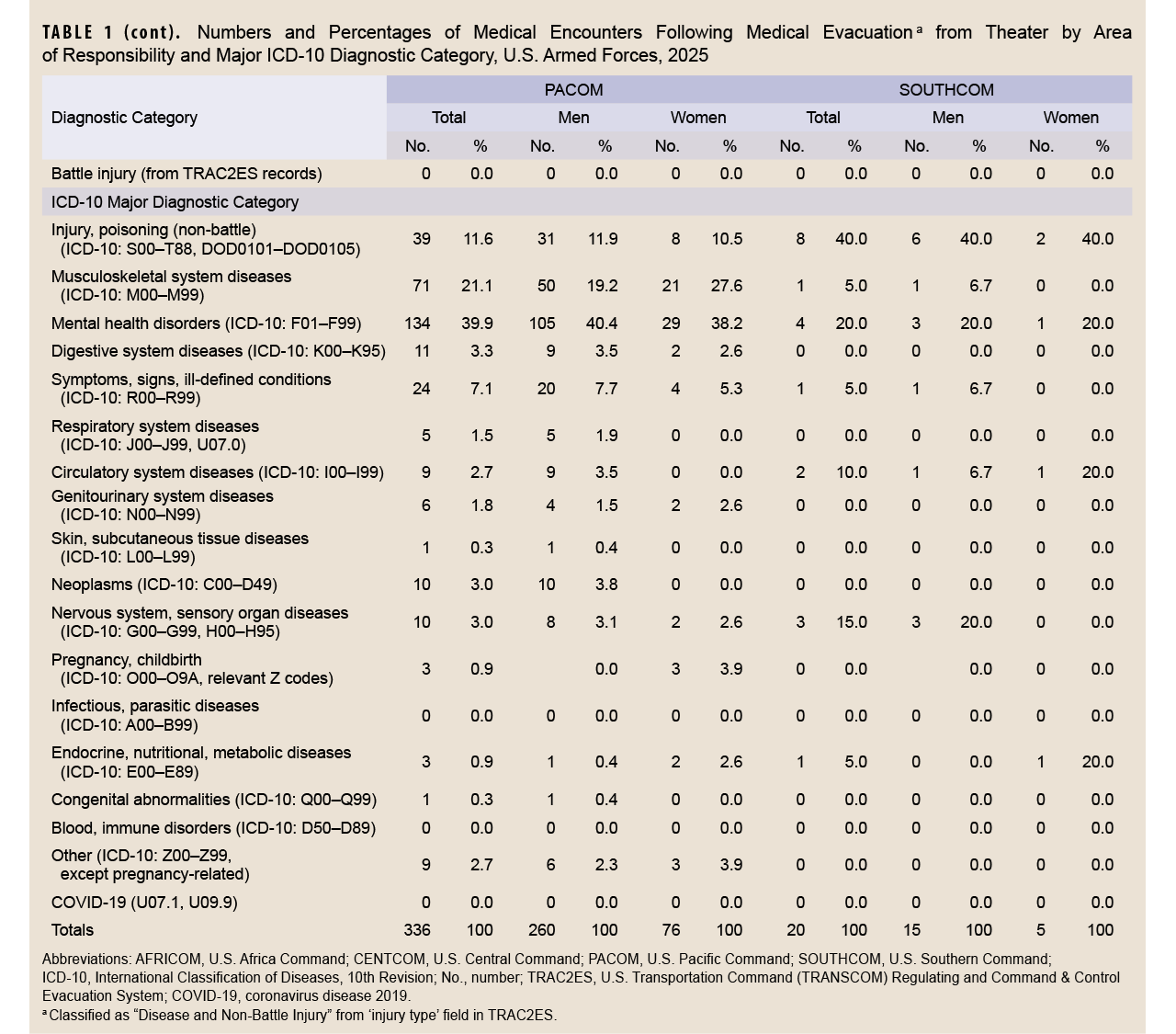
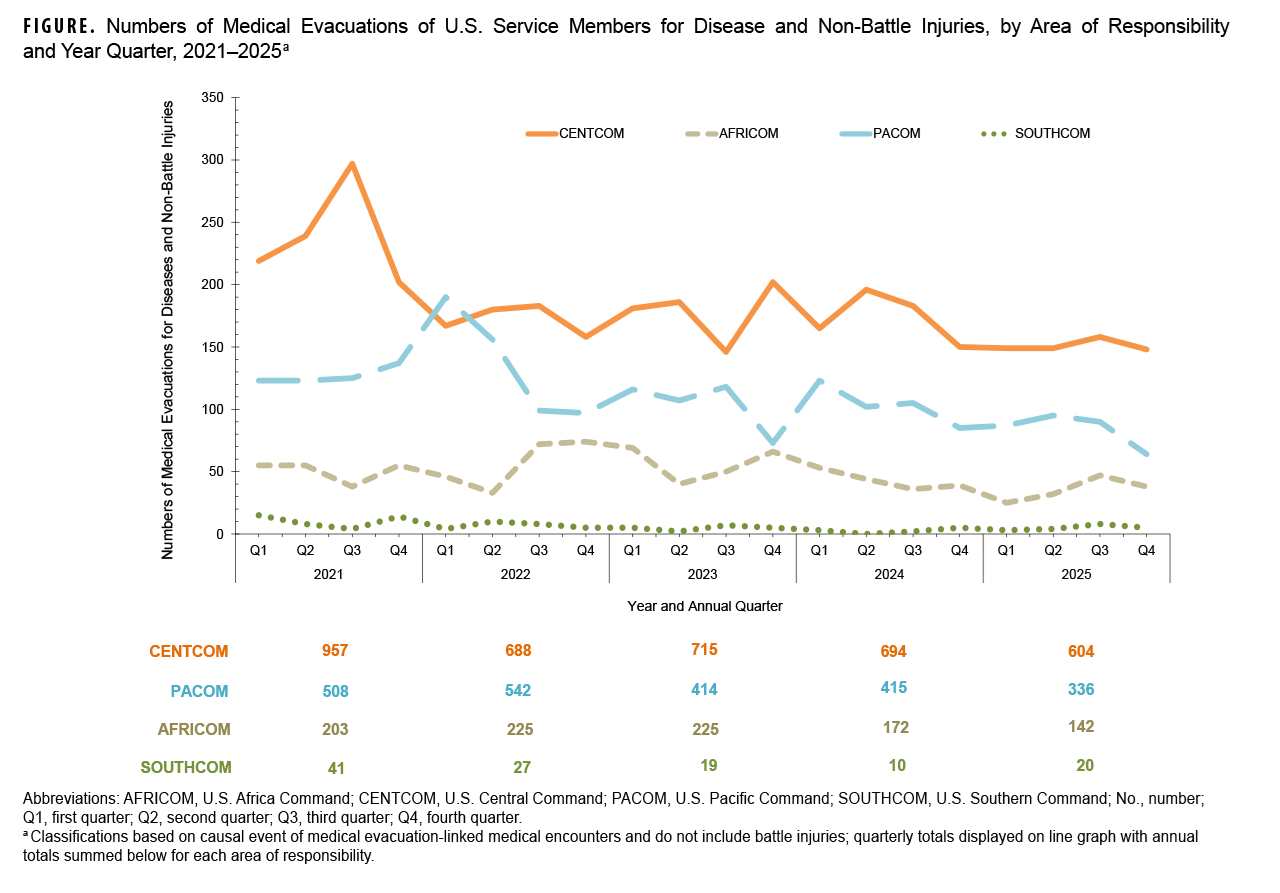
CENTCOM evacuations for disease and non-battle injury (DNBI) peaked in the third quarter of 2021, with 297 evacuations, before declining to 148 quarterly evacuations at the end of 2025 (Figure). Evacuations due to DNBI from PACOM peaked in the first quarter of 2022, at 190 evacuations, thereafter declining to 64 evacuations in the final quarter of 2025. Annual medical evacuations from AFRICOM exceeded 200 during the first 3 years of the surveillance period but in 2025 declined to less than 150. During the entire surveillance period, total quarterly numbers of SOUTHCOM medical evacuations rarely exceeded double digits.
Demographic and military characteristics
Evacuees were predominantly male (75-84%), ages 20-29 years, and typically among the enlisted ranks (Table 2). The Army accounted for the most medical evacuations, by branch of service, in every region except SOUTHCOM, where Navy personnel represented 40% of all medical evacuations. A notable regional difference emerged by component stratification: While active duty service members accounted for most evacuations in CENTCOM, PACOM, and SOUTHCOM, Guard and reserve personnel made up nearly 70% of AFRICOM evacuations.
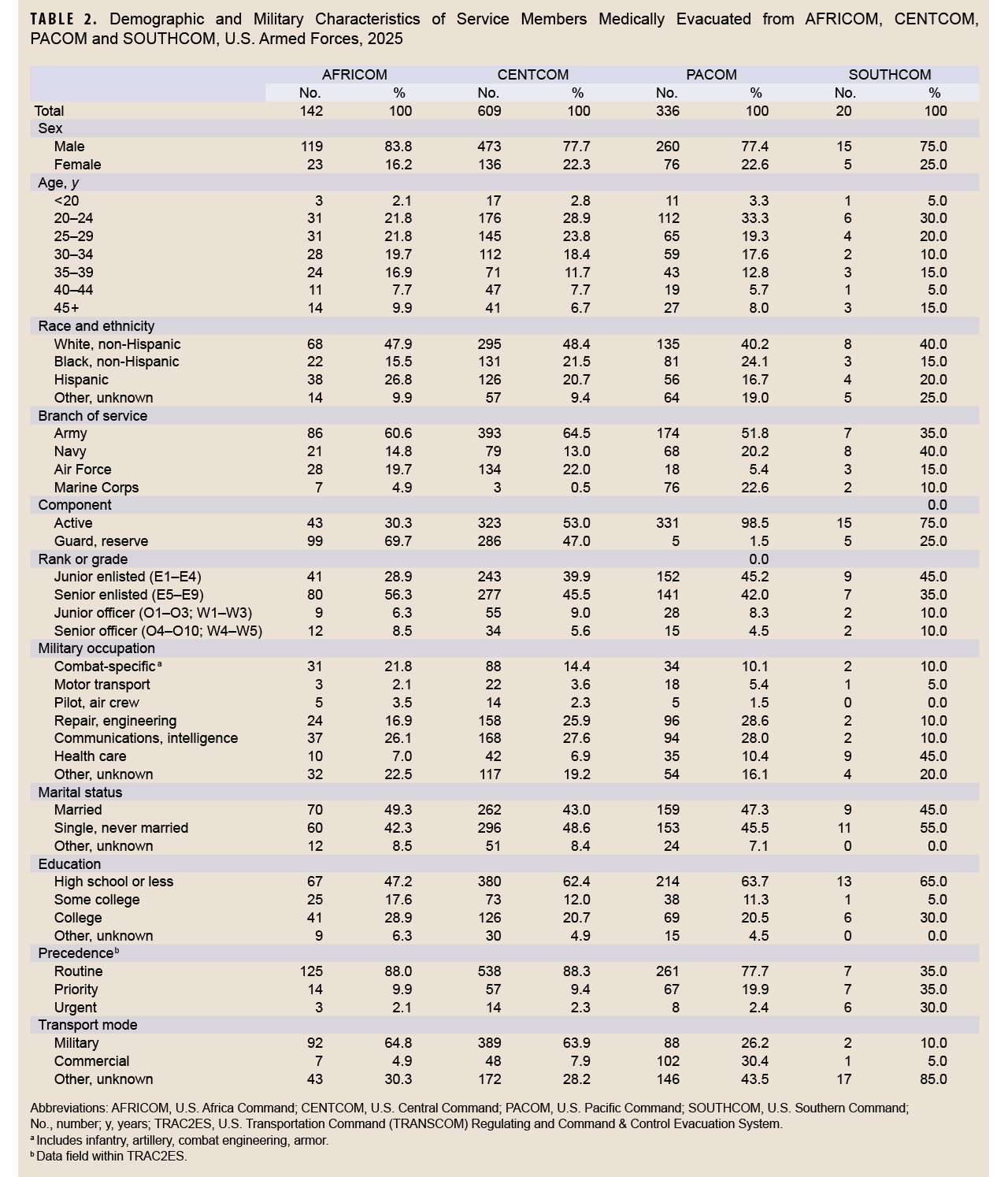
Service members in communications and intelligence as well as repair and engineering occupations experienced the highest numbers of medical evacuations. While most evacuations in AFRICOM, CENTCOM, and PACOM (77-88%) were classified as “Routine” and primarily involved military transportation, SOUTHCOM handled a distinctly higher proportion of “Priority” (35%) and “Urgent” (30%) evacuations that largely relied on non-military or unknown transportation modes.
Most frequent specific diagnoses
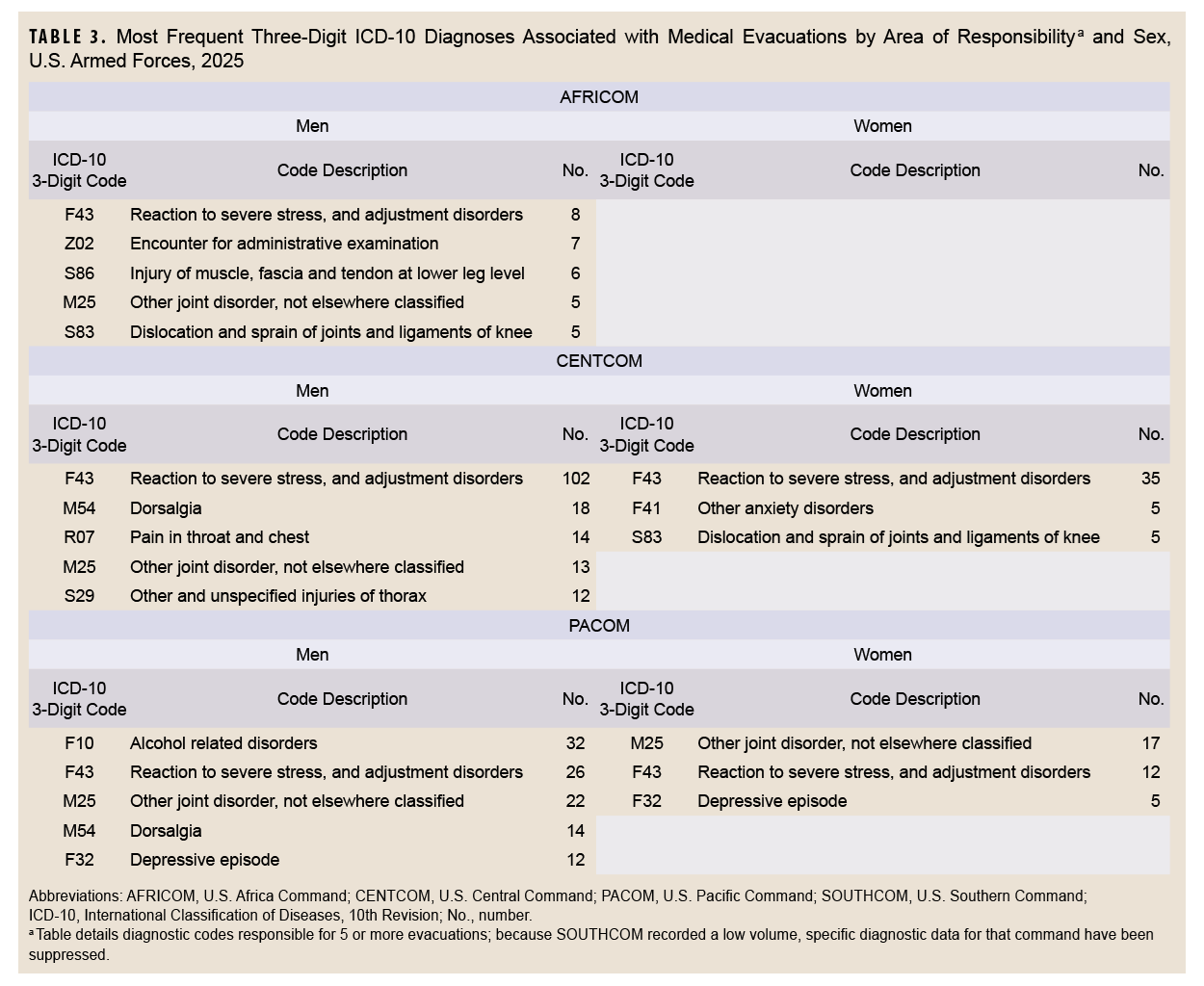
In CENTCOM, stress and adjustment disorders were the most frequent diagnoses by a wide margin, accounting for 102 male and 35 female evacuations (Table 3). This diagnosis similarly led AFRICOM’s list for both sexes, followed closely by “administrative examinations and lower-extremity injuries.” In PACOM, the most frequent diagnostic codes demonstrated slight differences by sex. Alcohol-related disorders led among service men, with 32 evacuations, while joint disorders represented the top diagnosis (n=17) for evacuations of service women. In all combatant commands, musculoskeletal ailments, such as joint disorders, dorsalgia and back pain, and knee injuries, consistently ranked as the most common physical causes of medical evacuation.
Discussion
This surveillance report reveals that disease and non-battle injuries, rather than combat trauma, accounted for nearly all 2021–2025 medical evacuations from AFRICOM, CENTCOM, PACOM, and SOUTHCOM AORs. With battle injuries accounting for less than 1% of total evacuations, these data emphasize the continued need for focused force health protection efforts on prevention and treatment of mental health and musculoskeletal conditions. While the general decline in quarterly evacuation volumes in CENTCOM and PACOM, following peaks in 2021 and 2022, likely reflects broader shifts in force posture, the persistent average numbers of DNBI evacuations evidences the continuous physical and psychological demands on deployed service members.
These distinct regional and demographic profiles reported suggest that mission-specific operational tempos and environments significantly influence medical readiness. The predominance of mental health conditions—specifically, stress, adjustment, and alcohol-related disorders—as leading causes for evacuation in CENTCOM and PACOM reveals a critical need for robust, in-theater psychological support. Notably, the proportions of medical evacuations due to mental health disorders are now considerably higher than the proportion (11.6%) described by a MSMR report of evacuations from Iraq during a 9-year period, 2003-2011.3 Furthermore, theater-specific distinctions highlight unique logistical and personnel challenges, such as AFRICOM’s heavy reliance on National Guard and reserve personnel and SOUTHCOM’s elevated rate of urgent, high-priority evacuations requiring non-military transportation.
The concentration of evacuations among communications and intelligence as well as repair and engineering personnel suggests that these essential support roles may involve substantial, perhaps under-recognized, occupational health risks; the data are not presented in proportion to the populations at risk, however, so these results should be interpreted with caution. Demographic data for the deployed population, i.e., person-time for individuals eligible for medical evacuation, are not readily available. The lack of deployed individual person-time data precludes calculation of stratified and overall rates for medical evacuations.
Additional limitations should be considered when interpreting these results. Most causes of medical evacuations were estimated for this report from primary (i.e., first-listed) diagnoses in DMSS recorded during hospitalizations or initial outpatient encounters following evacuation, based on DMSS data extracted on May 26, 2026. Diagnoses recorded in-theater through the Theater Medical Data Store (TMDS) are not represented in this analysis. In some cases, clinical evaluations at permanent treatment facilities following evacuation may have eliminated serious conditions that were clinically suspected while in theater, resulting in possible misclassification errors. When interpreting these evacuation metrics, methodological inclusion of intra-theater movements within PACOM should also be considered. While PACOM intra-theater inclusion reflects the vast geography and operational realities of the Indo-Pacific region, it distinguishes PACOM’s data from the inter-theater evacuations recorded for the other combatant commands. Finally, battle injuries rely on proper classification in TRAC2ES, but misclassification errors may occur. Due to the small number of battle injuries, any misclassification will have a disproportionate effect.
References
- The White House. Letter to the Speaker of the House and President pro tempore of the Senate Regarding the War Powers Report. Dec. 6, 2024. Accessed Apr. 18, 2025. https://bidenwhitehouse.archives.gov/briefing-room/statements-releases/2024/12/06/letter-to-the-speaker-of-the-house-and-president-pro-tempore-of-the-senate-regarding-the-war-powers-report-5
- U.S. Department of Defense. 2022 National Defense Strategy of the United States of America. U.S. Dept. of Defense;2022. Accessed Jun. 16, 2026. https://media.defense.gov/2022/oct/27/2003103845/-1/-1/1/2022-national-defense-strategy-npr-mdr.pdf
- Armed Forces Health Surveillance Center. Medical evacuations from Operation Iraqi Freedom/Operation New Dawn, active and reserve components, U.S. Armed Forces, 2003–2011. MSMR. 2012;19(2):18-21. Accessed Jun. 16, 2026. https://health.mil/reference-center/reports/2012/01/01/medical-surveillance-monthly-report-volume-19-number-2